Mauricio Pochettino Embraces the Future: 16-Year-Old Phenom Cavan Sullivan Headlines New-Look USMNT Ahead of 2030 World Cup Cycle

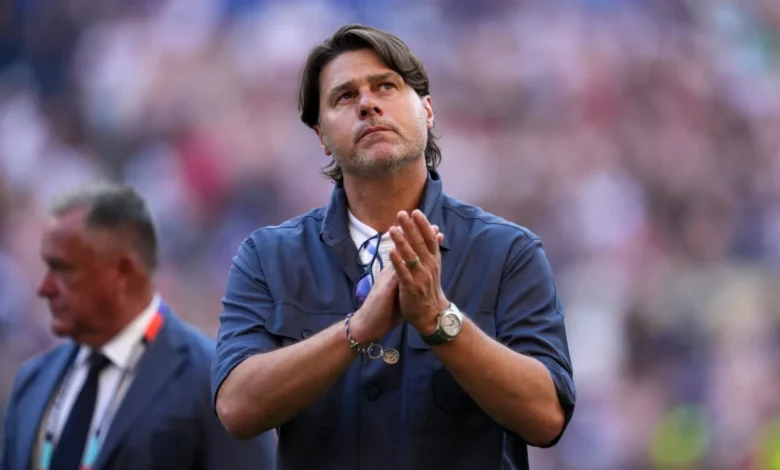
The United States men’s national soccer team is officially turning the page toward a new horizon. As the program looks past the bitter disappointment of a Round of 16 exit in the 2026 World Cup, head coach Mauricio Pochettino is wasting no time laying the groundwork for the 2030 tournament cycle. With a multi-year commitment keeping the Argentine-born manager at the helm through the next World Cup, Pochettino has signaled a seismic shift in how the national team pool will be constructed, heavily prioritizing emerging youth talent alongside seasoned veterans.
That philosophical pivot will be on full display next week as the USMNT assembles for the first time since the summer tournament during the extended September-October international window. Leading the charge into this critical transitional phase is 16-year-old Philadelphia Union sensation Cavan Sullivan, who has earned his maiden senior team call-up. Sullivan’s inclusion highlights a massive influx of teenage talent set to flood the American training camp, marking what many analysts are calling a generational changing of the guard for American soccer.
The 26-man roster, slated for an official release by U.S. Soccer late Thursday morning, is expected to blend veteran leadership with unprecedented youth. While Pochettino has repeatedly emphasized that building toward 2030 requires immediate, deliberate planning, the exclusion of several household names due to injuries and programmatic evaluations underscores the dawn of a completely new era for the program.
A New Dawn: The Road to the 2030 World Cup Cycle
When Mauricio Pochettino signed a long-term contract extension to remain manager of the USMNT through 2030, he inherited a program standing at a complex crossroads. The 2026 World Cup provided moments of brilliance on home soil, but it ultimately concluded with a sobering elimination in the Round of 16 against Belgium, exposing depth concerns and tactical limitations when facing elite global competition.
Recognizing the need for a sustained, systematic evolution over the next four years, Pochettino articulated a clear blueprint for the upcoming international window.
"The project is 2030," Pochettino told reporters last week. "That needs to be our aim. The next camp is going to be an opportunity to bring in players that can be involved in that four-year process with the possibility to arrive to 2030 in the best condition. The idea is to mix experienced players with young players, to build a resilient core that understands international competition at the highest level."

This extended international window carries immense weight because it serves as the foundation for the entire four-year cycle. Unlike traditional short friendlies, the September-October slate features a demanding gauntlet of high-profile matches against formidable opponents, including South American powerhouses Peru and Chile, alongside fierce regional rivals Mexico and Canada. Facing such diverse and competitive styles will provide Pochettino’s revamped squad with an immediate litmus test, offering a true gauge of where the program’s developmental pipeline stands.
Cavan Sullivan Leads the Charge of Teenage Phenoms
At the epicenter of this youth movement is Cavan Sullivan, a player whose trajectory has captivated the American sports landscape for over two years. Born in Philadelphia, Sullivan shattered records in July 2024 when he made his professional Major League Soccer debut at just 14 years and 293 days old, surpassing Freddy Adu’s long-standing record as the youngest player to ever appear in a North American professional sports league match.
Sullivan’s rise has only accelerated since the conclusion of the 2026 World Cup. Following the league’s summer resumption, the prodigious midfielder has established himself as an indispensable playmaker for the Philadelphia Union. Over his last seven MLS matches alone, Sullivan has registered an incredible nine goal contributions, boasting six goals and five assists since the post-World Cup break. His poise on the ball, exceptional vision, and maturity beyond his years have earned him a pre-arranged transfer to Premier League powerhouse Manchester City, which he will officially join when he turns 18.
Despite the dizzying hype surrounding his club career and future European destination, Sullivan remains grounded in his national team aspirations.
"I’m just working to develop my game and get better day by day and hopefully keep proving myself, proving to the world what I can do in the games and just having fun," Sullivan told CBS Sports during a recent appearance in New York. "Obviously, everyone dreams of playing for the USA. As a kid living in America, it’s the biggest goal, it’s the biggest honor, so it would be a blessing to be able to represent."
According to reports from ESPN, Sullivan’s inclusion in the upcoming senior camp was finalized earlier this week, formalizing a rapid ascent that has seen him breeze through various youth national team setups. His presence in the senior squad is not merely a ceremonial gesture; it is a calculated validation of his current form and a clear signal that Pochettino intends to reward merit and high-ceiling potential, regardless of age.
A Wave of Generation-Next Call-Ups

Sullivan is far from the only teenager poised to make waves during this international window. The broader USMNT pool is experiencing an unprecedented surge of elite teenage talent breaking into first-team environments across Major League Soccer and European leagues.
Among those expected to join Sullivan as potential first-time senior call-ups is New York Red Bulls standout Julian Hall. At 18 years old, Hall has drawn rave reviews for his explosive pace, clinical finishing, and fearless attacking instincts. Julian de Guzman, the Red Bulls’ head of sport, recently told reporters that Hall "should be amongst the player pool for the next generation" of the national team. Joining Hall from the Eastern Conference rivals is 17-летний midfielder Adri Mehmeti, whose tactical intelligence and technical polish have turned heads in MLS circles.
Furthermore, Yahoo Sports has reported that Sullivan’s Philadelphia Union teammate, 18-year-old central defender Neil Pierre, and 19-year-old Crystal Palace forward Zavier Gozo are also slated to receive their maiden senior call-ups. Pierre’s physical dominance and composure under pressure fill a critical positional need for a national team seeking long-term stability in central defense, while Gozo’s exposure to the English footballing ecosystem provides him with a hardened, competitive edge.
This deliberate injection of youth reflects a broader organizational strategy by U.S. Soccer to accelerate the development curve of its elite prospects, ensuring they are battle-tested by the time the 2030 tournament arrives.
Notable Absences and the Pulisic Conundrum
While the upcoming camp heralds the arrival of a new generation, it will proceed without the program’s most recognizable talisman: Christian Pulisic.
According to reports from Fox Sports, the 27-year-old AC Milan star will not feature in the September-October squad as he continues his arduous recovery from a significant injury suffered during the summer tournament. Pulisic sustained fractures to two separate bones in his right leg during the USMNT’s World Cup campaign. While he has since returned to club training in Italy, AC Milan’s medical staff has utilized him very sparingly since the Serie A season kicked off in August, prioritizing a cautious rehabilitation protocol to prevent long-term complications.
Pulisic’s absence leaves a massive leadership and playmaking void within the team. For years, the player known as "Captain America" has shouldered the immense burden of carrying the program’s offensive output and symbolic weight. Former USMNT goalkeeper Tim Howard notably issued an ominous warning regarding Pulisic’s physical toll and recovery timeline following the World Cup, emphasizing the critical need to manage the winger’s workload moving forward.

Pochettino’s decision to omit Pulisic is rooted in common sense and medical preservation, ensuring the nation’s premier star is fully rehabilitated for the grueling qualification cycle ahead rather than rushed back into meaningless friendlies. In the interim, the temporary absence of Pulisic opens a valuable tactical vacuum, forcing Pochettino’s young squad to learn how to generate offense, dictate tempo, and share leadership responsibilities collectively.
Implications and Analytical Outlook
The unfolding events of this international window carry profound tactical and psychological implications for American soccer. By aggressively promoting teenagers like Sullivan, Hall, Pierre, Mehmeti, and Gozo, Pochettino is sending an unequivocal message to the established core of the national team: complacency will not be tolerated, and the jersey belongs to whoever demonstrates peak form and future upside.
However, integrating such a young cohort carries inherent risks. International soccer is notoriously unforgiving, and deploying teenagers against battle-hardened CONCACAF rivals like Mexico and Canada—as well as top-tier South American opposition—can occasionally expose defensive lapses, tactical naivety, and emotional volatility. Pochettino’s primary challenge will be establishing a stable tactical framework that protects these young talents, allowing them to express their technical abilities without bearing the crushing weight of systemic expectations prematurely.
At the same time, the aggressive youth integration serves a vital economic and developmental purpose. Showcasing elite American teenagers on the senior international stage elevates their global profiles, accelerates their readiness for top European competitions, and ultimately fortifies the talent pipeline that will supply the 2030 World Cup squad.
As U.S. Soccer prepares to officially unveil the 26-man roster, the spotlight will shine brighter than ever on the training pitches. The journey to 2030 is long, winding, and filled with unpredictable variables, but under Mauricio Pochettino’s steady guidance, the future of the red, white, and blue has officially arrived.
Related posts: