
Run Up Trump Eligibility Supreme Court
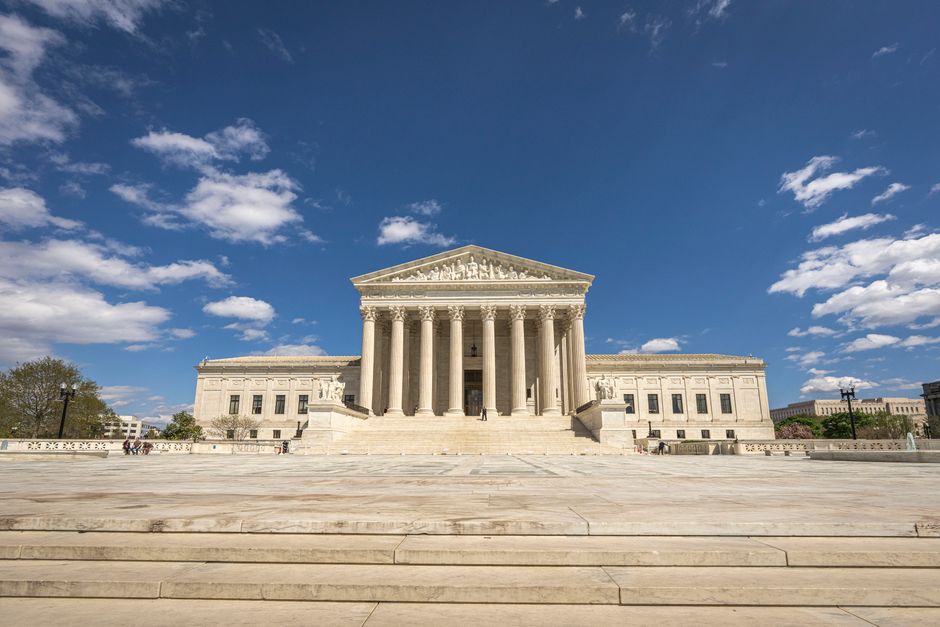
Trump’s Eligibility to Run: The Supreme Court’s Defining Decision
The Supreme Court’s decision regarding Donald Trump’s eligibility to appear on the ballot, stemming from challenges under Section 3 of the Fourteenth Amendment, represents a landmark moment in American constitutional law. This provision, often referred to as the "disqualification clause," prohibits individuals who have previously taken an oath to support the Constitution and subsequently engaged in insurrection or rebellion against it from holding any office, civil or military, under the United States. The legal battles that culminated at the Supreme Court were not merely abstract academic exercises; they directly impacted the democratic process by determining a candidate’s fundamental right to seek the highest office in the land and by extension, the choices available to the electorate. The core of the legal argument hinged on interpreting the scope and application of Section 3, specifically whether it applied to the President of the United States and if it could be enforced by individual states or required congressional action. The states, notably Colorado, initiated proceedings by disqualifying Trump from their primary ballots, citing his alleged involvement in the events of January 6, 2021, as an insurrection. These state-level rulings created a patchwork of eligibility across the nation, posing a significant logistical and constitutional quandary that necessitated swift and decisive intervention from the Supreme Court to ensure uniformity and uphold the integrity of the presidential election. The Court’s ultimate ruling would not only resolve the immediate legal dispute but also establish crucial precedent for the future application of the Fourteenth Amendment’s disqualification clause in the context of presidential candidacies.
The legal framework surrounding Trump’s eligibility primarily revolved around the interpretation of Section 3 of the Fourteenth Amendment. Enacted in the aftermath of the Civil War, this section was designed to prevent former Confederate officials from regaining power. Its text is clear: "No person shall be a Senator or Representative in Congress, or elector of President and Vice-President, or hold any office, civil or military, under the United States, or under any State, who, having previously taken an oath, as a member of Congress, or as an officer of the United States, or as a member of any State legislature, or as an executive or judicial officer of any State, to support the Constitution of the United States, shall have engaged in insurrection or rebellion against the same, or given aid or comfort to the enemies thereof. But Congress may by a vote of two-thirds of each House, remove such disability." The key interpretive questions before the Supreme Court were manifold: Did the office of the President fall within the scope of "any office, civil or military, under the United States"? Could individual states enforce this provision against a federal candidate without explicit congressional authorization? And, crucially, did the actions of Donald Trump on and leading up to January 6, 2021, constitute "engaging in insurrection or rebellion"? The "insurrection" prong of the analysis proved particularly contentious, with arguments focusing on the legal definition of insurrection, the intent of the actors involved, and the degree of participation required for disqualification. The absence of a prior definitive Supreme Court ruling on the application of Section 3 to presidential eligibility and state enforcement mechanisms meant that this case was charting new constitutional territory, with profound implications for the separation of powers and federalism.
The case of Trump v. Anderson, which reached the Supreme Court, originated from Colorado, where the state’s Supreme Court ruled that Trump was ineligible to appear on the Republican primary ballot under Section 3 of the Fourteenth Amendment. This ruling was based on the finding that Trump had engaged in insurrection. Similar challenges were mounted in other states, such as Maine, but the Colorado decision became the focal point due to its direct impact on a state’s primary election process and its explicit disqualification of a leading presidential candidate. The legal arguments presented to the Supreme Court addressed two primary issues: the applicability of Section 3 to the presidency and the authority of states to enforce the provision. Petitioners argued that Section 3 was never intended to apply to the President, citing historical context and the unique nature of the presidential oath. They also contended that even if it did apply, only Congress had the power to enforce such a disqualification, either through the impeachment process or by passing legislation specifically to remove such disabilities. Respondents, conversely, maintained that the text of Section 3 broadly covers "any office" and that the President is unequivocally an officer of the United States. They argued that the framers of the Fourteenth Amendment intended for states to have a role in preventing individuals deemed disqualified from holding office within their jurisdictions, especially when federal elections are at stake. The question of congressional enforcement, they argued, did not preclude state action, particularly in the absence of congressional legislation to the contrary or for the specific removal of disabilities. The urgency of the matter was amplified by the approaching general election, where divergent eligibility rulings across states could lead to chaos and undermine public confidence in the electoral process.
The Supreme Court’s decision, delivered with remarkable speed, ultimately held that individual states cannot unilaterally remove a presidential candidate from the ballot under Section 3 of the Fourteenth Amendment. The Court’s majority opinion, authored by Chief Justice John Roberts, concluded that Section 3 is not self-executing with respect to presidential eligibility and requires an act of Congress to be enforced. The Court’s reasoning focused on the fact that Section 3 specifically enumerates certain offices, such as Senator or Representative, and "elector of President and Vice-President," but conspicuously omits the President. Furthermore, the Court reasoned that the disqualification clause applies to "officers of the United States," but the specific enforcement mechanism contemplated by the amendment, particularly the provision for Congress to remove such disabilities, suggested a federal, rather than state, enforcement framework. Chief Justice Roberts emphasized that allowing each state to make its own determination about a presidential candidate’s eligibility would create an unworkable and chaotic system, potentially leading to a situation where a candidate could be eligible in some states but not others. This, he argued, would undermine the uniform and orderly conduct of presidential elections, which are national in scope. The Court therefore reversed the Colorado Supreme Court’s ruling, thereby reinstating Trump on the state’s primary ballot. The decision, while resolving the immediate legal question and averting widespread ballot access chaos, did not definitively rule on whether Trump had engaged in insurrection, leaving that factual determination for other legal or political processes.
The ramifications of the Supreme Court’s decision are far-reaching and touch upon several critical aspects of American governance. Firstly, it definitively established that Section 3 of the Fourteenth Amendment, as applied to presidential eligibility, requires congressional action for enforcement. This means that future challenges to a presidential candidate’s eligibility under this clause will likely need to be addressed by Congress, perhaps through specific legislation or by initiating impeachment proceedings. This places a significant burden on the legislative branch and may make such disqualifications more difficult to achieve. Secondly, the ruling avoided a scenario of extreme federalism where individual states could effectively disqualify a major party presidential candidate, thereby preserving the national character of presidential elections. This decision reinforces the principle that presidential elections are federal matters, with uniform rules governing candidate eligibility. Thirdly, by not ruling on the factual question of whether Trump engaged in insurrection, the Court effectively punted on the more politically charged aspect of the case. This leaves open the possibility of future legal or political challenges on those grounds, though the path for such challenges has now become significantly more constrained. The decision also has implications for how the Fourteenth Amendment’s disqualification clause will be interpreted and applied in other contexts, potentially influencing future cases involving state or federal officeholders. The ruling is a testament to the Supreme Court’s role as the ultimate arbiter of constitutional disputes, ensuring a degree of legal certainty and predictability in the face of potentially destabilizing political and legal challenges.
The legal and political implications of the Supreme Court’s decision in Trump v. Anderson continue to reverberate throughout the American political landscape. By ruling that states cannot unilaterally disqualify a presidential candidate under Section 3 of the Fourteenth Amendment, the Court has significantly altered the landscape of future eligibility challenges. This decision effectively centralizes the enforcement of the disqualification clause concerning the presidency within the federal government, primarily Congress. The implications for future presidential elections are substantial, as any attempt to disqualify a candidate based on the "insurrection clause" will now likely require a federal legislative response, a process that is inherently more complex and politically fraught than state-level court proceedings. This could lead to a chilling effect on the initiation of such challenges, as the high bar for congressional action may render them less feasible. Moreover, the ruling underscores the Court’s commitment to ensuring the uniformity and integrity of the presidential election process, preventing a scenario where a candidate’s eligibility could vary from state to state. This decision prioritizes national coherence over the potential for divergent state interpretations of a constitutional provision.
Furthermore, the Court’s decision has sparked debate regarding the balance of power between the federal government and individual states, particularly in the realm of election law. While the ruling emphasizes federal authority in matters pertaining to presidential eligibility, it also highlights the potential for congressional inaction to leave certain constitutional provisions unenforced. This raises questions about the efficacy of the Fourteenth Amendment’s disqualification clause if Congress chooses not to act. The ruling also implicitly acknowledges the contentious nature of defining "insurrection" and "rebellion" in a modern political context. By sidestepping a definitive ruling on whether Trump’s actions constituted such an offense, the Court has left this highly politicized question to be debated in other forums. This approach, while perhaps pragmatically avoiding further inflaming political divisions, means that the constitutional question of what constitutes disqualifying conduct under Section 3 remains somewhat unresolved in practice. The long-term impact of this decision will likely hinge on future congressional actions and the evolving interpretation of Section 3 by the courts, especially in cases involving candidates for offices explicitly enumerated in the clause. The decision serves as a potent reminder of the Supreme Court’s critical role in shaping the contours of American democracy and its capacity to resolve complex constitutional questions with profound societal implications. The legal precedent set by this case will undoubtedly inform future debates and litigation concerning the scope of constitutional disqualifications and the mechanisms for their enforcement in the American system of government.
