
Tag Us Foreign Policy
The US Foreign Policy: A Multifaceted and Evolving Landscape
The United States’ foreign policy is a dynamic and complex entity, shaped by a confluence of historical experiences, geopolitical realities, economic imperatives, and evolving domestic values. Far from being a static doctrine, it undergoes continuous adaptation, driven by shifts in global power structures, emergent threats, and the changing priorities of the American populace and its leadership. Understanding US foreign policy necessitates an examination of its core tenets, the instruments it employs, the principal actors involved in its formulation and execution, and the key challenges it confronts in the 21st century.
At its heart, US foreign policy has historically oscillated between isolationist tendencies and interventionist impulses. While the founding fathers cautioned against entanglement in foreign disputes, the nation’s rise to global prominence, particularly after World War II, firmly established a commitment to international engagement. This engagement is often framed by principles such as promoting democracy, protecting human rights, fostering economic prosperity, and ensuring national security. The pursuit of these objectives, however, has frequently led to diverse and sometimes contradictory approaches, reflecting the inherent tension between idealistic aspirations and pragmatic geopolitical considerations.
The instruments of US foreign policy are varied and interconnected, forming a comprehensive toolkit for influencing international affairs. Diplomacy remains the cornerstone, encompassing negotiations, treaties, alliances, and participation in international organizations like the United Nations. This diplomatic engagement aims to build consensus, resolve disputes peacefully, and establish frameworks for international cooperation. Economic tools are equally vital, including foreign aid, trade agreements, sanctions, and financial assistance. These mechanisms are employed to promote economic development, exert pressure on recalcitrant states, and foster economic interdependence that aligns with US interests. Military power, while often a last resort, remains a significant instrument. This includes maintaining a robust defense apparatus, engaging in military exercises, deploying forces to deter aggression, and, when necessary, conducting military operations. The concept of "soft power," encompassing cultural influence, educational exchanges, and public diplomacy, is also increasingly recognized as a crucial component, shaping global perceptions and fostering goodwill.
The formulation of US foreign policy is a multifaceted process involving a range of governmental and non-governmental actors. The President, as the chief diplomat and commander-in-chief, holds ultimate authority. However, the President’s decisions are heavily influenced by advisors within the Executive Branch, including the National Security Council, the State Department, the Department of Defense, and intelligence agencies. Congress plays a critical oversight role, with the Senate ratifying treaties and confirming appointments, and both houses holding the power to declare war and control funding for foreign policy initiatives. Think tanks, academic institutions, and advocacy groups contribute to policy debates through research, analysis, and lobbying, shaping public discourse and influencing policy decisions. The media also plays a significant role in disseminating information and shaping public opinion, thereby indirectly influencing foreign policy.
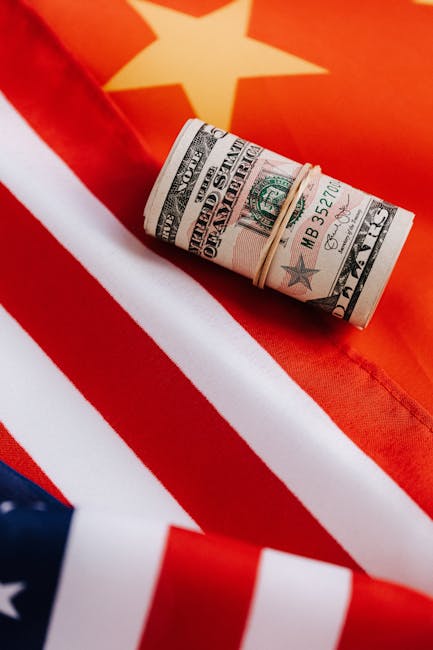
In the contemporary era, US foreign policy grapples with a complex and rapidly evolving global landscape. The rise of China as a global economic and military power presents a significant strategic challenge, prompting a reevaluation of US engagement in the Indo-Pacific region and a focus on competition. The resurgence of Russia, its assertiveness in its near abroad, and its cyber warfare capabilities pose ongoing security concerns. The persistent threat of terrorism, originating from non-state actors and sometimes state-sponsored groups, necessitates a multifaceted approach that combines military action, intelligence gathering, and efforts to address the root causes of radicalization. Climate change, a global existential threat, demands international cooperation and a reorientation of foreign policy towards sustainable development and environmental protection. Pandemics, as vividly demonstrated by COVID-19, highlight the interconnectedness of global health and security, requiring robust international collaboration and preparedness.
The notion of "American exceptionalism," the belief that the US has a unique role to play in the world, has historically underpinned its foreign policy. This has manifested in a willingness to act unilaterally when deemed necessary, as well as a commitment to leading international coalitions. However, the effectiveness and desirability of unilateralism are subjects of ongoing debate, with many advocating for a more multilateral approach to address global challenges. The rise of populism and nationalist sentiments in various parts of the world, including within the US, has also led to a reassessment of traditional alliances and a questioning of established international norms.
The economic dimension of US foreign policy remains paramount. The pursuit of free trade agreements, the protection of intellectual property rights, and the promotion of market access for American businesses are key objectives. However, trade imbalances, protectionist tendencies in other countries, and the impact of globalization on domestic jobs have led to a more protectionist stance in recent years, characterized by tariffs and trade disputes. The US also leverages its economic power through sanctions to deter aggression, counter proliferation, and promote human rights. The effectiveness and unintended consequences of sanctions are a constant point of consideration.
Human rights and democracy promotion have been enduring themes in US foreign policy, albeit with varying degrees of emphasis and application. The US has often advocated for democratic reforms and human rights standards globally, supporting civil society organizations and providing assistance to transitioning democracies. However, this commitment has sometimes been perceived as selective or instrumental, leading to criticisms of hypocrisy. The challenge lies in balancing the promotion of universal values with respect for national sovereignty and cultural differences.
The role of alliances and partnerships in US foreign policy is a subject of continuous evolution. Traditional alliances, such as NATO, remain central to US security strategy, providing collective defense and a framework for cooperation. However, the nature of these alliances is being reevaluated in light of new threats and the changing geopolitical landscape. The US also cultivates a network of bilateral partnerships to address specific regional challenges and promote shared interests. The concept of "burden-sharing" within alliances is a recurring theme, with the US often pressing its allies to contribute more to collective security.
In recent years, the concept of "great power competition" has become a central organizing principle for US foreign policy. This framework emphasizes the strategic rivalry with China and, to a lesser extent, Russia, and guides resource allocation and diplomatic engagement. It encompasses economic, technological, and military dimensions, and influences policy towards trade, investment, and security in various regions. The challenge is to manage this competition constructively, avoiding escalation while protecting US interests.
The impact of domestic politics on US foreign policy cannot be overstated. The President’s party affiliation, the composition of Congress, and prevailing public opinion all shape the direction and priorities of foreign policy. Shifts in administrations can lead to significant policy changes, as witnessed in the transition from one presidency to another. The media’s coverage of international events and the public’s engagement with foreign policy issues can also exert pressure on policymakers.
The effectiveness of US foreign policy is a subject of ongoing debate. Critics point to instances where interventions have been unsuccessful, alliances have been strained, or human rights concerns have been overlooked. Proponents argue that US leadership has been essential for maintaining global stability, fostering economic growth, and promoting democratic values. Ultimately, the evaluation of US foreign policy’s success or failure is often subjective and depends on the metrics and perspectives employed.
Looking ahead, US foreign policy will likely continue to be shaped by the ongoing interplay of globalization, technological advancements, and the shifting balance of power. The ability of the US to adapt to these changes, to forge effective partnerships, and to balance its national interests with its global responsibilities will be crucial in navigating the complexities of the 21st century international system. The challenges are formidable, but the imperative for effective and responsive foreign policy remains as strong as ever.
