NBA Season Preview 2026-27: A Packed Eastern Conference Promises a Historic Battle for Playoff Positioning

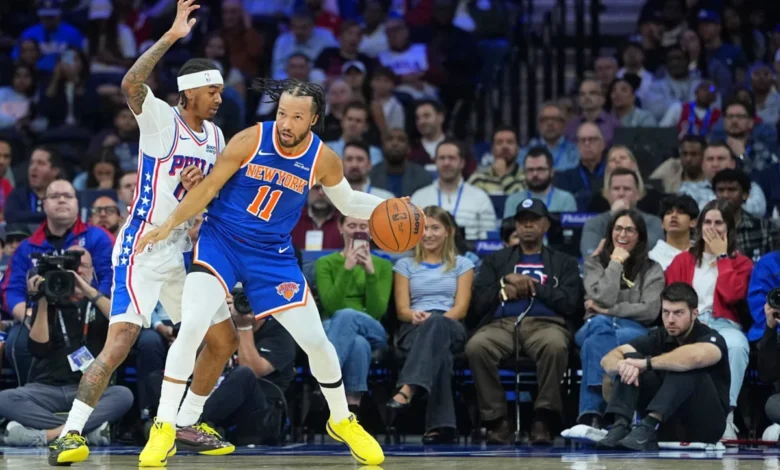
The landscape of the National Basketball Association is entering a fascinating new era as the 2026-27 regular season prepares to tip off. With teams concluding their preseason preparations—highlighted by early matchups such as the Philadelphia 76ers’ 120-97 victory over the New York Knicks at the Xfinity Mobile Arena—analysts, fans, and front offices alike are turning their attention toward what promises to be one of the most volatile and competitive regular seasons in recent memory. The unpredictability of the 82-game schedule is a defining characteristic of professional basketball, where unexpected breakouts and unforeseen struggles routinely rewrite preseason narratives.
The Preseason Landscape and Early Indicators
As teams wrap up their training camps and final exhibition games, the baseline metrics for the upcoming campaign are taking shape. Preseason contests, while traditionally viewed with a degree of caution regarding final outcomes, offer vital glimpses into rotation depth, tactical adjustments, and the integration of rookies and newly acquired veterans.
A prime example of this transition occurred on Monday, October 5, 2026, when the Philadelphia 76ers hosted the New York Knicks. The matchup showcased not only established superstars like New York’s Jalen Brunson but also emerging talents such as Philadelphia’s Labaron Philon Jr. While exhibition scores do not count toward the standings, the intensity of divisional and conference matchups in October signals that the competitive fire across the league is already at a regular-season peak.
Chronology of Recent Conference Shifts
To understand the current positioning of the Eastern Conference, one must examine the developmental trajectories of recent campaigns. Regular seasons in the NBA have a distinct habit of defying conventional wisdom. Historical precedent demonstrates that predictive models are frequently upended by sudden organizational leaps. For instance, few observers outside of the Detroit metropolitan area anticipated the historic surge that propelled the Pistons to a 60-win campaign just a year prior. Similarly, the Boston Celtics managed to secure 56 victories despite playing a significant portion of the schedule without cornerstone forward Jayson Tatum, showcasing the resilience of elite coaching systems and deep rosters.
These historical anomalies emphasize the fluid nature of the NBA standings. As the league approaches the 2026-27 opening night, basketball operations departments have spent the summer constructing rosters designed to navigate the grueling 82-game marathon. Yet, the distinct rhythms of the regular season ensure that attrition, chemistry, and tactical evolution will ultimately dictate which franchises exceed expectations and which fall short.
Tier Analysis: The Eastern Conference Logjam
A granular examination of the Eastern Conference reveals a remarkably dense middle tier, setting the stage for a historic logjam in the standings. Rather than a clear separation between elite contenders and rebuilding franchises, the conference is defined by a massive cluster of competitive teams.
Current projections indicate that as many as eleven teams in the Eastern Conference possess a legitimate, data-supported claim to finish the season within a narrow win-loss window of 44 to 49 victories. This unprecedented parity means that seeding battles, tiebreakers, and late-season performances will carry monumental significance. The margin for error will be razor-thin, transforming every single night of the schedule into a high-stakes affair for playoff positioning and play-in tournament security.
Conversely, the bottom tier of the conference features a distinct group of franchises currently navigating multi-year rebuilding phases or organizational transitions. Alphabetically speaking, the quartet of teams generally excluded from the immediate 44-to-49-win bracket consists of the Brooklyn Nets, Chicago Bulls, Milwaukee Bucks, and Washington Wizards.
Within this group of four, unique narratives are unfolding. The Brooklyn Nets and Washington Wizards continue to accumulate draft capital and develop young prospects, prioritizing long-term sustainability over immediate regular-season success. The Chicago Bulls remain in a transitional phase, evaluating roster components to determine their competitive ceiling. Meanwhile, the Milwaukee Bucks stand as the notable exception within this excluded group; despite fluctuating expectations, the Bucks retain the veteran infrastructure necessary to outperform their counterparts and potentially challenge the established upper tier, provided they maintain health and tactical consistency.

Supporting Data and Roster Dynamics
The mathematical tightness of the Eastern Conference is a byproduct of aggressive roster construction and the widespread distribution of elite talent. Front offices across the conference have mirrored one another in acquiring versatile two-way wings, spacing big men, and dynamic primary playmakers.
Statistical models evaluating net ratings, defensive efficiency, and strength of schedule from previous campaigns suggest that the gap between the conference’s fourth seed and its tenth seed has narrowed significantly. In previous eras, a 46-win season might have comfortably secured home-court advantage in the first round; in the projected 2026-27 environment, that same win total could easily relegate a team to the seventh or eighth seed, forcing them to navigate the unpredictable Eastern Conference Play-In Tournament.
Furthermore, depth has become the ultimate currency in the modern NBA. With load management protocols, minor injuries, and the physical toll of back-to-back fixtures impacting player availability, the success of the aforementioned eleven contending teams will heavily depend on the productivity of their second units. Franchises that can sustain high offensive and defensive efficiency when resting their star players will capture those crucial extra three to five wins that separate a 44-win season from a 49-win campaign.
Official Responses and Front Office Perspectives
While general managers and head coaches maintain standard public optimism during media days and training camp availabilities, league insiders note a palpable sense of anxiety regarding the conference’s brutal competitiveness.
"You cannot take a single night off in this conference anymore," noted one Eastern Conference executive who spoke on the condition of anonymity. "The talent level from top to bottom is staggering. If you have a two-week skid in January, you might drop from the fifth seed straight out of the playoff picture entirely. Every possession in the middle of winter is going to feel like April basketball."
Coaching staffs have similarly emphasized the importance of defensive consistency and early-season focus. With so many rosters operating at a comparable talent level, coaching chess matches and tactical adjustments during in-season series will often decide the outcome of tight contests. The ability to execute under pressure in clutch moments—defined as games within a five-point margin in the final five minutes—will serve as the ultimate separator for teams vying for that 49-win threshold.
Broader Impact and Implications for the 2026-27 Season
The ramifications of this competitive cluster extend well beyond the individual win-loss records of the participating franchises.
For the league office and broadcast partners, a hyper-competitive Eastern Conference enhances fan engagement and television ratings throughout the winter months. Instead of early-season runaway narratives, national television windows will feature high-stakes showdowns between direct playoff rivals on a weekly basis.
For players and agents, the compressed standings will directly influence award voting, All-Star selections, and contract incentive thresholds. Individual statistics achieved within winning contexts will carry disproportionate weight, elevating the stakes for every individual performance as the season progresses toward the spring.
As the final preparations conclude and the official schedule tips off, the basketball world watches with anticipation. Whether an unexpected dark horse manages to replicate the historic 60-win surprises of the past, or whether the conference descends into a chaotic, down-to-the-wire scramble for survival among eleven evenly matched contenders, the 2026-27 NBA season is guaranteed to deliver drama, narrative twists, and high-level competition from opening night to the final buzzer of the regular season.
Related posts: