President Trump Grants Onstage Pardons to Alaska Auto Shop Owners for Clean Air Act Violations During Wasilla Rally

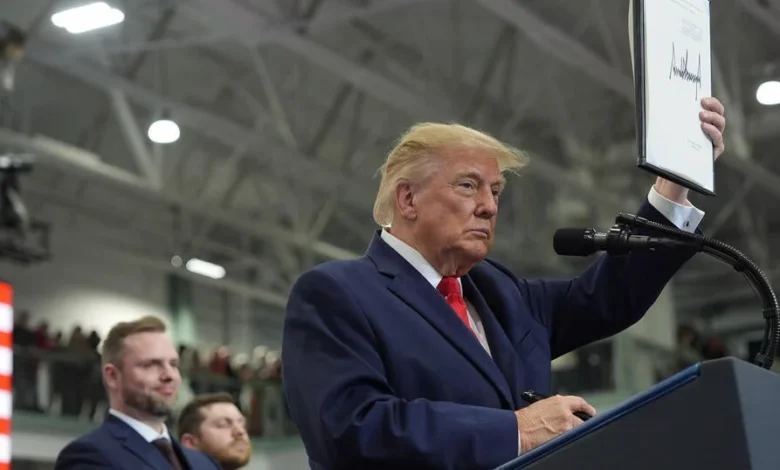
In an unprecedented display of executive clemency, President Trump utilized a pre-midterm election rally in Wasilla, Alaska, late Tuesday to issue public pardons to two men previously convicted of violating the Clean Air Act. The recipients, Zachary Czubak and Patrick Fleming, were former co-owners of "Arm Rippin Toys," an auto shop that specialized in the modification of diesel engines. The event, held before a boisterous crowd, marked a significant escalation in the president’s ongoing efforts to dismantle environmental regulations established during the Biden administration and to challenge the jurisdiction of the Environmental Protection Agency (EPA) in cold-weather regions.
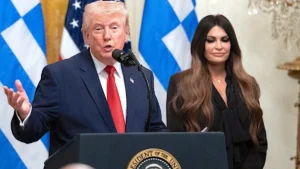
The pardons were delivered with theatrical flourish. During his address, Mr. Trump summoned both men to the stage, ordering an aide to produce the official pardon documents. "Think of it: They want to put them in jail for 10 years because they fixed an engine. How sick?" the president declared, framing the federal prosecution as a punitive overreach by the previous administration’s Department of Justice. He further characterized the legal actions against the men as a systematic attack on the Alaskan way of life, asserting that the charges were both politically motivated and fundamentally unjust.
A Chronology of the Arm Rippin Toys Case
The legal saga surrounding Czubak, Fleming, and their business partner, Michael Hanzuk, began several years ago as federal authorities intensified their scrutiny of "defeat devices"—aftermarket modifications designed to bypass emissions control systems. According to federal court records, the trio’s shop became a focal point for investigators tracking the removal of particulate matter filters and the reprogramming of vehicle diagnostic systems.
In 2022, all three men pleaded guilty to conspiracy to violate the Clean Air Act. The prosecution presented evidence that the shop charged customers between $1,140 and $5,445 to modify diesel trucks, effectively disabling their ability to monitor or limit pollutant output. At the time of their sentencing, the court imposed five years of probation, significant fines totaling $66,000, and mandatory community service.
The timeline of the case reflects a sharp shift in federal policy. While the Biden-era DOJ pursued these cases as critical environmental enforcement actions, the political landscape shifted following the transition of power. Michael Hanzuk, the third partner in the enterprise, received a presidential pardon last month. Tuesday’s announcement confirmed that the federal government’s pursuit of the remaining two partners has been formally terminated through executive intervention.
Environmental Policy and the "Cold Weather" Defense
The pardons highlight a growing divide between federal environmental mandates and the practical realities of vehicle operation in extreme climates. Supporters of the mechanics, including Alaska Senator Dan Sullivan, have long argued that the modifications performed by shops like Arm Rippin Toys were not acts of environmental vandalism, but rather necessary maintenance for vehicles operating in sub-zero temperatures.
Senator Sullivan has been a vocal critic of the EPA’s stance, characterizing the previous administration’s efforts as the work of "overzealous federal prosecutors." The argument posits that standard emission systems are prone to catastrophic failure when exposed to the harsh Alaskan winters, leading to vehicle malfunctions that can leave residents stranded or unable to transport goods in remote areas.
However, this perspective is sharply contested by environmental agencies and public health advocates. During the initial prosecution of the Arm Rippin Toys co-owners, federal officials warned that the removal of emissions controls leads to a massive, immediate increase in the discharge of nitrogen oxides and particulate matter. The EPA’s Criminal Investigation Division has historically maintained that such modifications negate decades of progress in air quality improvement, arguing that the health impacts—particularly respiratory distress—are felt by the entire community, not just the vehicle owners.
The Shift in Department of Justice Strategy
The legal environment surrounding emissions tampering has undergone a visible transformation in recent months. In January, the Department of Justice announced a significant policy pivot, declaring it would no longer pursue criminal charges under the Clean Air Act based solely on allegations of tampering with onboard diagnostic devices. This shift suggests a broader retreat from the aggressive enforcement tactics that characterized the 2020–2024 period.
The Biden administration had previously prioritized these cases, with officials like former EPA special agent Scot Adair vowing to hold individuals accountable for "jeopardizing human health for the sake of profit." The current administration’s reversal represents a complete abandonment of that prosecutorial philosophy. By using the pardon power to effectively vacate the convictions of these individuals, the President is signaling a return to a more deregulated approach to industrial and automotive emissions.
Broader Implications for Environmental Regulation
The rally in Wasilla serves as a microcosm for the Trump administration’s wider environmental agenda. Beyond individual pardons, the administration has consistently sought to relax fuel economy standards and rescind policies that incentivized the adoption of advanced emissions-reducing technologies, such as start-stop systems.
Economically, the administration argues that these regulations impose an unfair burden on working-class Americans and small business owners in rural states. By framing the Clean Air Act as a weapon of a "coastal elite" bureaucracy, the President has successfully aligned his environmental policies with his populist electoral strategy.
However, the implications of these moves extend beyond partisan rhetoric. Legal scholars observe that the frequent use of the pardon power in this context creates a significant chilling effect on federal regulators. If line-level prosecutors and agency investigators believe that their cases will be undermined by executive intervention, the enforcement of environmental statutes may become functionally impossible, regardless of the laws currently on the books.
Public and Political Reaction
The reaction to the pardons has been predictably polarized. For his supporters in the crowd, the act was a demonstration of a leader standing up for the "forgotten man." During the rally, Fleming addressed the audience, stating that the federal charges had "destroyed" them and that their work was intended to help, not harm, the Alaskan community.
Conversely, environmental watchdog groups have expressed alarm. The decision to grant clemency to individuals who admitted to widespread tampering—an act that contributes to poor air quality and respiratory issues—is viewed by critics as a direct assault on the public interest.
As the midterm elections approach, the Wasilla event underscores the role of the pardon power as both a legal tool and a political instrument. With the President explicitly stating that he is "taking care of" others involved in similar cases, it is likely that these pardons will not be the last. The case of the Arm Rippin Toys mechanics will remain a key reference point in the ongoing debate over the balance between federal authority, environmental protection, and individual property rights in the United States.
The DOJ’s current stance, combined with these high-profile pardons, effectively signals that for diesel mechanics and automotive shops across the country, the era of federal criminal prosecution for emissions tampering has come to a close. Whether this will lead to a measurable increase in pollutants or a necessary reprieve for drivers in cold-weather states remains a point of intense contention, with both sides of the aisle preparing for a long-term struggle over the future of the nation’s environmental regulatory framework.
Related posts: