CNN Political Briefing Navigates the Shifting Tides of American Governance Ahead of 2026 Midterms

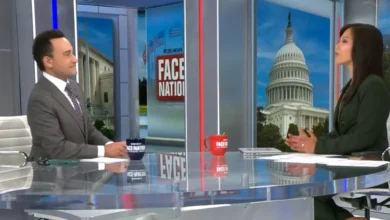
The American political landscape is undergoing a profound structural and cultural transformation, driven by high-stakes legislative gridlock, dramatic local election upsets, and shifting internal dynamics within both major political parties. At the center of this turbulence is the CNN Political Briefing podcast, hosted by CNN Political Director David Chalian. Through candid interviews with key policymakers, veteran strategists, and investigative journalists, the podcast has mapped out the emerging fault lines of U.S. politics as the nation looks toward the critical 2026 midterm elections and a post-presidential horizon.
From federal government shutdowns and contentious congressional leadership battles to historic mayoral victories in major metropolitan areas, recent months have tested the resilience of traditional political coalitions. Observers note that the friction within the Republican House caucus and the strategic recalibration of the Democratic Party reflect a broader disillusionment among voters regarding economic stability, institutional trust, and party accountability.
Congressional Friction and Leadership Crises in the House
The internal friction plaguing the Republican majority in the House of Representatives has become a dominant theme of late-2025 politics. California Republican Representative Kevin Kiley recently voiced sharp criticisms of House leadership, bluntly asserting on the CNN Political Briefing that Speaker Mike Johnson has “failed to lead.” This public rebuke highlights a widening ideological and tactical chasm within the GOP conference.
Representative Kiley’s critique is further complicated by his own precarious political standing. Following aggressive redistricting efforts spearheaded by California Democrats under Governor Gavin Newsom, Kiley faces the prospect of being drawn out of his current district, adding a personal layer of urgency to his assessment of the party’s trajectory. According to Kiley, a palpable "vibe shift" is underway among House Republicans as they attempt to reconcile their legislative agenda with the realities of governing alongside an increasingly unpredictable voter base.
The leadership struggles are compounded by the legislative fallout from repeated budgetary standoffs and government shutdowns. In October 2025, as Washington braced for and ultimately endured a prolonged fiscal shutdown, moderate and battleground Republicans like New York Representative Mike Lawler found themselves on the front lines of the messaging war. Lawler argued that the standoff presented significant electoral risks for Democrats, whom he accused of miscalculating the public mood. Conversely, progressive Democrats like Representative Ro Khanna countered that certain legislative demands were entirely non-negotiable, setting up weeks of intense partisan posturing.
The Battle for the House and Post-Shutdown Fallout
The legislative battles in Washington have had immediate repercussions for the 2026 midterm outlook. As the longest government shutdown in U.S. history finally came to a close, both parties immediately pivoted to framing the resolution to their electoral advantage.
Representative Suzan DelBene (D-WA), chair of the Democratic Congressional Campaign Committee (DCCC), laid out her party’s roadmap for recapturing the House majority in 2026. DelBene emphasized that economic anxiety and governance reliability remain the primary levers for Democrats to peel away suburban battleground districts. Meanwhile, veterans of internal party strategy, such as former Virginia Governor and DNC Chair Terry McAuliffe, argued that the shifting political environment—characterized by persistent voter dissatisfaction—could turn President Donald Trump and Republican congressional messaging into the Democrats’ most potent weapon for the midterms.
The legislative gridlock has also forced individual lawmakers to navigate treacherous electoral waters. Representatives like Mike Lawler, who represent districts carried by opposing presidential candidates, find themselves walking a political tightrope. Their ability to survive the 2026 cycle will likely depend on their perceived independence from national party orthodoxies and their responsiveness to hyper-local economic concerns.
A Strained MAGA Coalition and Questions of Presidential Influence
Beyond Capitol Hill, the core of the conservative movement has experienced rare moments of internal friction. Political analysts have closely monitored shifts in the relationship between President Donald Trump and his core MAGA base. A notable flashpoint occurred when the administration reversed course on the public release of the Epstein files in an effort to appease party purists—a move that exposed minor fractures in a traditionally unbreakable political bond.

Jonathan Martin, senior political columnist and bureau chief at POLITICO, joined the political briefing to analyze these developments. Martin suggested that while the core coalition remains formidable, growing voter fatigue regarding foreign affairs prioritization over domestic economic pain—specifically inflation and consumer prices—has created openings for critics. These dynamics have sparked broader discussions regarding whether the administration is entering an early lame-duck phase and who within the conservative ecosystem is positioned to inherit the movement’s mantle.
The tension between populist foreign policy focus and domestic pocketbook issues is expected to be a defining theme for Republican candidates campaigning in competitive districts throughout 2026.
Municipal Earthquakes: The New York City Mayoral Race
While federal politics grappled with shutdowns and leadership squabbles, local elections in the fall of 2025 delivered seismic shifts that caught national observers off guard. The most dramatic of these occurred in New York City, where progressive state assemblyman Zohran Mamdani achieved a stunning victory in the mayoral race, rewriting the political playbook for America’s largest city.
Errol Louis, political anchor at Spectrum News NY1, highlighted how Mamdani’s grassroots campaign successfully capitalized on cost-of-living anxieties and tenant advocacy, vaulting a relatively unknown progressive lawmaker into the national spotlight. Mamdani’s victory over a crowded field—including Republican standard-bearer Curtis Sliwa and former New York Governor Andrew Cuomo, who mounted a controversial comeback bid following his resignation years prior—demonstrated the enduring power of economic populism at the municipal level.
Curtis Sliwa, who mounted his second consecutive mayoral bid despite representing a heavily outmatched Republican registration base (where Democrats outnumber Republicans six to one), faced immense pressure throughout the cycle from various factions urging him to step aside. Sliwa’s campaign, alongside the broader regional contests in New Jersey and Virginia analyzed by CNN correspondents Jeff Zeleny and Eva McKend, underscored a nationwide trend: local elections are increasingly serving as bellwethers for national sentiment regarding housing affordability, public safety, and institutional trust.
The Intersection of Law, Politics, and Judicial History
The intersection of the American legal system and electoral politics reached another watershed moment in late 2025 with the federal prosecution of former FBI Director James Comey. This unprecedented legal proceeding added to an already volatile political climate, prompting deep dives into the historical precedent of executive branch investigations.
Legal analyst and former federal prosecutor Elie Honig, author of When You Come at the King: Inside DOJ’s Pursuit of the President, From Nixon to Trump, joined the discussion to contextualize the Comey prosecution. Honig’s analysis placed the event within a historical continuum of Department of Justice independence, executive overreach, and the shifting boundaries of accountability for high-ranking public officials. The case has further polarized public opinion, serving as both a rallying cry for critics of federal law enforcement and a cautionary tale regarding the weaponization of judicial institutions.
Broader Implications and Outlook for 2026
The cumulative insights gathered across these diverse political battlegrounds point to a deeply fragmented electorate entering the 2026 midterm cycle. Several core takeaways define the current trajectory of American politics:
- Institutional Fatigue: Voters across demographic lines exhibit profound frustration with congressional paralysis, evidenced by repeated budgetary standoffs and government shutdowns. Both parties risk severe electoral retribution if governance is perceived as secondary to partisan theater.
- The Evolution of Populism: Both the progressive surge exemplified by Zohran Mamdani’s victory in New York City and the intra-party debates within the GOP demonstrate that economic grievances—particularly housing, affordability, and inflation—supersede traditional ideological markers.
- Down-Ballot Vulnerabilities: Moderate incumbents in swing districts, such as Rep. Mike Lawler and Rep. Kevin Kiley, face unique threats from aggressive state-level redistricting and shifting voter demographics, making them critical barometers for control of the House.
- The Post-Trump Horizon: As questions linger over the stability of the MAGA coalition and the emergence of potential successor factions, both parties are actively auditioning new leadership styles and policy priorities.
As David Chalian and his guests continue to dissect these developments on the CNN Political Briefing, the overarching narrative is clear: the rules of American politics are being rewritten in real-time. Whether through legislative rebellion in Washington, progressive victories in municipal strongholds, or historic judicial flashpoints, the events of late 2025 have established a high-volatility baseline for the electoral battles to come.