Engineers Unveil the World’s First Functional Touchscreen Fabric Embedded Directly Into Clothing

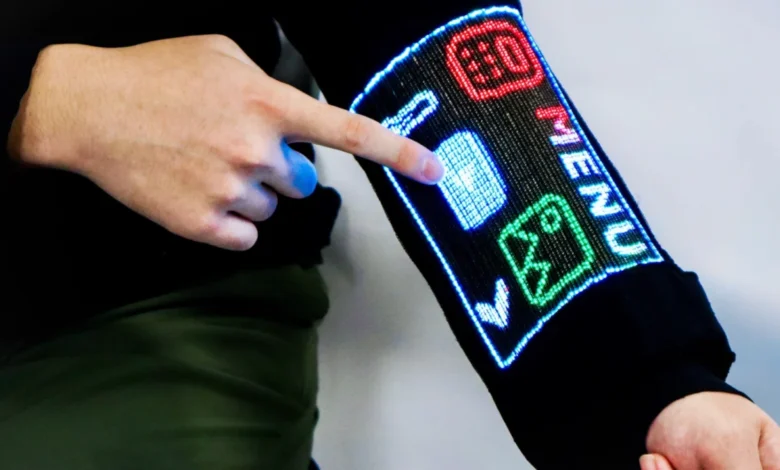
The intersection of fashion and mobile computing has taken a dramatic leap forward with the development of the world’s first fully functional touchscreen display woven directly into a garment. Researchers at the National University of Singapore’s (NUS) College of Design and Engineering have successfully engineered flexible, electronic fibers capable of rendering digital images, running applications, and responding to touch commands right on a user’s sleeve. Published recently in the prestigious journal Nature, this breakthrough addresses a 15-year engineering hurdle in the "smart clothes" sector: transitioning from basic haptic input devices to a comprehensive, textile-based graphical user interface (GUI).
Evolution of Smart Textiles: From Jacquard to Garment GUIs
For nearly two decades, technology companies and academic institutions have experimented with ways to integrate digital capabilities into everyday attire. The most notable commercial attempt occurred in 2017, when denim manufacturer Levi’s partnered with Google’s Advanced Technology and Projects (ATAP) division to release the Jacquard trucker jacket.
The Jacquard jacket appeared identical to a traditional denim garment, but its left cuff contained conductive grid threads with touch sensors and haptic feedback. Wearers could execute simple gesture commands—such as swiping or tapping—to control connected smartphones for tasks like pausing music, adjusting volume, or remotely triggering a camera shutter.
While innovative, the Jacquard system suffered from severe functional limitations. Its basic input framework could not display visual data, forcing users to rely on their primary mobile devices for feedback. Due to modest consumer adoption and limited utility, Google officially discontinued the Jacquard platform in March 2023.
Recognizing that true smart clothing must transcend simple remote-control functionality, the NUS research team pivoted toward an ambitious goal: transforming the fabric itself into a visual output and interactive display.
Engineering the Microelectronic Fiber Matrix
Creating a textile screen presented profound geometric and materials science challenges. Traditional microelectronics are built on rigid, two-dimensional silicon wafers. A fiber, by contrast, possesses a one-dimensional, axially symmetric geometry that inherently resists complex circuit integration.
To overcome this limitation, assistant professor Tural Khudiyev and his research team developed a novel interconnection architecture. The manufacturing process utilizes a specialized laser-guidance technique to maneuver molten solder, ensuring that melted metal bonds exclusively at precise, microscopic points along tiny insulated wires where microchips are required.

Through this method, the team successfully embedded more than 5,000 microelectronic chips and over 20,000 electrical components into a single, multi-layer thread measuring just one millimeter in thickness—slender enough to feel comparable to a standard credit card.
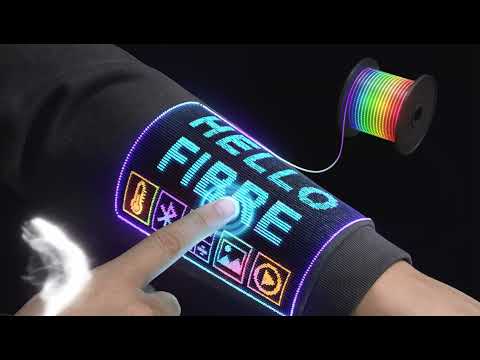
"What made this possible was our ability to construct the GUI system from electronic building blocks in fiber form—similar to traditional yarn, but with sophisticated electronic functionality built directly into the fibers," explained Khudiyev in an official institutional statement.
Technical Specifications and Capabilities
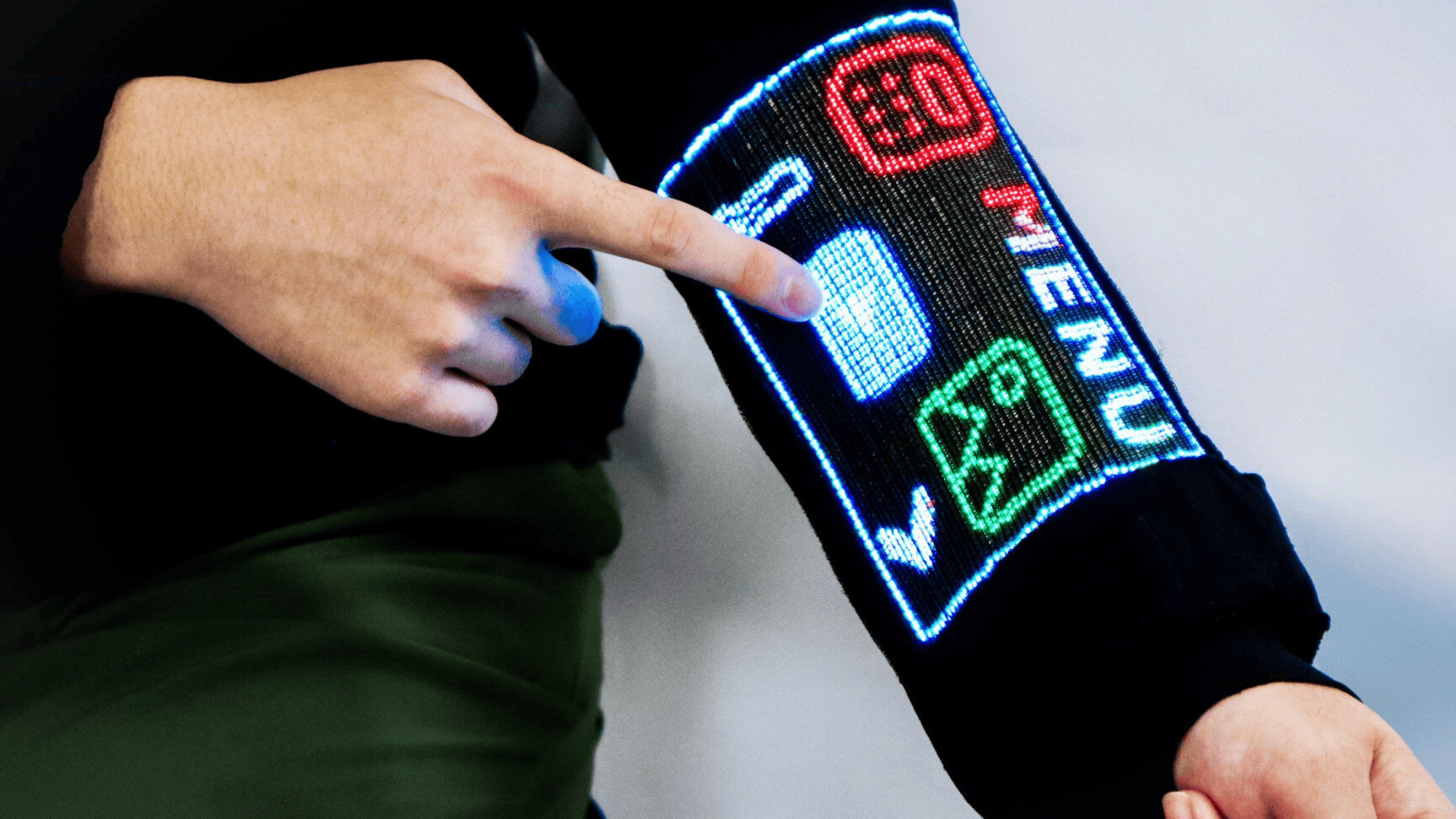
When woven into an apparel item, these specialized threads form an integrated 96 by 54-pixel display screen measuring approximately 6.6 by 4.3 inches. Positioned primarily along the inner forearm of the garment, the display boasts several key technical parameters:
- Color Depth: Supports an 8-bit color depth, yielding a retro visual aesthetic reminiscent of early arcade systems.
- Multi-Touch Support: Capable of registering multiple simultaneous touch inputs.
- Media Playback: Tested successfully at 30 frames per second for video playback, though syncing accompanying audio reduces the frame rate to 25 frames per second, introducing mild visual choppiness.
- Application Integration: Capable of running standalone utilities such as a functional calculator, displaying image galleries, functioning as a digital compass, processing voice commands via Bluetooth, and reading or displaying real-time body temperature metrics.
Durability, Breathability, and Real-World Testing
A critical barrier to commercial smart clothing has always been material durability and wearer comfort. Garments must withstand normal wear, mechanical stress, and routine laundering without compromising sensitive internal electronics.
To evaluate structural integrity, the NUS research team subjected the touchscreen fabric to rigorous physical stress tests. The material was mechanically bent 1,000 times and underwent 50 full domestic washing machine cycles. Remarkably, the integrated display and touch sensors retained near-original functionality following the trials.
Furthermore, the team prioritized ergonomic comfort. Despite housing thousands of semiconductor components, the resulting fabric maintains a level of breathability comparable to heavy cotton or denim, ensuring wearers do not feel constricted by internal wiring.
Implications for Health Monitoring and Device Dependency
The development of a garment-based GUI arrives amid growing societal discourse regarding excessive smartphone usage and digital distraction. Public health advocates and researchers have increasingly highlighted the psychological impacts of constant smartphone engagement. While smart fabrics offer alternative pathways for interacting with technology, analysts note a paradox: while some functions, such as glancing at brief notifications, can be executed discreetly on a sleeve, viewing complex video or image content merely swaps a traditional glass screen for a lower-resolution textile display.
Nevertheless, experts emphasize that the long-term utility of garment-integrated electronics extends far beyond media consumption. The integration of textile displays with advanced artificial intelligence and biometric sensors holds substantial promise for continuous medical diagnostics.
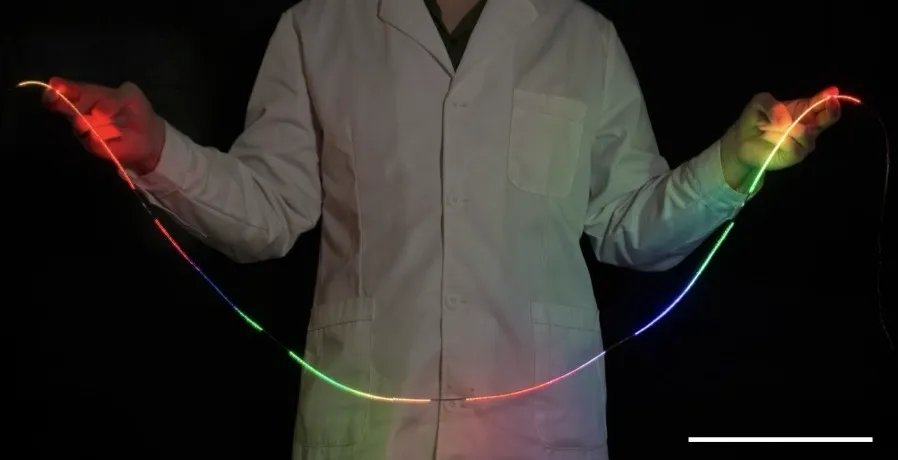
Khudiyev and his colleagues suggest that future iterations of these smart garments could autonomously collect physiological telemetry, process the data via local AI models, and project health insights directly onto the user’s arm in real time. This capability could prove transformative for elderly care, athletic training, and chronic disease management, allowing patients to monitor vital signs without auxiliary equipment.
Path to Commercialization
Despite the successful demonstration published in Nature, the touchscreen shirt remains in the academic research and development phase. Key operational questions—such as power source optimization, battery lifespan, and scalable manufacturing costs—must be addressed before the technology can be considered commercially viable for mass retail markets.
As material scientists continue to refine semiconductor fiber integration, the boundary between traditional textiles and computational hardware continues to blur. While the technology requires further refinement before replacing conventional mobile devices, the NUS breakthrough establishes a foundational blueprint for the next generation of wearable electronics.