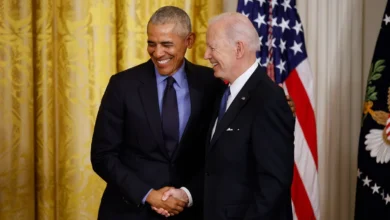
Newly Unsealed FBI Files Shed Fresh Light on the 2008 Rod Blagojevich Political Corruption Scandal and Obama Administration Inquiries

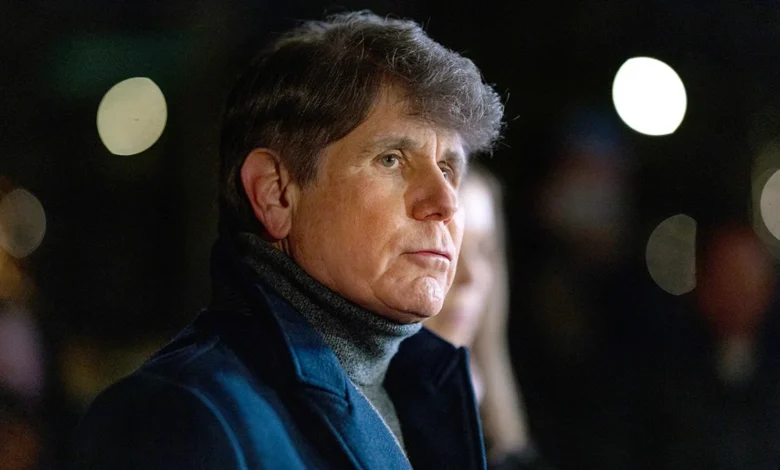
Nearly two decades after a sweeping political scandal upended Illinois politics and culminated in the imprisonment of a sitting governor, newly unsealed federal investigative files are providing a fresh look at the high-stakes maneuvering that occurred behind closed doors. Newly obtained and partially redacted FBI FD-302 interview reports—withheld from public view and trial proceedings for years—detail the frantic communications between President-elect Barack Obama’s incoming inner circle and the administration of then-Illinois Governor Rod Blagojevich over the vacant U.S. Senate seat in late 2008.
The documents, secured by Fox News, cast renewed light on a chaotic period in American political history that ended with Blagojevich’s arrest on December 9, 2008, his subsequent conviction on public corruption charges, and a winding legal saga that stretched across nearly eight years of federal imprisonment before concluding with executive clemency. As historians and legal analysts sift through the newly public records, the documents offer a granular timeline of how the White House, federal prosecutors, and state power brokers interacted during one of the most tumultuous transitions in modern executive history.
The Anatomy of a Vacancy: The Backdrop of 2008
The controversy began when Barack Obama won the 2008 presidential election, vacating the Class 3 U.S. Senate seat he had held representing Illinois since 2005. Under the U.S. Constitution and Illinois state law, the constitutional authority to appoint a temporary successor to fill the vacancy until a special or regular election could be held rested entirely with the governor.
At the time, Illinois was governed by Rod Blagojevich, a Democrat whose tenure had already been dogged by persistent whispers of pay-to-play politics and friction with the state’s legislative leaders. Eager to wield maximum leverage, Blagojevich held the keys to the coveted Senate seat, viewing the appointment not merely as an administrative duty, but as a priceless political asset. Federal prosecutors would later argue that Blagojevich viewed the seat as something to be traded for personal financial gain, campaign contributions, or high-paying employment for himself or his wife—a theory that formed the bedrock of the 2011 federal corruption case that landed him a 14-year prison sentence.
However, Blagojevich has consistently maintained his innocence, claiming for years that he never intended to sell the seat illegally. Instead, he insists he was closing in on a legitimate political arrangement: appointing then-Illinois Attorney General Lisa Madigan to the U.S. Senate in exchange for legislative cooperation. Lisa Madigan was the daughter of Michael Madigan, the extraordinarily powerful and entrenched Speaker of the Illinois House of Representatives, who has since faced his own legal troubles in a separate state corruption case. Under Blagojevich’s reported proposal, the appointment of the younger Madigan would be traded for the elder Madigan’s legislative backing on crucial state budget packages and health care reforms.
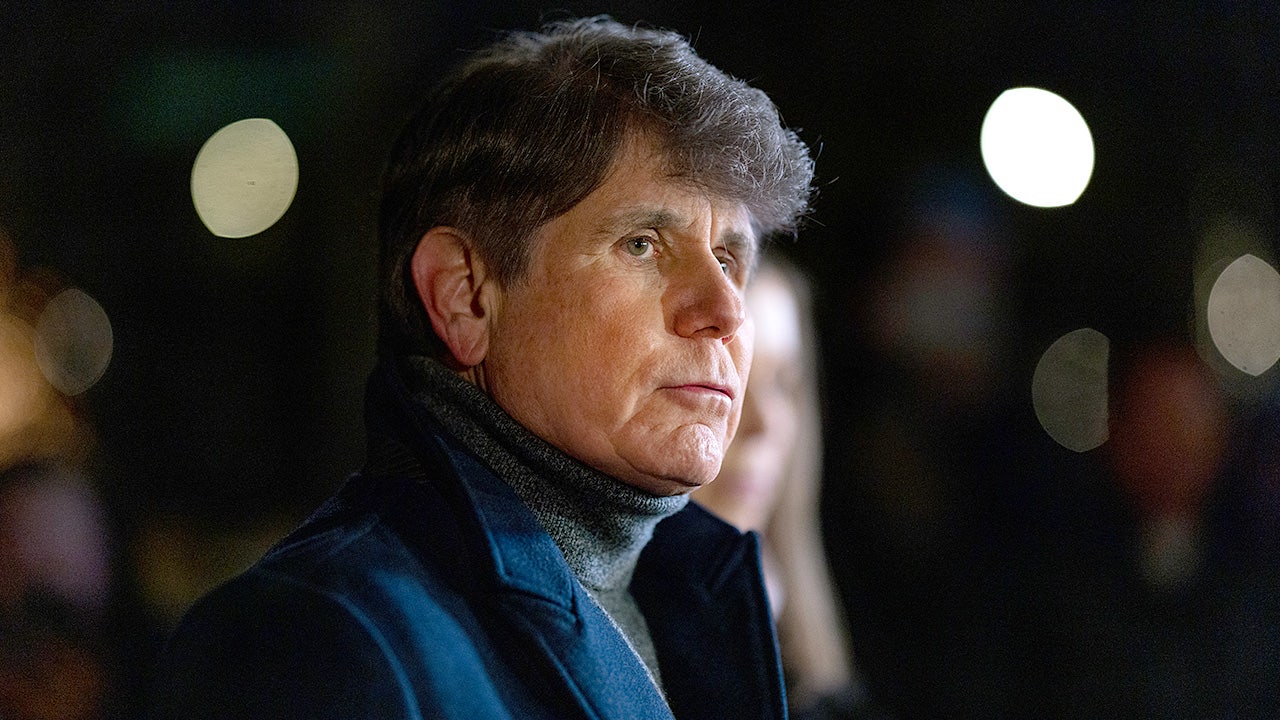
Inside the Newly Unsealed FBI Files
The newly revealed FBI FD-302 documents—stemming from interviews conducted with President-elect Obama and incoming White House Chief of Staff Rahm Emanuel in December 2008—confirm that discussions regarding Lisa Madigan were active at the highest levels of the incoming administration.
According to the records, on December 8, 2008, top Obama advisors David Axelrod and Rahm Emanuel met with U.S. Senator Dick Durbin (D-IL). During that meeting, the group mutually agreed that Lisa Madigan would make a strong, acceptable candidate to succeed Obama in the Senate. Following this discussion, Emanuel reached out to Blagojevich’s chief of staff, John Harris, to communicate the perceived merits of appointing Lisa Madigan.
The documents also illuminate internal strategic debates within the Obama transition team regarding another prominent figure: Valerie Jarrett. Initially, President-elect Obama favored Jarrett, a close confidante and personal friend, to fill his vacant Senate seat. However, as the vetting process unfolded, Obama reversed his position, deciding instead that he wanted Jarrett to transition with him to Washington as a senior advisor in the West Wing.
Emanuel, however, reportedly pushed back against this pivot. The interview notes indicate that Emanuel remained interested in seeing Jarrett take the Senate seat rather than enter the White House staff. Emanuel reasoned that because Jarrett was the president-elect’s closest friend and confidante, having her serve formally on the White House staff could create operational awkwardness within the executive office.
Despite Emanuel’s tactical objections, Obama remained resolute. The files note that Obama ultimately informed Emanuel that his decision was final: Jarrett was heading to the White House, and the matter was closed.
With Jarrett out of the running, a roster of other prominent Illinois Democrats entered consideration, including Tammy Duckworth, U.S. Representative Jan Schakowsky, and U.S. Representative Jesse Jackson Jr.—the latter of whom would also later experience a personal fall from grace, serving prison time in an unrelated campaign finance scandal.
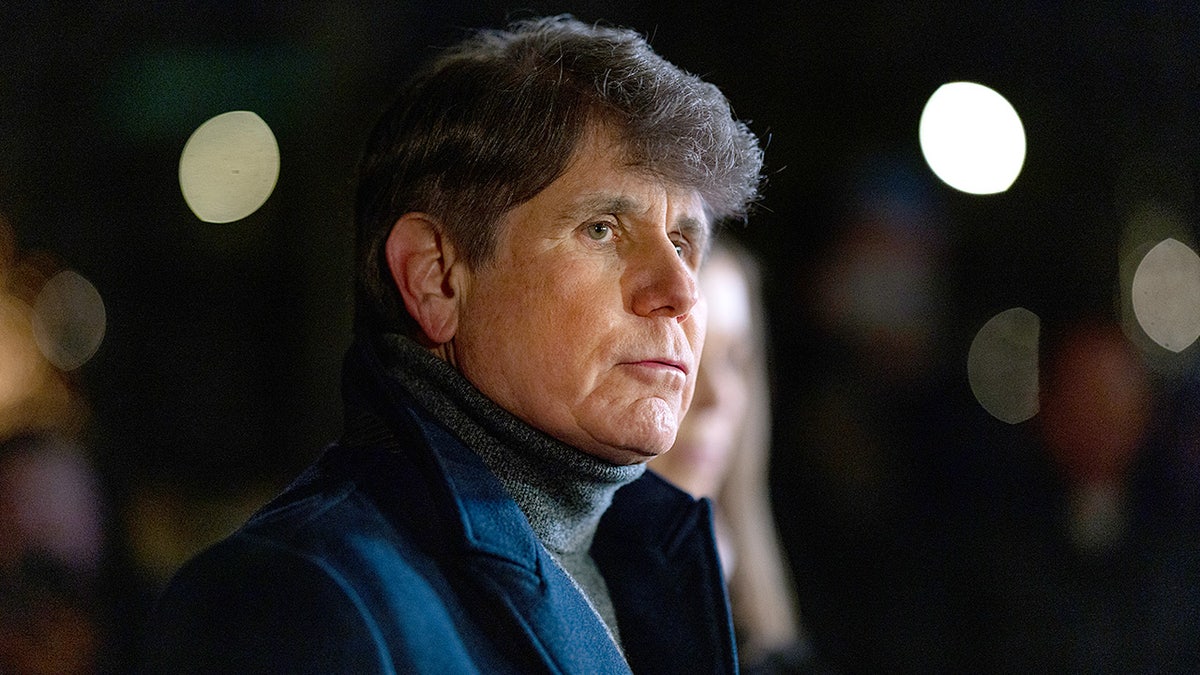
The Arrest and the Competing Narratives
Just hours after the flurry of back-channel communications and strategic assessments, federal law enforcement moved swiftly. On the morning of December 9, 2008—just one day after Emanuel’s outreach to Blagojevich’s office regarding Lisa Madigan—FBI agents arrested Governor Blagojevich at his Chicago home.
At the time, then-U.S. Attorney for the Northern District of Illinois Patrick Fitzgerald delivered a blistering public assessment, characterizing the governor’s actions as a "political corruption crime spree" that necessitated immediate intervention to halt ongoing abuses of power.
The newly unsealed interview records have given fresh ammunition to Blagojevich and his defenders, who argue that the FBI’s documentation proves his dealings regarding Lisa Madigan were standard, high-level political negotiations rather than criminal extortion.
"That just proves the Madigan deal was very much front and center. It was something I was about to do," Blagojevich asserted following the unsealing of the records. "There never was a crime spree that Mr. Fitzgerald, the U.S. Attorney, said he was stopping to justify arresting a sitting governor in his home."
Observers note that while the documents confirm the Obama team was aware of and open to the Madigan consideration, they do not explicitly validate the more transactional elements of Blagojevich’s defense—specifically, whether a quid-pro-quo exchange of a Senate seat for personal or legislative favors crossed the line from hardball politics into federal wire fraud and extortion, which was the core legal standard applied by the jury during his trial.
Broader Implications and Historical Fallout
The fallout from the 2008 appointment scandal reshaped Illinois politics for over a decade. Caught in the political crossfire, Blagojevich ultimately bypassed the Madigan option and appointed former Illinois Attorney General Roland Burris to fill the remainder of Obama’s Senate term. Burris chose not to run for re-election in 2010, opening the door for Republican Mark Kirk to capture the seat in a wave election year. Kirk later lost the seat to Democrat Tammy Duckworth in 2016.
For Blagojevich, the legal reckoning was severe. Impeached overwhelmingly by the Illinois General Assembly and removed from office in January 2009, he was subsequently tried twice in federal court. His first trial in 2010 resulted in a hung jury on most counts, but a retrial in 2011 led to his conviction on multiple corruption charges, earning him a 14-year federal prison sentence.
Blagojevich served nearly eight years behind bars before President Donald Trump commuted his sentence in February 2020, citing the sentence as disproportionate. In early 2025, Blagojevich received a full presidential pardon, clearing his record and enabling him to re-enter public discourse as an outspoken critic of federal prosecutorial overreach.
Neither former President Barack Obama nor Rahm Emanuel responded to requests for comment regarding the newly unsealed FBI FD-302 documents. As these records enter the public domain, they offer political scientists, legal historians, and the public an unprecedented, behind-the-curtains look at the convergence of presidential ambition, state-level machinations, and federal law enforcement at one of the most critical crossroads in modern American political history.