Supreme Court Preserves Access to Abortion Drug Mifepristone Amidst Ongoing Legal Challenges

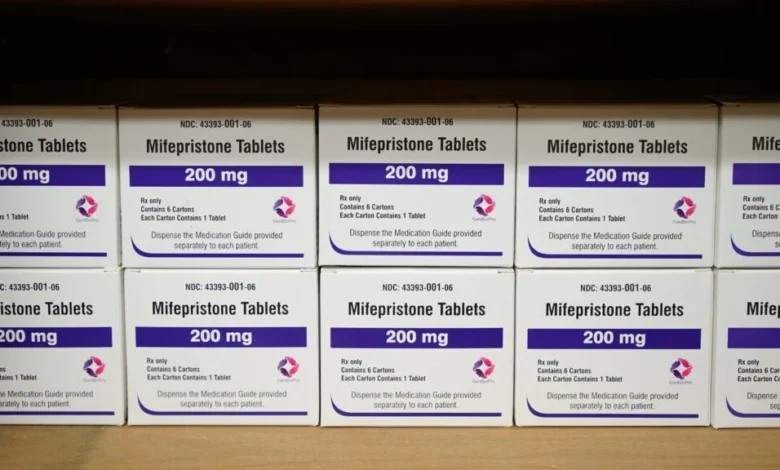
WASHINGTON D.C. – In a significant decision that preserves broad access to mifepristone, the most common drug used in medication abortions, the Supreme Court on Thursday effectively blocked lower-court restrictions that sought to curtail its availability. The unanimous order allows women to continue obtaining the abortion pill through pharmacies and via mail, without the requirement of an in-person doctor’s visit, at least until the broader legal challenge concludes. This decision is expected to keep access to mifepristone uninterrupted through much of next year, with the possibility of further appeals reaching the high court.
The justices’ intervention came in response to emergency requests filed by the manufacturers of mifepristone. They are appealing a ruling by a federal appeals court that would have imposed stricter dispensing requirements, including mandating in-person consultations and halting mail-order deliveries. The U.S. Food and Drug Administration (FDA), which first approved mifepristone in 2000, had previously relaxed these in-person visit requirements five years ago, a move now temporarily shielded from rollback by the Supreme Court’s order.
This legal battle unfolds against a backdrop of intense political and social debate surrounding abortion access in the United States, particularly in the wake of the Supreme Court’s 2022 decision overturning Roe v. Wade, which eliminated the federal constitutional right to abortion and empowered states to enact their own restrictions.
Background of the Legal Challenge
The current Supreme Court case originated from a lawsuit filed by Louisiana, which aimed to invalidate the FDA’s regulations governing mifepristone. The state argued that the FDA’s policies undermine its own state-level abortion ban and questioned the safety of the drug, despite repeated affirmations of its safety and efficacy by FDA scientists.
Lower courts initially sided with Louisiana. A three-judge panel of the 5th U.S. Circuit Court of Appeals issued a ruling that would have suspended mail access and telehealth prescribing of mifepristone while the litigation progressed. This ruling set the stage for the emergency appeal to the Supreme Court.
Mifepristone, typically used in conjunction with another medication, misoprostol, accounts for a substantial portion of abortions performed in the United States. Statistics from 2023, the most recent year for which data is available, indicate that medication abortions comprised nearly two-thirds of all abortions nationwide.
A History of Legal Battles Over Mifepristone
This is not the first time access to mifepristone has been litigated at the federal level. Three years prior, a similar challenge emerged, brought by physicians who oppose abortion. Following the overturning of Roe v. Wade, these physicians filed a lawsuit seeking to restrict mifepristone access.
In that instance, lower courts also attempted to impose limitations. However, the Supreme Court intervened, blocking the 5th Circuit’s ruling from taking effect, with Justices Samuel Alito and Clarence Thomas dissenting. Ultimately, in early 2024, the Supreme Court unanimously dismissed the doctors’ suit, concluding that they lacked the legal standing to bring the case.
The current legal proceedings involve different plaintiffs and arguments, but the core issue of mifepristone’s accessibility remains central.
Political Pressures and the FDA
The legal fight over mifepristone has also become entangled with political pressures, particularly within the Trump administration. Anti-abortion advocacy groups, expressing frustration with the pace of the FDA’s review of mifepristone, have been lobbying for stricter regulations. These groups hope to see restrictions implemented that would include blocking the prescribing of mifepristone via telehealth platforms.
Earlier in the week preceding the Supreme Court’s decision, FDA Commissioner Marty Makary resigned amidst sustained criticism from President Trump’s political allies, many of whom are prominent figures in the anti-abortion movement. Organizations such as Susan B. Anthony Pro-Life America had publicly called for Makary’s dismissal due to the perceived slowness of the mifepristone review process.
Despite these pressures, the Trump administration has maintained a notably quiet stance before the Supreme Court in this particular case. The administration declined to file a written brief offering its recommendation on how the court should rule, even though the case directly involves federal regulations established by the FDA. This silence has been interpreted by both sides of the debate as a tacit endorsement of the appellate ruling that sought to restrict access.
The administration’s position is complex, balancing the need to appease its anti-abortion base with the political realities of public opinion, which generally favors abortion rights as evidenced by ballot measures and polling data.
Broader Implications and Expert Reactions
The Supreme Court’s decision to preserve access to mifepristone has significant implications for reproductive healthcare in the United States. It ensures that millions of individuals can continue to access abortion care through established and widely used methods, particularly in states where abortion is legal.
Mainstream medical organizations, the pharmaceutical industry, and Democratic members of Congress had all urged the Supreme Court to reject the lower court’s restrictions. Pharmaceutical companies warned that a ruling against mifepristone access could destabilize the drug approval process and create a precedent that undermines regulatory certainty.
The debate over the safety of mifepristone has been ongoing for over two decades. The FDA has progressively eased its initial restrictions on the drug, modifying guidelines regarding who can prescribe it, how it is dispensed, and the types of adverse events that must be reported. These modifications have been based on extensive scientific review and real-world data.
However, anti-abortion groups have consistently challenged the FDA’s findings, filing numerous petitions and lawsuits that generally allege the agency has violated federal law by disregarding alleged safety concerns associated with the drug.
The Supreme Court’s decision, while a reprieve for abortion access advocates, does not resolve the underlying legal and political conflicts. The lawsuit challenging mifepristone’s approval will continue in lower courts, potentially leading to further legal battles. The case highlights the ongoing tension between federal regulatory authority and state-level efforts to restrict abortion access, a dynamic that will likely shape reproductive rights discourse for years to come.
This ruling underscores the critical role of the judiciary in determining access to essential healthcare services, particularly in the contentious landscape of abortion. The Supreme Court’s action provides a temporary but crucial shield for a medication that has become a cornerstone of abortion care for a significant portion of the American population.
Related posts: