Trump Administration EPA Prepares Total Repeal of Federal Power Sector Carbon Rules as AI Boom Resurrects Coal Power

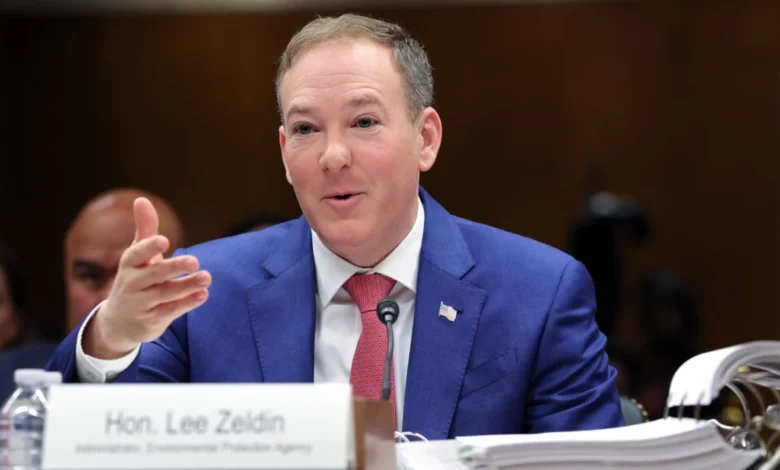
The United States Environmental Protection Agency is poised to announce a sweeping deregulation of the nation’s power sector, eliminating all federal carbon emissions rules for electricity generation. Slated for formal unveiling at an international energy summit in Texas this week, the move represents the latest and most decisive chapter in a nearly twenty-year tug-of-war over the future of coal—the dirtiest and most carbon-intensive major energy source in the global economy.
Under the leadership of EPA Administrator Lee Zeldin, the agency will wipe away the regulatory architecture established by prior administrations, granting electric utilities broad latitude to operate legacy fossil fuel generators without federal greenhouse gas constraints. The administration’s justification mirrors the rationale used in recent rollbacks of vehicle emissions standards: casting doubt on the scientific consensus surrounding the pace of climate change while emphasizing projected cost savings for consumers.
This impending rollback deals a severe blow to federal decarbonization initiatives. Yet, it arrives at a uniquely complex moment for the American energy landscape. Even as the executive branch seeks to unshackle traditional power sources to secure what officials term "American energy dominance," a historic surge in electricity demand driven by the artificial intelligence boom has unexpectedly thrown a lifeline to aging coal plants that were previously bound for retirement.
The Regulatory Whiplash: Two Decades of Climate Policy Instability
Coal accounts for nearly half of cumulative global carbon emissions since the dawn of the industrial era—matching the combined output of oil and natural gas while generating significantly higher volumes of carbon dioxide per unit of energy. Consequently, climate scientists have long identified the phaseout of coal-fired electricity as the single most impactful lever to mitigate global warming.
For the past two decades, however, U.S. federal energy policy has been characterized by sharp partisan reversals:
- The Obama Era: Following the legislative failure to pass a comprehensive carbon tax through Congress, the Obama administration formulated the Clean Power Plan. Designed to compel electric utilities to reduce emissions by transitioning away from coal, the plan faced fierce legal challenges from fossil-fuel-reliant states and industry groups.
- The Trump First Term: President Donald Trump formally repealed the Clean Power Plan. This regulatory rollback was subsequently bolstered by a landmark Supreme Court ruling, which established that the executive branch could not unilaterally force utility companies to abandon specific fuel sources under existing statutory authorities.
- The Biden Era: Seeking to navigate around the Supreme Court’s constraints, the Biden administration introduced a flexible rule in 2024. Utilities were given a binary choice: either schedule the retirement of their coal-fired units within the 2030s or equip them with carbon capture and sequestration (CCS) technology capable of trapping nearly all smokestack emissions.
- The Trump Second Term: The current EPA administration is now dismantling the 2024 framework entirely. According to agency briefings, the upcoming announcement will strip away all federal carbon limits on the electricity sector, effectively neutralizing federal climate oversight.
According to Kenneth Gillingham, a professor of environmental economics at Yale University and a former economic adviser to the Obama administration who helped draft the original Clean Power Plan, regulatory certainty is vital for long-term corporate planning.
"The reason to have a target is that it sends a clear signal to decision-makers in companies," Gillingham explained. "If you’re on the fence between choosing two things, you might as well choose the one that’s in line with the target. That’s been undermined. There has to be some teeth behind it."
Despite the continuous political pendulum, neither the Obama nor the Biden regulations ever achieved substantial direct enforcement due to prolonged litigation and frequent reversals. Analysts note that when compared to legislative incentives—most notably the deployment subsidies for solar and wind energy embedded in the Inflation Reduction Act—executive branch carbon rules played a relatively minor role in shaping actual utility-level generation fleets over the past twenty years.
The Shale Gas Revolution and Public Health Tolls
Paradoxically, even in the absence of stringent federal carbon mandates, coal power in the United States has experienced a dramatic and prolonged decline. This contraction was not driven primarily by environmental edicts, but by the American shale fracking boom of the late 2000s and 2010s. The massive influx of domestic shale gas drove natural gas prices to historic lows, making it economically irresistible for utilities to replace aging coal-burning plants with cleaner-burning natural gas facilities.
While natural gas combustion still releases carbon dioxide, it does so at roughly half the rate of coal. This market-driven fuel switch has helped cut overall power sector carbon emissions in the United States by nearly 50 percent from peak levels.
However, the complete eradication of federal carbon constraints—and the resulting extension of coal plant operational lifespans—carries profound implications for public health. Beyond greenhouse gases, coal-fired power plants emit hazardous atmospheric pollutants, including mercury, sulfur dioxide, nitrogen oxides, and fine particulate matter. These toxins are linked to thousands of premature deaths annually, alongside chronic respiratory illnesses, cardiovascular disease, and severe asthma flare-ups.
When the Biden administration finalized its 2024 power plant standards, federal health economists calculated that accelerating the retirement of coal infrastructure would prevent approximately $370 billion in cumulative health damages and climate-related costs. Projections indicated that by 2035, the rule would have averted hundreds of thousands of asthma-related medical episodes, numerous emergency room admissions, and upwards of 1,200 premature deaths each year. The removal of these standards removes a major regulatory incentive to curb these localized health hazards.
The Artificial Intelligence Boom and the Resurgence of Legacy Coal
Compounding the policy shift toward deregulation is an unprecedented structural shock to the domestic energy market: the explosive growth of energy-intensive data centers powering artificial intelligence and cloud computing.
When the Biden EPA drafted its rules in 2024, energy planners operated under the assumption that electricity demand would remain relatively flat and that coal generation would continue its steady, organic decline. The agency’s regulatory impact analysis explicitly cited "eroding economic opportunities for coal-fired steam generating units" as a primary driver for continuing retirements.
That calculus has been thoroughly upended. The proliferation of hyperscale data centers has created an acute, localized surge in power demand, particularly in regions tied to wholesale electricity markets in the Midwest and the mid-Atlantic. High wholesale power prices have suddenly made it financially lucrative for utility companies to keep legacy coal units online rather than shuttering them.
A prime illustration of this trend is Southern Company, a major utility provider serving Georgia, Mississippi, and surrounding states. Under previous planning assumptions, Southern intended to retire its primary Mississippi coal-fired facility by 2028. However, the surging electricity demands of incoming data centers prompted the company to officially announce plans to keep the plant operational well into the 2030s.
Efforts by the utility in prior years to pioneer industrial-scale carbon capture at its coal plants—most notably the failed Kemper Project—ended in costly financial collapses. Environmental organizations have sharply criticized the prolonged reliance on unmitigated coal, arguing that projected AI energy demands are artificially inflated and undermine corporate net-zero commitments. In response to these market pressures, the incoming administration has signaled full support for granting utilities the regulatory leeway necessary to maintain fossil fuel assets.
Market Realities Versus Regulatory Lifelines
As the EPA moves forward with its total repeal of power sector carbon rules, incoming presidential administrations inherit a structural dilemma: how to accelerate the phaseout of a fuel source that is structurally declining, yet temporarily insulated by macroeconomic and technological shifts.
Experts suggest that while the current deregulation and the data center boom provide a welcome short-term commercial reprieve for coal operators, they may not be enough to reverse the long-term structural obsolescence of the fleet. American coal infrastructure is aging rapidly, and the capital expenditure required to keep vintage, mid-century plants functioning safely and efficiently is often prohibitively expensive compared to building new natural gas, solar, or battery storage facilities.
"We have more electricity demand than we did before, which is, on the margins, going to make it easier for a coal plant to stay on," Gillingham noted. "But the trend is pretty clear, and you can only fight markets so much."
Ultimately, while the impending EPA announcement dismantles the federal government’s primary regulatory mechanism against power sector carbon emissions, the broader economic trajectory of the American energy market suggests that coal’s ultimate demise may be delayed rather than averted. When future administrations confront the realities of global climate targets, they will likely find a power sector that, despite temporary reprieves, is steadily succumbing to economic forces far larger than Washington politics.
Related posts: