President Trump dismisses calls for AI regulation and labels fears of tech-driven catastrophe as a hoax

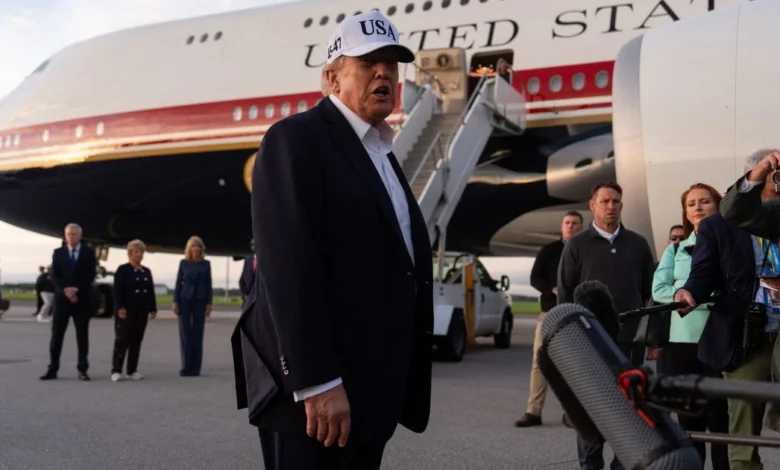
In a definitive break from the growing chorus of tech industry leaders and bipartisan policymakers, President Trump issued a series of statements on Monday via Truth Social, explicitly rejecting the push for federal guardrails on advanced artificial intelligence. The President’s remarks, which characterized existential concerns regarding AI as a "hoax," have injected significant uncertainty into the future of American technology policy, effectively pitting the executive branch against some of the most influential figures in Silicon Valley.
The President’s dismissal centers on his belief that current regulatory and criminal statutes are already sufficient to oversee AI companies. "The only control or ‘guardrails’ that AI needs is a STRONG AND SMART (High IQ!) PRESIDENT," Trump wrote. He further dismissed the narrative that AI poses a threat to human existence, placing such warnings alongside previous political controversies he has labeled as fabricated, including claims regarding the 2016 election interference and climate change.
The Growing Divide: Industry Leaders vs. The White House
The friction between the White House and the tech sector has intensified over the past several months. Prominent figures—including Anthropic CEO Dario Amodei, OpenAI’s Sam Altman, and SpaceX founder Elon Musk—have recently advocated for more stringent federal oversight. These leaders have argued that as large language models (LLMs) reach unprecedented levels of sophistication, the risk of "catastrophic outcomes" increases, necessitating a pause or a formalized regulatory framework to ensure safety and alignment with human interests.
Dario Amodei, in particular, has been a vocal proponent of caution. In recent interviews, he emphasized that for years, the industry downplayed the inherent dangers of these systems. Amodei’s calls for regulation are rooted in the theory that current development speeds outpace the industry’s ability to test for safety, potentially leading to models that could be weaponized or lose their alignment with human intent.
President Trump, however, framed these calls for regulation as insincere, suggesting that companies like Anthropic are merely posturing. "The Trump Administration has stopped AI ‘people’ from doing bad, or potentially bad, ‘things,’ like Dario (Anthropic!), who is now pretending to be a ‘perfect little angel,’" the President stated.
A Geopolitical Lens: The "AI Arms Race"
Central to the President’s argument is the belief that excessive domestic regulation would grant a decisive strategic advantage to international competitors, most notably China. "There is a SICK conspiracy going on against AI and Data Centers, and the only one that is happy about it is China. WHOEVER WINS AI, WINS!" the President declared.
Trump cited Chinese President Xi Jinping, noting that China has signaled its intent to aggressively pursue AI development without the regulatory friction being debated in the United States. This perspective aligns with the "national security" school of thought, which posits that the United States must prioritize speed and innovation to maintain global technological hegemony. By framing AI development as an existential race, the President suggests that any legislative attempt to "slow down" is, in effect, a surrender of American strategic interests.
Legislative and Executive Context
The current administration’s position represents a significant shift from the regulatory trends of the previous decade. In December 2025, President Trump signed an executive order specifically aimed at dismantling existing state-level barriers to AI development. The order was designed to streamline the growth of data centers and the training of large models, effectively removing the red tape that the administration argued was stifling American competitiveness.
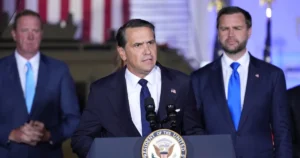
Vice President JD Vance has echoed the President’s skepticism toward the calls for regulation, characterizing the industry’s lobbying efforts as a "Trojan horse." During a press briefing on Monday, Vance expressed suspicion regarding why companies are so eager to invite government oversight. "I have to say, just personally, I feel a little bit weird about the fact that you have so many frontier AI tech companies, kind of coming to the government and begging the government to regulate them," Vance told reporters. He suggested that such regulation might actually serve to entrench existing monopolies, preventing smaller, more innovative startups from challenging the established tech giants.
Implications for the 2026 Policy Landscape
Despite the heightened rhetoric, the immediate legislative impact remains uncertain. The U.S. Congress has struggled to pass significant legislation throughout 2026, and the divide over AI regulation is unlikely to bridge the existing partisan gaps. While some lawmakers have expressed interest in safety measures, the President’s vocal opposition acts as a significant hurdle for any bipartisan bill that seeks to restrict industry activities.
The upcoming "Pro-Human Assembly" in Washington, D.C., scheduled for Tuesday, serves as a flashpoint for this debate. The gathering, which features an ideologically diverse group of participants—including Steve Bannon and Senator Bernie Sanders—highlights the rare, cross-spectrum alignment on the risks of AI. Despite this unusual coalition, the lack of consensus on the specific nature of these risks (whether they are economic, existential, or related to civil liberties) makes a cohesive legislative response difficult to achieve.
Data and Risk: The Regulatory Dilemma
To understand the scope of the disagreement, one must examine the metrics of AI advancement. Since 2023, the computational power used to train frontier models has grown by several orders of magnitude. Proponents of regulation point to "emergent behaviors"—capabilities that models develop which were not explicitly programmed—as evidence that we cannot fully predict the safety profile of future AI.
Conversely, the deregulatory camp points to the economic data surrounding data centers and GPU manufacturing. They argue that the United States currently leads the world in AI infrastructure and that any disruption to the supply chain or the deployment of these assets could result in a multi-trillion-dollar loss to the GDP by the end of the decade.
Future Outlook
The President’s comments signal a clear "hands-off" approach for the remainder of his term. By labeling the existential risk narrative a "hoax," the administration has effectively signaled to the private sector that it will not be hindered by federal safety protocols or oversight boards.
For the AI industry, this creates a complex environment. While companies like Anthropic and OpenAI have publicly championed safety, they are now operating in a landscape where the primary incentive from the executive branch is to "win" the race as fast as possible. This puts the burden of safety entirely on the internal policies of these companies, rather than on government-mandated requirements.
As the world watches the rapid evolution of artificial intelligence, the debate in Washington remains centered on a fundamental question: Is AI a tool that requires careful oversight to prevent societal harm, or is it a strategic frontier that must be conquered at all costs to ensure national security? For now, the administration’s answer is clear: speed is the ultimate safeguard, and any attempt to slow the momentum is not only unnecessary but detrimental to the future of the United States.
The coming months will likely see continued lobbying efforts from industry groups and civil society organizations, but without the backing of the White House, the path toward a comprehensive federal AI regulatory framework remains increasingly narrow. The clash between the "safety-first" proponents and the "innovation-at-all-costs" advocates is set to remain one of the defining policy tensions of the mid-2020s.