Tensions Flare on the Ohio Campaign Trail as Amy Acton and Vivek Ramaswamy Clash Over Debate Refusals and Past Controversies

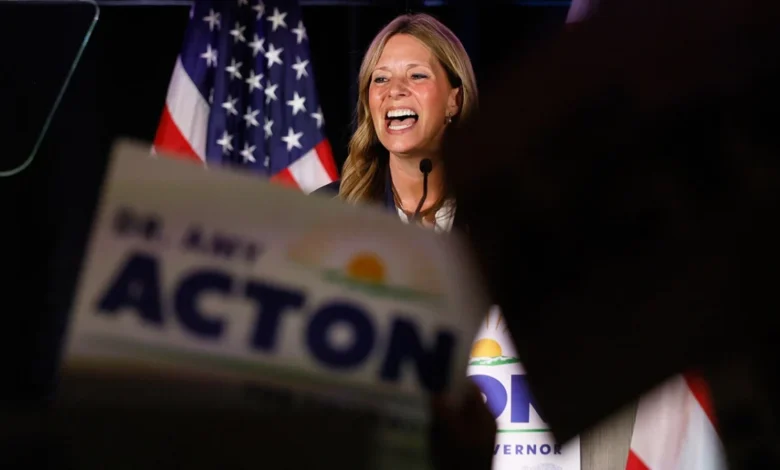
The race for the Ohio governorship has officially entered a contentious and volatile phase, marked by escalating friction between the Democratic nominee, Dr. Amy Acton, and her Republican challenger, Vivek Ramaswamy. With the general election scheduled for November 3, the contest has transcended traditional policy debates, devolving into high-profile disputes over media access, personal histories, and the utilization of artificial intelligence in political advertising.
The latest flashpoint occurred during a campaign event in Harrison, Ohio, where a confrontation between Acton’s campaign personnel and a politically aligned independent videographer underscored the hostile atmosphere characterizing the final stretch of the gubernatorial race. As both candidates vie for executive leadership of the state, the fallout from this incident has amplified existing disagreements regarding transparency, accountability, and the boundaries of campaign engagement.
A Confrontation in Harrison: The Saturday Incident
Last Saturday, an unidentified political activist and cameraman approached Dr. Amy Acton during an outdoor campaign stop in Harrison, Ohio. Armed with a camera and pressing questions, the interviewer sought to confront the Democratic nominee regarding her ongoing refusal to participate in scheduled debates against Ramaswamy.
"Dr. Amy Acton, why do you refuse to debate your opponent, Vivek Ramaswamy?" the interviewer asked on camera, stepping closer to the candidate as she navigated through a crowd of supporters.
Within seconds, Acton’s campaign staff intervened, physically placing themselves between the candidate and the camera. Members of her security and communications team repeatedly chanted, "No photos, no videos," while attempting to push the cameraman back. During the scuffle, a member of Acton’s detail collided with the videographer, jarring the camera out of focus and prompting the operator to urge the staff to be "careful." Acton herself maintained silence throughout the exchange, continuing to walk away from the interviewer without addressing the question.
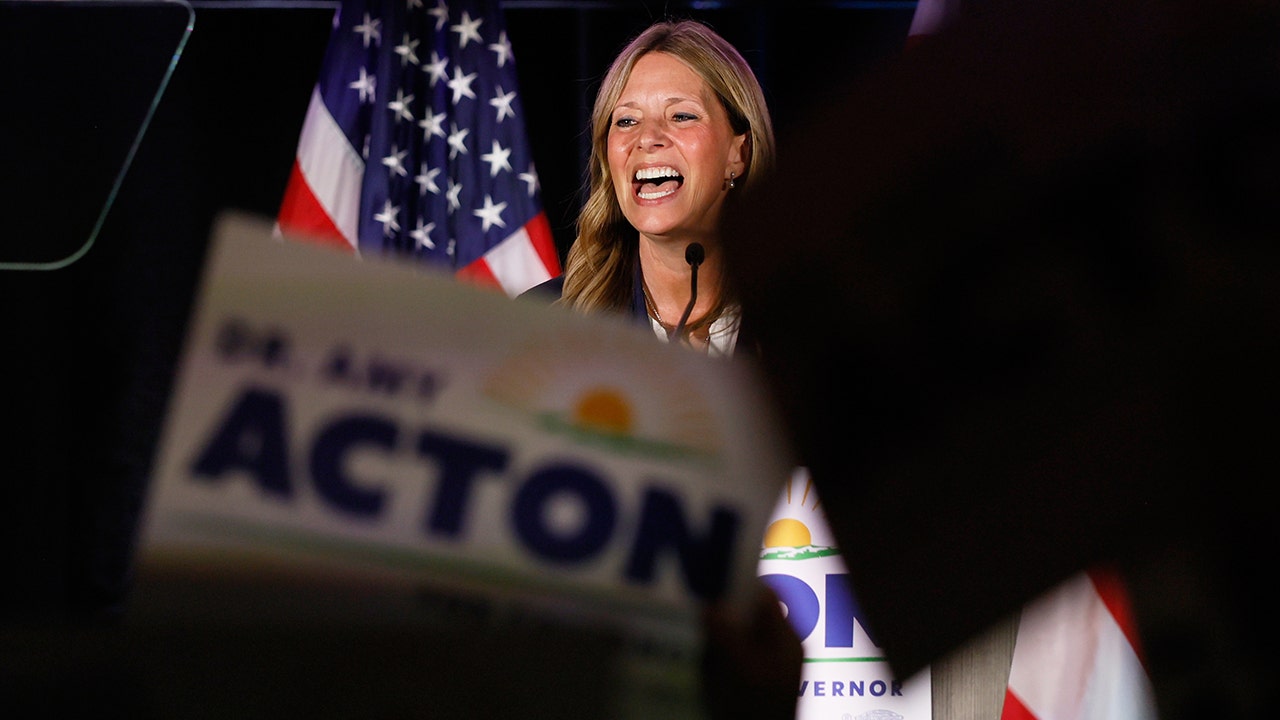
While Acton’s campaign did not immediately respond to subsequent requests for comment regarding the physical altercation, the episode immediately circulated across social media platforms, fueling broader debates about media accessibility and campaign security.
The Debate Stalemate and Media Strategy
The primary catalyst for the mounting friction remains Acton’s steadfast refusal to share a debate stage with Ramaswamy. Earlier this month, Ramaswamy formally accepted an invitation from CNN to participate in a statewide televised debate, a challenge that Acton’s campaign promptly rejected.
For months, the Acton camp has defended this decision by arguing that engaging in a debate would provide an unwarranted platform to an opponent they characterize as dishonest. In a strongly worded statement released on September 2, an Acton campaign spokesperson articulated the rationale behind bypassing the event:
"Dr. Acton’s focus is on talking with Ohioans, not platforming a scam artist who spreads baseless lies about her and her family, uses AI to falsely paint her as someone with a substance abuse problem, and shames Dr. Acton for being sexually abused as a child while Vivek stands with predators and abusers."
This rationale reflects a deliberate tactical choice by the Democratic campaign. Rather than entering a conventional debate format where opponents trade barbs on economic and administrative policy, Acton has chosen to focus on localized, direct-to-voter town halls and retail campaigning. Her strategists contend that participating in debates would legitimize attacks that they view as crossing ethical boundaries.
Conversely, Ramaswamy’s campaign has weaponized this strategy, framing Acton’s absence from the debate stage as a sign of weakness and an evasion of accountability. Ramaswamy has consistently maintained that Ohio voters deserve a transparent, side-by-side comparison of the candidates’ visions for the state. Following the Saturday incident, Ramaswamy took to social media to criticize his opponent’s record and her reluctance to answer unscripted questions from the public.
"It’s too bad for Ohio voters that Acton won’t take voter questions, won’t debate, quit after failing as Ohio’s health director, and has some serious issues now surfaced in multiple police reports," Ramaswamy posted.
Chronology of a High-Stakes Gubernatorial Race
To understand the intense animosity defining the current phase of the Ohio race, it is necessary to examine the timeline of key events leading up to the November 3 general election:
- May 5, 2026: Dr. Amy Acton secures the Democratic nomination for governor during the primary election night event in Columbus, Ohio, positioning herself as a unifying figure with extensive public health experience.
- February 25, 2025: Vivek Ramaswamy officially kicks off his Republican gubernatorial bid with a major rally at the Glass City Center in Toledo, Ohio, quickly establishing a formidable financial advantage.
- Early 2026: Ramaswamy shatters state fundraising records by injecting $25 million of his own personal capital into his campaign, pushing his total war chest past the $50 million mark.
- September 2026: Debate negotiations break down. After Ramaswamy accepts a CNN-hosted debate, the Acton campaign officially declines, citing concerns over personal attacks and the use of deceptive campaign materials.
- Late September 2026: A confrontation occurs in Harrison, Ohio, when a conservative activist corners Acton regarding her debate boycott, resulting in a physical scuffle with campaign staff.
Underlying Controversies: Public Health Legacy and Personal Scrutiny
The bitterness of the 2026 Ohio gubernatorial race is deeply rooted in the divergent professional backgrounds of the candidates and a series of explosive personal and political controversies.
Dr. Amy Acton first entered the public consciousness as the director of the Ohio Department of Health during the onset of the COVID-19 pandemic. Initially praised for her data-driven approach and calm demeanor during daily briefings alongside Republican Governor Mike DeWine, Acton later became a polarizing figure among conservative voters. Her tenure was marked by strict mitigation measures, business closures, and mask mandates that sparked fierce protests from anti-lockdown groups. Ultimately, she resigned from her post in June 2020 amid intense political pressure and security concerns.
In the current election cycle, the Republican apparatus has seized upon her health department record, while also injecting personal matters into the public discourse. Attacks from pro-Ramaswamy circles have highlighted a 2019 domestic dispute involving Acton while she was intoxicated, details of which emerged from police records. Furthermore, the campaign has been roiled by the introduction of advanced artificial intelligence in political advertising. Critics point to AI-generated commercials distributed by conservative groups that manipulated digital imagery, including altering a car’s license plate to feature a derogatory label referencing her past.
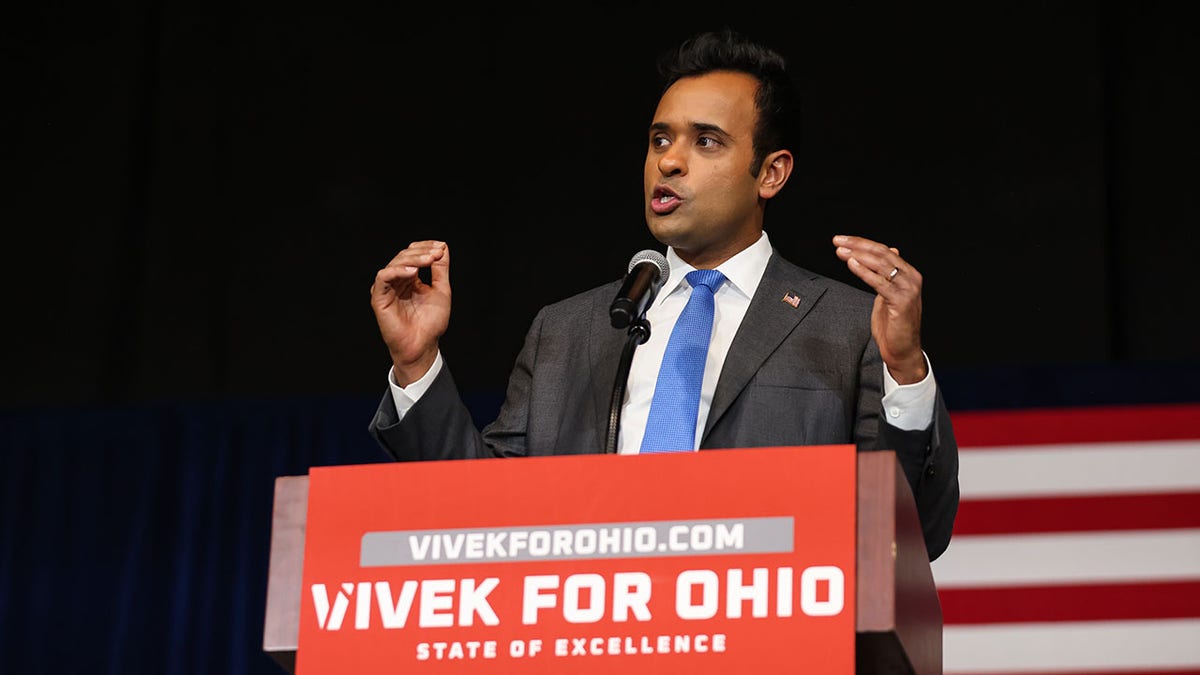
At the same time, Acton’s allies have targeted Ramaswamy, a former pharmaceutical executive and federal presidential candidate, pointing to his own controversial statements and positions on national issues as disqualifying for state-level executive office.
Implications for the General Election
As Ohio voters prepare to head to the polls on November 3, the race serves as a bellwether for the shifting dynamics of modern American political campaigns, where digital warfare, artificial intelligence, and intense personal animosity frequently overshadow traditional policy discussions.
Political analysts suggest that Acton’s strategy of avoiding joint appearances may insulate her from direct confrontations with a seasoned debater like Ramaswamy, but it also carries inherent risks. By declining debates, she hands her opponent a persistent narrative regarding accountability and transparency, which Republicans are leveraging in suburban and rural media markets across the state.
Meanwhile, Ramaswamy’s unprecedented financial investment—fueled by tens of millions of dollars of his own wealth—has allowed his campaign to saturate television and digital platforms with ads highlighting Acton’s public health record and recent controversies.
With both camps entrenched in their respective strategies, the final weeks of the election cycle promise further polarization. Whether the debate standoff and the recent street-level confrontations will ultimately sway undecided voters in this critical Midwestern battleground remains one of the central questions of the 2026 midterm cycle.