New York Governor Kathy Hochul Signs Controversial Law Granting Attorney General Authority to Fine Groups Over Deceptive Union Communications

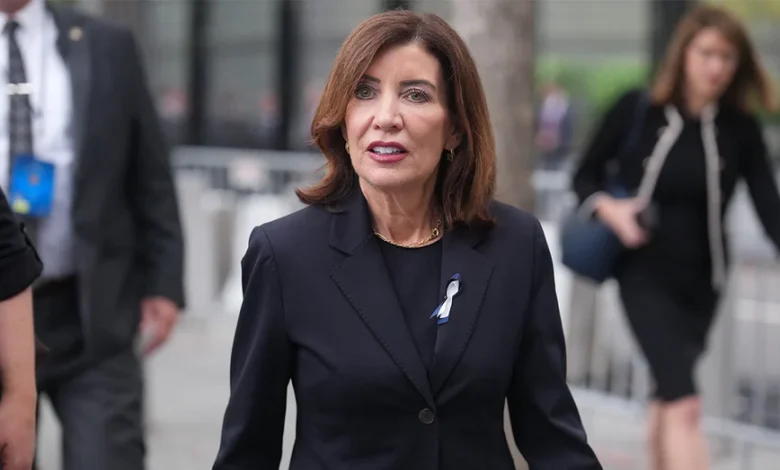
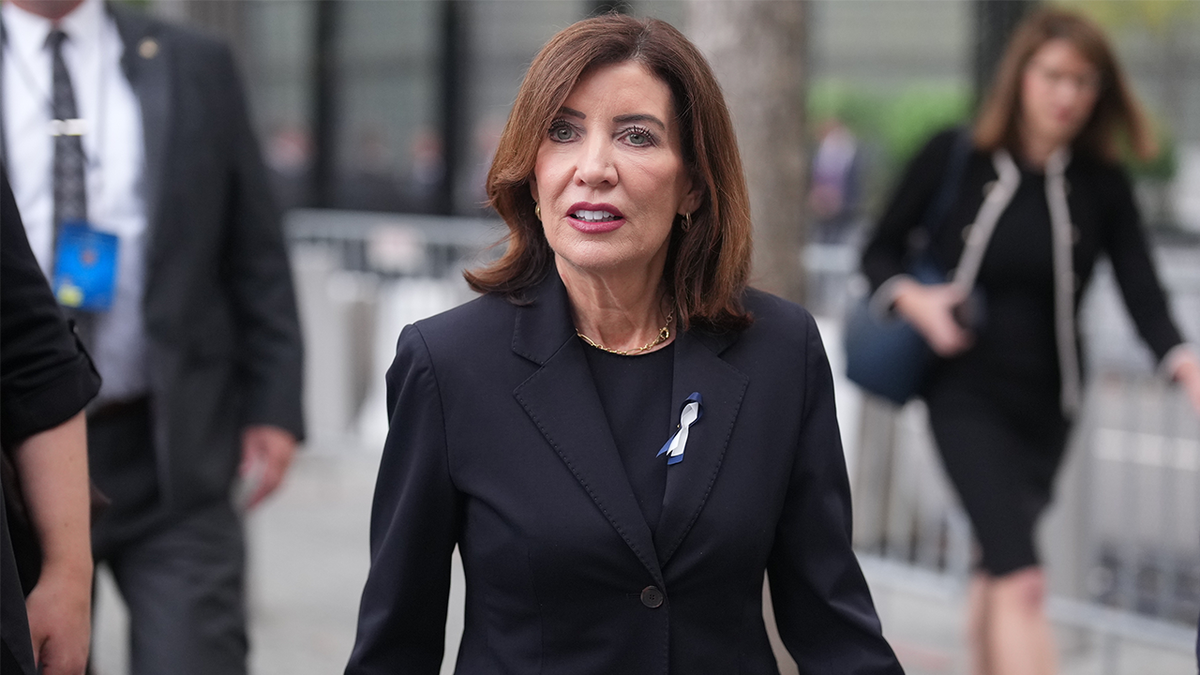
New York Governor Kathy Hochul recently signed a contentious piece of legislation that grants the state’s Democratic Attorney General, Letitia James, broad authority to investigate and penalize organizations accused of distributing deceptive communications that falsely appear to be authorized by labor unions. While proponents argue the measure is an essential safeguard to protect workers from fraudulent misrepresentation and predatory practices, critics—most notably conservative advocacy groups and anti-union organizations—have strongly condemned the statute as an unconstitutional assault on free speech engineered to protect powerful public-sector labor unions.
The newly enacted legislation takes effect immediately, equipping the Office of the Attorney General with the power to issue subpoenas, demand documentation, and initiate civil lawsuits against any entity—including out-of-state organizations—found to be utilizing misleading correspondence regarding union representation. Under the framework of the law, courts are authorized to levy financial penalties of up to $1,000 per individual violation. The debate surrounding this measure highlights a deeply polarized legal and political landscape concerning public-sector employment, the First Amendment, and the political influence wielded by organized labor within progressive states.
Background and Legislative Origins
The legislative push behind the bill is deeply intertwined with ongoing battles over public-sector union membership, which accelerated dramatically following the landmark 2018 United States Supreme Court ruling in Janus v. American Federation of State, County, and Municipal Employees (AFSCME). In that historic decision, the high court ruled by a 5-4 margin that public-sector employees cannot be compelled to pay agency fees or mandatory dues as a condition of employment. The court concluded that compelling non-members to financially support collective bargaining activities violates their First Amendment rights, as union negotiations frequently touch upon matters of intense public interest and political debate.
In the wake of the Janus ruling, several conservative and libertarian non-profit organizations launched aggressive informational campaigns targeting public employees—such as teachers, civil servants, and municipal workers—to inform them of their legal right to opt out of union membership and cease paying dues. Among the most active of these groups is the Freedom Foundation, a Washington-state-based think tank that has actively campaigned against public-sector unions across the Pacific Northwest and the Northeast.
According to organizational data, the Freedom Foundation has successfully assisted nearly 7,500 New York public employees in canceling their union memberships through direct mail campaigns, digital outreach, and informational resources, with more than 1,400 cancellations recorded in the preceding year alone. Labor leaders and union representatives have long argued that these external groups employ aggressive, confusing, and deceptive tactics designed to mimic official union correspondence, thereby misleading workers into believing that opting out is mandated by external legal entities or that the outreach originates from union leadership itself.
Proponents Argue for Worker Protection and Fraud Prevention
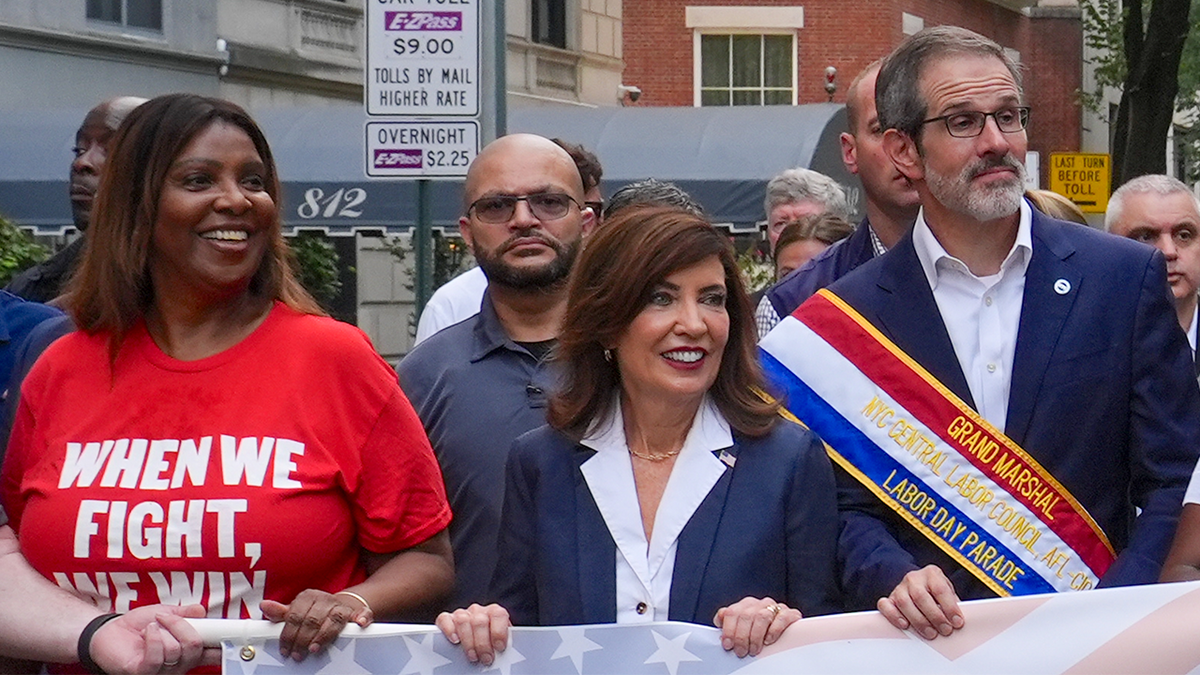
Supporters of the legislation maintain that the new law is a necessary measure designed to protect workers from bad-faith actors attempting to manipulate them out of their collective bargaining benefits. During a joint appearance alongside union leaders, Governor Hochul and Attorney General James framed the legislative package as part of a broader commitment to bolstering labor rights in New York, a state historically recognized as a cradle of the American labor movement.
Mario Cilento, president of the New York State American Federation of Labor and Congress of Industrial Organizations (NYS AFL-CIO), strongly praised the passage and signing of the bill, alongside two complementary labor-focused measures. Cilento emphasized that the legislation provides critical mechanisms for holding fraudulent actors accountable. He asserted that individuals and organizations who misrepresent themselves as union representatives or utilize deceptive letterheads to confuse workers undermine the integrity of the workplace.
Governor Hochul echoed these sentiments in public statements and social media posts, emphasizing her administration’s ongoing dedication to defending working families. "New York State gave birth to the labor movement," Hochul wrote on social media. "Over the last five years, I have continued that legacy by fiercely supporting the men and women of labor… Today marks a new day with even more protections, because I’ll never stop fighting for our workers."
Opposition Condemns the Law as Censorship and a Political Hit Job
Conversely, opponents of the legislation view the statute as a transparent and heavy-handed attempt to stifle political dissent and protect government-backed unions from losing revenue. Aaron Withe, Chief Executive Officer of the Freedom Foundation, launched a scathing critique of the governor and the state legislature, characterizing the statute as a targeted "hit job" orchestrated by union bosses terrified of declining membership numbers.
"This law isn’t about protecting anyone," Withe stated. "It exists because government unions in New York are terrified of an inconvenient fact: when public employees learn they don’t have to pay union dues, a lot of them stop. So instead of making their case to their own members, union bosses ran to their friends in the legislature and got them to write a law that makes speech illegal."
Withe argued that the outreach conducted by the Freedom Foundation strictly adheres to the parameters established by the Janus decision, focusing exclusively on educating public workers about constitutional rights they already possess. He contended that granting the attorney general the discretion to penalize external organizations based on subjective interpretations of what constitutes an "impersonation" creates a chilling effect on political speech. Furthermore, Withe noted that the New York statute appears to be modeled after similar legislation enacted in Oregon, which is currently facing ongoing constitutional challenges in the federal court system. The Freedom Foundation has indicated that it intends to mount a similar legal challenge in federal court to block the enforcement of New York’s new statute on First Amendment grounds.
Broader National Implications and Political Reactions
The legislative action in New York has drawn intense scrutiny from political figures outside the state, highlighting the national significance of local labor disputes. Ryan Walters, former superintendent of Oklahoma public schools and CEO of the Freedom Foundation’s education arm, the Teacher Freedom Alliance, offered a stark assessment of the law’s broader implications.
Walters labeled the legislation as an instance of "pure censorship and targeting of political opponents by Democrats protecting their union bosses." He warned that New York’s policy could serve as a legislative blueprint for other progressive states seeking to curb the influence of school choice and anti-union advocacy organizations.
"This is such a canary in the coal mine moment where if New York is allowed to do this—an openly socialist mayor, a governor operating as a tyrant doing the behests of the teachers’ unions—it’s going to go on across the country, and our schools will not be able to improve in that kind of environment," Walters remarked. He further contended that the dynamic underscores the reliance of the Democratic Party on public-sector union infrastructure for political mobilization and electoral support.
Legal Analysis and Expected Challenges
Constitutional law experts suggest that the newly minted New York law will face immediate and rigorous judicial scrutiny regarding its compatibility with the First Amendment. While states possess a legitimate interest in preventing consumer fraud and deceptive trade practices, regulations that restrict speech based on content or speaker identity—particularly in the context of political advocacy and labor relations—must satisfy strict scrutiny standards under established constitutional jurisprudence.
Legal analysts point out that a central point of contention in upcoming litigation will likely center on the statutory definition of "deceptive communications." Plaintiffs are expected to argue that the law provides overly broad discretion to state enforcement agencies, creating an environment where non-profit organizations engaging in core protected speech could face crippling investigations and financial penalties for criticizing public-sector institutions. Conversely, state attorneys are expected to defend the statute as a narrow, content-neutral consumer protection measure designed exclusively to prevent fraudulent impersonation and material misrepresentation in labor relations.
As the legal battles take shape, the enactment of the law underscores the enduring volatility of the intersection between labor policy, constitutional rights, and partisan politics in the United States. With both labor unions and conservative policy organizations digging in for prolonged courtroom confrontations, the ultimate fate of New York’s statute may carry profound ramifications for the future of public-sector organizing and political advocacy nationwide.