Congress Grapples with Soaring U.S.-Iran War Costs Amid Intensifying Conflict and Contentious Funding Battle

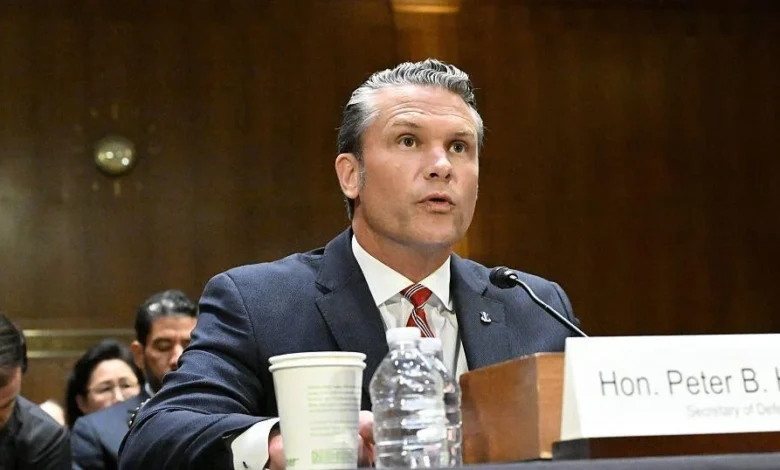
Washington, D.C. — Defense Secretary Pete Hegseth faced a skeptical Senate Appropriations Committee on Tuesday, July 21, 2026, revealing that the U.S.-Iran conflict has already cost an estimated $37.5 billion, a figure projected through the end of the current fiscal year on September 30. His testimony came as the Trump administration urgently pressed lawmakers to approve tens of billions in additional Pentagon funding to sustain ongoing military operations and replenish depleted resources, signaling a deepening financial commitment to a war that has escalated dramatically in recent weeks and drawn sharp criticism from Democrats and some Republicans alike.
The high-stakes hearing, which also featured Chairman of the Joint Chiefs of Staff Gen. Dan Caine, highlighted the administration’s request for a $67 billion supplemental package specifically earmarked for the Iran conflict. This substantial sum is in addition to a monumental $1.5 trillion proposed for the Pentagon’s overall budget in the upcoming fiscal year. The requests underscore the immense strain the protracted conflict is placing on national finances and military readiness, sparking a fierce debate on Capitol Hill over strategic objectives, fiscal responsibility, and the scope of executive war powers.
A Conflict Spiraling: The Recent Escalation
The committee session unfolded against a backdrop of rapidly deteriorating security in the Middle East. For over a week, the United States and Iran have engaged in a relentless exchange of nightly strikes, marking a definitive end to what had been a precarious and often-violated ceasefire. This renewed intensity follows a period of heightened tensions that saw Iran targeting several commercial vessels in the strategically vital Strait of Hormuz, disrupting global shipping lanes and further ratcheting up regional instability.
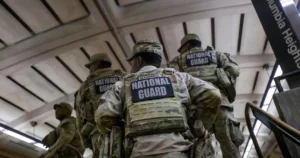
Tragically, the human cost of the conflict was acutely felt in the days leading up to the hearing. Just last Friday, two U.S. service members were killed in an Iranian attack on a base in Jordan. A third service member perished in Iraq during a controlled explosion aimed at destroying an Iranian drone. These casualties brought the total number of American military deaths since the war began in February to 17. Moreover, officials confirmed that nearly 100 American service members have sustained injuries this month alone, victims of multiple Iranian strikes on U.S. and allied bases across the Middle East. Senator Susan Collins (R-ME), the committee chair, opened the hearing by solemnly recognizing these sacrifices, stating that the fallen "made the ultimate sacrifice while serving our nation." General Caine echoed this sentiment, honoring the three service members killed over the weekend before framing the funding request as a critical response to escalating global threats.
The Administration’s Urgent Plea for Funding
Defense Secretary Hegseth, in his opening remarks, articulated the administration’s strategic rationale for the vast funding request, emphasizing the need to bolster the nation’s defense capabilities. "Rest assured that every dollar appropriated to the Department of War will be focused on building the lethality of our joint force, and reinforcing peace through strength," Hegseth asserted, though he notably avoided direct mention of Iran in his initial statement. He later clarified that the supplemental request included $21 billion specifically for readiness, which would encompass replacing "much of the equipment utilized during recent operations" – a clear reference to the matériel expended in the ongoing fight against Iran.
General Caine further elaborated on the necessity of the funds, painting a picture of a world rife with military challenges. "I’ve come to you today to request the necessary funds while in the window of opportunity, while time is still on our side," Caine told senators, citing a "global list of military challenges" spanning the Middle East, Europe, and Asia. This broad framing suggests the administration views the Iran conflict not in isolation, but as part of a larger geopolitical struggle requiring robust and sustained military investment.
The $67 billion supplemental request, a refined version of an earlier $88 billion package, outlines specific allocations: $21 billion for munitions, $17.3 billion for operational costs, and $12.1 billion for classified programs. These figures indicate a comprehensive plan to not only sustain current operations but also to fortify the military’s long-term capacity. Beyond the war-related expenses, the administration’s broader legislative package also included requests for funds to combat an Ebola outbreak in African countries and $11.1 billion for farm aid, with Agriculture Secretary Brooke Rollins also present to advocate for these additional priorities. The inclusion of these disparate items in a single, large reconciliation bill has added another layer of complexity to the legislative process.
Democrats Challenge War Strategy and Fiscal Prudence
While the administration underscored the urgency of its funding demands, Senate Democrats vehemently challenged the Trump administration’s overarching Iran strategy and the spiraling costs of the conflict. Senator Patty Murray (D-WA), the ranking Democrat on the committee, opened her statement by highlighting the financial burden on American taxpayers and expressing deep concern that the conflict was "spiraling out of control again."
"My colleagues and I cannot and will not support rubber-stamping a request to bankroll this war and whatever other misadventures Trump wants to get us into next," Murray declared, encapsulating the sentiment of many on her side of the aisle. "The American people want to see a quick and strategic end to this war, not $70 billion of their tax dollars sent to keep it going."
Under questioning from Senator Richard Durbin (D-IL), Hegseth confirmed the $37.5 billion cost-to-date figure, noting that it includes projected expenses through September 30. This figure marks a significant increase from the approximately $29 billion reported by a Pentagon official in mid-May, underscoring the accelerating financial drain of the conflict. The lack of clarity regarding what specific costs are encompassed within this figure, particularly whether it includes repairs to U.S. bases damaged by Iranian attacks, further fueled Democratic scrutiny.
Democrats also questioned the administration’s success in achieving its stated objectives, particularly in light of recent Iranian successes. They pressed Hegseth on whether the U.S. had effectively decimated Iran’s conventional military capabilities and prevented it from rebuilding its nuclear program, especially after successful Iranian attacks on U.S. bases in Jordan and the Gulf region. Hegseth conceded that some of Iran’s ballistic missiles had survived U.S. bombing campaigns, largely due to their storage in deep underground facilities. However, he maintained that Iran’s military infrastructure had been severely degraded. "The Iranian defense industrial base is effectively gone," Hegseth asserted, "but they do have underground facilities because they’re the world’s leading state sponsor of terrorism, and they’ve spent 47 years trying to hide their missiles under mountains, just like their nuclear capabilities."
The hearing’s tension peaked during a heated exchange between Hegseth and Senator Gary Peters (D-MI). Peters characterized the administration’s Iran strategy as a "failure," remarks that Hegseth vehemently dismissed as "reckless," "irresponsible," and "smears" against service members. Raising his voice in response, Peters retorted, "You, sir, are the failure. Not the men and women who are on that frontline. … If there’s a lack of a winning strategy, they’re in harm’s way, their leaders have failed them." This acrimonious exchange laid bare the deep partisan divide over the conduct and efficacy of the war.
Bipartisan Doubts and the Reconciliation Conundrum
While the most vocal criticism came from Democrats, cracks in Republican unity on the Iran conflict have also emerged. Notably, Senator Collins, the committee chair, and Senator Lisa Murkowski (R-AK), also a member of the committee, have previously crossed the aisle to support resolutions aimed at reining in the President’s war powers in Iran. These votes signal a broader concern within Congress about the executive branch’s authority to commit military forces without explicit legislative approval, a debate that has historically transcended party lines.
Collins, despite chairing the hearing, acknowledged the "divergent views on this committee about the decision to use military force against Iran" in her opening statement. However, she underscored a foundational principle: "But irrespective of our differing views about the military operations, the fact remains that there are must-pay bills and urgent requirements facing the department that affect the ability of our troops to be well-trained, and more broadly, of the U.S. military to deter and defend against potential aggressors worldwide." She stressed that Congress "should not undermine the readiness of our service members for any engagement, or refuse to rebuild critical capabilities." Her position highlights the difficult balancing act between oversight and ensuring military readiness, even for operations with which some lawmakers disagree.
The path to securing the necessary funds is further complicated by the legislative strategy employed by House Republicans, who are pursuing the Pentagon funding through the budget reconciliation process. This parliamentary maneuver allows a party in power to pass measures with direct budgetary consequences with a simple majority, bypassing the typical 60-vote threshold in the Senate and thus avoiding a filibuster. However, this approach faces significant hurdles in the Senate.
Several Democrats at the hearing pointed out that the Pentagon still held approximately $75 billion from a previous reconciliation package, questioning the need for additional funds when prior appropriations remained unspent. Hegseth countered that 95% of that previous reconciliation money would be allocated by the end of September, suggesting a temporary lag rather than a fundamental inability to spend funds efficiently.
Despite the House’s strategy, key GOP senators, including Collins and Murkowski, have expressed skepticism about the prospects of a third reconciliation bill passing the Senate. Majority Leader John Thune (R-SD) has also remained noncommittal, recognizing the distinct challenges of the reconciliation process in the upper chamber. Thune noted last week that reconciliation "is very different in the House than it is in the Senate," emphasizing that Senate Republicans would demand input on the overall figures, potential offsets for the funds, and adherence to the Senate’s strict rules governing what can be included in a reconciliation package. "I’ve said all along… that it’s an option," Thune stated, "But it’s not, certainly, the only option." This indicates that the administration faces an uphill battle to secure the requested funding, even with a Republican-controlled Congress.
Broader Implications and the Road Ahead
The U.S.-Iran conflict and the associated funding debate carry significant implications beyond the immediate military theater. Economically, the soaring costs contribute to the national debt and place a considerable burden on American taxpayers. Geopolitically, the conflict risks further destabilizing the Middle East, potentially drawing in other regional actors and impacting global energy markets, especially given Iran’s threats in the Strait of Hormuz, a critical chokepoint for international oil shipments. The ongoing strikes and counter-strikes also raise questions about the long-term effectiveness of U.S. military engagement and its broader foreign policy objectives in the region.
Domestically, the war has become a potent political issue. With the 2026 midterm elections on the horizon, the administration’s handling of the conflict, its financial costs, and the human toll will undoubtedly be central to congressional campaigns. The bipartisan pushback on war powers and the funding mechanism underscores a growing unease across the political spectrum about the sustainability and strategic clarity of the current approach.
As the fiscal year draws to a close and the administration pushes for swift approval of its requests, Congress finds itself at a critical juncture. Lawmakers must weigh the urgent demands of military readiness against concerns about strategic efficacy, fiscal responsibility, and constitutional checks and balances. The debate over the U.S.-Iran war’s funding is not merely a budgetary exercise; it is a profound reflection of the nation’s strategic priorities, its willingness to bear the costs of prolonged conflict, and the enduring tension between executive action and legislative oversight in matters of war and peace. The outcome of this legislative battle will undoubtedly shape the trajectory of the conflict and the future of American foreign policy.