President Trump pivots to super PAC funding for national ad campaign following intense scrutiny over taxpayer expenditures

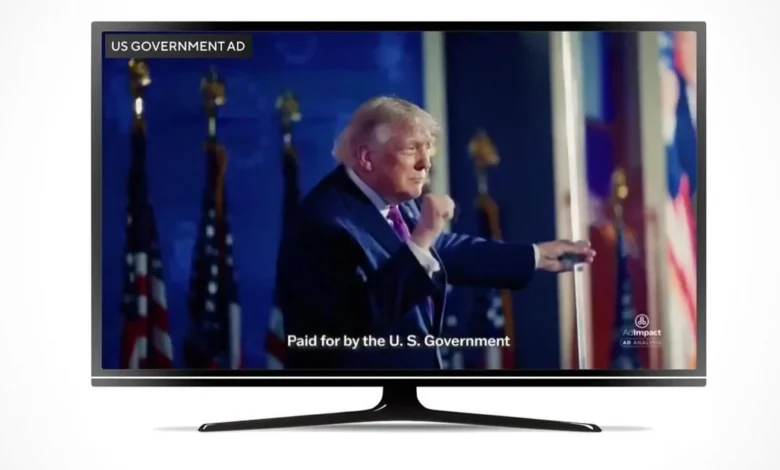
President Trump announced on Monday that he will transition the financing of a controversial national advertising campaign from federal coffers to his aligned super PAC, MAGA, Inc. This strategic pivot follows weeks of mounting bipartisan backlash regarding the use of public funds for messaging that critics argue resembles campaign-style promotion rather than objective public service announcements. The President, writing on his Truth Social platform, defended the initial use of government funds as a "standard" practice for positive promotion, while simultaneously confirming that future airings of the "Patriotic Ads" and related content will be funded by private donations raised by his political action committee.
The Controversy Behind the "Patriotic Ads"
The advertising campaign, which began appearing on major broadcast and cable networks late last month, drew immediate fire for the disclaimer emblazoned on the screen: "Paid for by the U.S. Government." The content of these spots varied, ranging from testimonials featuring the President himself to segments highlighting the U.S. capture of former Venezuelan President Nicolás Maduro.
For many observers, the inclusion of the President’s personal rhetoric—specifically his claims regarding the defeat of "communism, socialism, and Marxism"—blurred the lines between administrative communication and partisan advocacy. While the White House consistently maintained that the ads were educational and patriotic, the proximity to the November midterm elections amplified concerns among ethics watchdogs and lawmakers. The central issue remains the appropriation of funds meant for federal agency outreach for content that serves the President’s personal political narrative.
Chronology of Events
The escalation of this controversy can be traced back to mid-September, when federal contracting records first indicated a significant movement of funds.
- September 19, 2026: The White House Office of Management and Budget (OMB) reportedly authorized the Department of Homeland Security’s (DHS) Customs and Border Protection to allocate $20 million toward "OBBB Commemorative Events."
- September 20, 2026: DHS awarded a $20 million contract to the LMD Agency, specifically earmarked for a "National Media Campaign."
- Late September 2026: The advertisements began airing across national networks. The emergence of the "Paid for by the U.S. Government" tag triggered immediate inquiries from political analysts and federal oversight bodies.
- Early October 2026: Following a crescendo of criticism from both sides of the aisle, including formal letters from Senate Democrats and public rebukes from high-profile Republicans, the President announced the shift to MAGA, Inc. funding.
The Financial Discrepancies and Federal Oversight
The use of a $20 million DHS contract for media production has raised significant questions regarding the oversight of administrative spending. The LMD Agency, tasked with the "National Media Campaign," has become a focal point of investigations by appropriations committees. Legal scholars have pointed to the Anti-Deficiency Act and various statutes that prohibit the use of appropriated funds for "publicity or propaganda" purposes.
Under these regulations, federal agencies are restricted from engaging in activity that promotes the President’s personal image or partisan goals. The White House’s defense—that the ads lack a "call to action" and do not explicitly mention the President’s ballot status—has been met with skepticism by members of the Senate Appropriations Committee. Democrats argued in a September letter that the expenditure constitutes an egregious misuse of tax dollars, noting that the content mirrors the messaging found in campaign rallies rather than traditional agency outreach regarding border security or public health.
Bipartisan Pushback
While the criticism was initially led by Democratic lawmakers, the backlash expanded to include members of the President’s own party. The concern among GOP strategists is twofold: the moral optics of utilizing taxpayer money for self-promotion and the strategic implications of depleting federal budgets for activities that are traditionally funded by private campaign contributions.
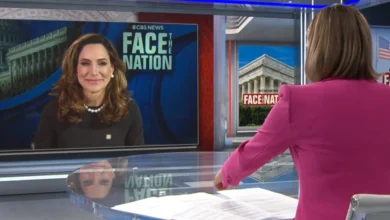
Senator John Kennedy, a Republican from Louisiana, expressed his disapproval during an appearance on "Face the Nation," stating clearly that public officials should not utilize government resources for private advertising. This sentiment reflects a broader anxiety within the Republican party regarding the potential for these ads to be used as legal leverage by opposition groups to file ethics complaints as the midterm cycle intensifies.
The Role of MAGA, Inc.
By shifting the financial burden to MAGA, Inc., the President is tapping into a substantial financial reserve. FEC filings reveal that the super PAC held more than $400 million at the end of August. The decision to redirect these funds to cover the ad campaign is significant, as it effectively removes that capital from potential use in other competitive battleground states.
Currently, MAGA, Inc. has been heavily involved in the Texas Senate race, where Attorney General Ken Paxton is engaged in a high-stakes contest against Democratic state lawmaker James Talarico. The group has already committed tens of millions of dollars to this specific race, signaling that the organization is prioritizing key legislative seats. The diversion of funds to maintain the national ad campaign, which was previously "free" to the campaign by virtue of being taxpayer-funded, represents a tangible cost to the President’s political operation.
Implications for Future Administrations
The resolution of this specific dispute through the shift to private funding does not necessarily settle the underlying legal questions regarding the use of executive branch resources. Legal experts suggest that this episode will likely serve as a case study for future congressional oversight committees.
If the government is allowed to produce "educational" content that features the image and voice of an incumbent president shortly before an election, it sets a precedent that could be exploited by future administrations of any political affiliation. The "educational" label, while technically defensible in a vacuum, faces a higher threshold of scrutiny when the content aligns so closely with the President’s political brand.
Furthermore, the involvement of the DHS in what effectively became a media blitz has raised questions about the mission creep of federal departments. Critics argue that the DHS budget should be reserved for the operational security of the nation’s borders and the management of customs, rather than the production of high-fidelity, politically charged television spots.
Looking Ahead
As the November midterms approach, the impact of this ad campaign remains to be seen. While the content of the ads—ranging from anti-communism messaging to the capture of Nicolás Maduro—is designed to energize the base, the controversy surrounding their funding may provide an additional talking point for opposition candidates.
The transition to MAGA, Inc. funding effectively ends the immediate legal threat regarding the misuse of taxpayer dollars, but the political fallout may persist. With $400 million in the bank, the President maintains the ability to continue these advertisements indefinitely, provided the super PAC remains willing to absorb the costs. Whether this strategy will prove effective in swaying undecided voters in key states, or whether the distraction of the funding controversy will undermine the message of the ads, remains a central question for political analysts in the final stretch of the election cycle.
As the situation evolves, the focus of both the media and legislative watchdogs will likely shift to the specific details of the initial DHS contract and whether any recovery of the spent taxpayer funds is possible. For now, the administration appears to have retreated from its initial position of using public funds, signaling a cautious approach to avoiding further ethical entanglement as the political landscape shifts toward the final vote.