Bannock County Stands at a Crossroads as Local Leaders Reconsider the Future of Renewable Energy Development

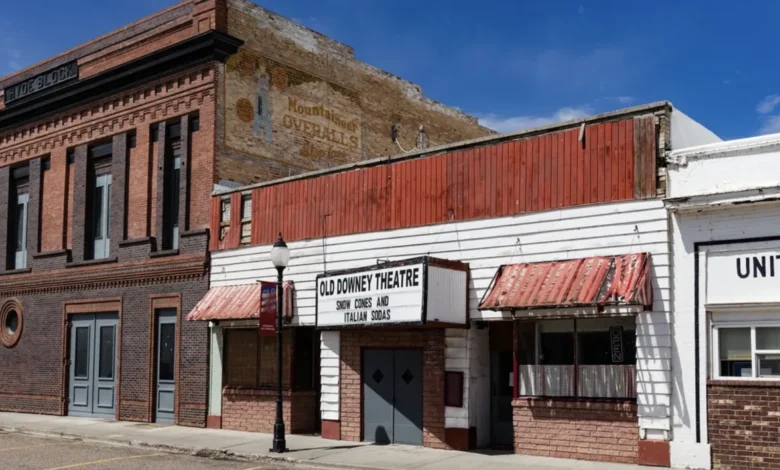
The debate over renewable energy in rural America has found a high-stakes epicenter in Bannock County, Idaho. For over two years, this region has been locked in a legislative and cultural standoff regarding the deployment of utility-scale solar and wind energy projects. Following a contentious 2024 vote that effectively barred such developments, the county commission is now poised to revisit its energy ordinance this fall. The proposed legislative shift, championed by Commission Chair Jeff Hough, seeks to replace the current moratorium with a comprehensive framework that would permit solar, wind, and nuclear energy, marking a potential turning point for a region struggling to balance economic preservation with the demands of a modernizing electrical grid.

The conflict in Bannock County is emblematic of a broader national trend. According to a joint analysis by the Daily Yonder and Canary Media—utilizing data from USA Today and the Sabin Center for Climate Change Law at Columbia University—nearly 25% of U.S. counties had implemented some form of moratorium or restriction on clean energy development by 2025, a sharp increase from 15% in 2023. Over 60% of the jurisdictions enacting these bans are classified as rural, highlighting a growing tension between traditional land-use values and the industrial requirements of the energy transition.
A Chronology of the Bannock County Moratorium

The roots of the current impasse trace back to the fall of 2023. Following a statewide conference of the Idaho Association of Counties in Boise, where the controversial 1-gigawatt Lava Ridge Wind Project dominated regional discussions, Commissioner Jeff Hough began to evaluate the legislative state of his own county. Concerned that developers might bypass local oversight, Hough spearheaded an effort to enact a temporary pause on large-scale energy projects. On October 12, 2023, the commission voted unanimously to implement a six-month moratorium.
The intention behind the moratorium was to provide the county with a window to craft regulatory guardrails. However, the measure galvanized a vocal segment of the local population. Led by residents like Rebecca Falcon and Dez Hauser, opposition groups organized to transform the temporary pause into a permanent fixture. By the time the commission held a pivotal public hearing in February 2024, the divide was clear. The subsequent March 2024 vote resulted in a 2-1 decision to uphold a ban on utility-scale renewables, with Hough casting the sole dissenting vote.

Since that time, the landscape of the debate has shifted. Hough has risen to the role of Commission Chair and has spent the intervening months advocating for a repeal of the ban. The upcoming fall vote will consider new language that explicitly permits renewable development while integrating provisions for nuclear energy, a sector that has recently gained significant traction in regional public opinion.
Economic Pressures and the Search for Viable Futures

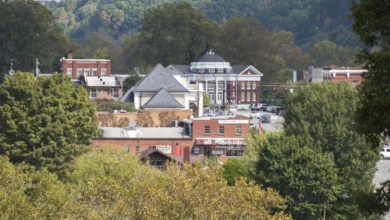
The motivation for reconsidering the ban is largely rooted in the stark economic realities facing rural Idaho. Bannock County, located north of Salt Lake City and west of the Teton Range, is strategically positioned near the Populus substation—a critical node in the Western electrical grid. Proximity to such infrastructure typically reduces transmission costs, making the county an attractive location for energy developers.
However, the local economy has experienced sluggish growth compared to the rest of the state. Traditional grain farming, once the backbone of the region, is increasingly hampered by the impacts of climate change, specifically persistent drought conditions and record-low snowfall. As small-scale family farms struggle to remain solvent, the loss of essential rural services—including pharmacies, grocery stores, and medical facilities—has accelerated.

Proponents of the repeal argue that renewable energy projects offer a necessary economic lifeline. In neighboring Power and Bingham counties, similar projects have generated hundreds of thousands of dollars in annual tax revenue. Farmers like Dale Lish and Lytton Bastian have viewed potential land leases as a means to ensure the multi-generational survival of their properties. For these landowners, the ability to lease "less productive" acreage for solar development provides a stable income stream that is four to five times higher than traditional wheat cultivation.
The Nuclear Alternative and Public Sentiment

While opposition to solar and wind remains intense among some residents, the sentiment toward nuclear energy is markedly different. A January 2026 county survey revealed that 90% of over 700 respondents held favorable views toward the nuclear industry. This shift is partially driven by the region’s proximity to the Idaho National Laboratory (INL), a leader in advanced nuclear research.
The prospect of small modular reactors (SMRs) and microreactors has provided common ground for those who previously stood on opposite sides of the solar debate. For critics like Rebecca Falcon, the high energy density of nuclear power makes it a more "efficient" use of land than the sprawling footprints required by solar arrays. However, energy analysts caution that the nuclear industry remains in its infancy in the U.S. With only two next-generation projects currently holding construction permits—TerraPower’s Kemmerer 1 in Wyoming and Kairos Power’s Hermes 2 in Tennessee—the timeline for commercial deployment remains uncertain, with engineering and supply chain challenges persisting.

Commissioner Hough acknowledges this reality, framing the integration of solar and wind as a necessary "bridge" to the eventual arrival of advanced nuclear technology. "Everybody’s claiming nuclear is the future, which it is, but nuclear is 10 years away," Hough noted. "You’ve got to have something to help get you there."
Implications of the Impasse

The implications of the upcoming vote extend far beyond the borders of Bannock County. Idaho Power, the state’s largest utility, projects a 1-gigawatt surge in electricity demand by 2030, a 26% increase from current levels. Regional energy experts argue that the county’s refusal to permit new generation facilities complicates the state’s ability to meet these demands.
Moreover, the regulatory environment is being shaped by concerns over fire safety and decommissioning. The proposed ordinance under consideration this fall includes stringent requirements for developers, including mandatory bonds for site restoration and provisions for funding local emergency services. These measures are designed to address the specific anxieties voiced by local fire departments and residents who fear that, without strict oversight, communities will be left to manage the risks and cleanup of aging infrastructure.

As the commission prepares for the final vote, the atmosphere remains charged. Commissioner Ernie Moser, who previously supported the 2024 ban, has indicated a softening of his stance, noting that his concerns regarding the industry are "not as big" as they were two years ago. Nevertheless, the divide between those prioritizing the preservation of the existing landscape and those seeking economic diversification through energy development persists.
The decision in Bannock County serves as a case study for the broader challenges of the American energy transition. It underscores the difficulty of reconciling local land-use autonomy with the national imperative for a reliable, decarbonized energy grid. For the residents of Downey and the surrounding communities, the vote will not merely determine the placement of panels or reactors; it will define the economic and social trajectory of their region for the next half-century. Whether the county chooses to remain a holdout or embrace a new energy identity remains to be seen, but the outcome will undoubtedly inform the strategies of counties across the country as they grapple with similar dilemmas.
Related posts: