Bannock County Idaho Faces Defining Moment as Commissioners Revisit Controversial Renewable Energy Ban

The political landscape of Bannock County, Idaho, has become a high-stakes arena for the national debate over land use, property rights, and the future of domestic energy production. Since March 2024, when a narrow 2–1 vote imposed a moratorium on utility-scale wind and solar developments, the region has been caught in a tug-of-war between proponents of economic diversification and those who fear that large-scale clean energy projects threaten the rural character and agricultural viability of their communities. As the county commission prepares to vote this fall on a new ordinance that could potentially reopen the door to solar, wind, and nuclear energy, the region serves as a microcosm for the challenges facing rural America in the transition to a modern power grid.

The genesis of the current conflict dates back to the fall of 2023, when regional anxiety regarding the massive Lava Ridge Wind Project in southern Idaho spilled over into local governance. While the Lava Ridge project was eventually canceled by the federal government in August 2025, the conversation it sparked prompted local leaders to consider how to protect their jurisdictions from perceived overreach by energy developers. Jeff Hough, who initially served as a commissioner during the 2023 discussions, spearheaded an effort to enact a temporary six-month moratorium on energy projects. His goal was not to ban development, but to implement a regulatory framework that would allow the county to manage the influx of energy applications responsibly.

However, the political climate shifted significantly during the months that followed. A grassroots movement, led by residents such as Rebecca Falcon, organized to push for a permanent ban. The debate reached a fever pitch in early 2024, culminating in a public hearing that was moved from the county courthouse to a high school auditorium to accommodate the hundreds of attendees. The sentiment expressed by many local landowners was one of deep skepticism toward the renewable industry, fueled by concerns over the aesthetic impact of industrial arrays, the potential for fire hazards associated with battery storage, and the long-term stewardship of agricultural land. The result was a successful push to maintain the moratorium, which effectively stalled several major projects, including the 300-megawatt Harmon Solar Project proposed by Balanced Rock Power.

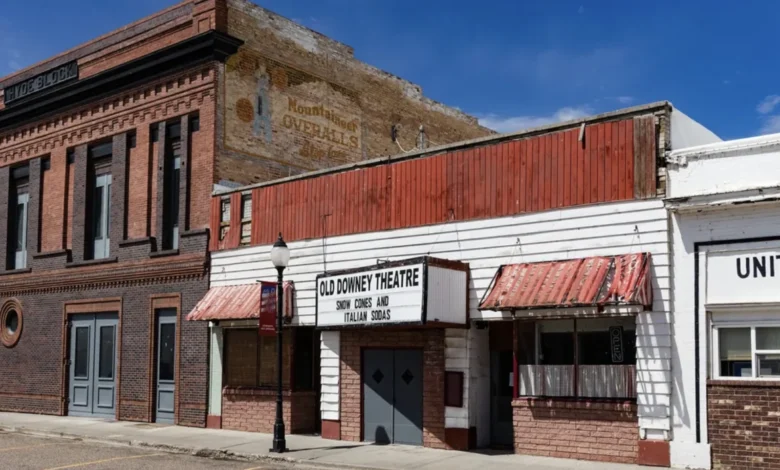
The economic and logistical landscape of Bannock County makes it a prime candidate for energy infrastructure. The presence of the Populus substation—a vital node for regional power transmission connecting Idaho, Utah, Wyoming, and the Pacific Northwest—creates a unique opportunity for developers to reduce costs by siting projects in close proximity to the grid. For farmers like Dale Lish and Lytton Bastian, who have faced the dual pressures of persistent, climate-driven drought and the erosion of traditional agricultural services in towns like Downey, the prospect of leasing land for energy projects offered a lifeline. Lish, who lost a contract with Hecate Energy due to the ban, noted that the per-acre income from solar could be four to five times higher than that of wheat production, providing the capital necessary to preserve family farms for future generations.

The debate is not merely about energy production; it is about the definition of property rights in rural communities. Commissioner Jeff Hough, now serving as chair, has become the primary advocate for reversing the ban, grounding his argument in the foundational principles of individual land rights. "We cannot deny the entire county the opportunity to exercise their property rights," Hough stated. His stance has created a distinct rift within the commission and the broader constituency. In the May 2026 primary, while Hough secured a victory overall, his opponent in the anti-solar stronghold of Downey captured a significant 70 percent of the vote, highlighting the persistent and intense opposition to large-scale development in the county’s southern reaches.

As Bannock County weighs its options, the national context remains stark. According to a joint analysis by the Daily Yonder and Canary Media, nearly one in four U.S. counties had implemented some form of ban, moratorium, or impediment to clean energy development by 2025, an increase from 15 percent in 2023. More than 60 percent of these restrictions occur in rural areas, suggesting that Bannock County is far from alone in its reluctance to integrate industrial-scale renewables into local landscapes. This trend presents a significant hurdle for regional utilities like Idaho Power, which projects a 1-gigawatt increase in electricity demand by 2030—a 26 percent rise that necessitates rapid infrastructure expansion to maintain grid reliability.

A notable shift in the local discourse has occurred with the growing interest in nuclear energy. Public sentiment in Bannock County appears significantly more receptive to nuclear power than to wind or solar, with a county survey finding that 90 percent of respondents held favorable views toward the nuclear industry. This alignment with the state’s proximity to the Idaho National Laboratory (INL) and regional interest in small modular reactors (SMRs) has provided a unique path forward for the commission. By including provisions for nuclear energy alongside wind and solar in the new draft ordinance, officials hope to build a broader consensus.

However, the promise of nuclear energy remains a long-term goal fraught with economic and technical uncertainties. While the Trump administration has moved to expedite microreactor test beds and private-public partnerships are utilizing artificial intelligence to accelerate development, the industry is still in its infancy. Only two next-generation projects in the United States have reached the construction phase, and the sector has faced historical setbacks, including the 2023 cancellation of the first fully licensed SMR project due to ballooning costs. For Commissioner Hough, the challenge is bridging the gap between the immediate need for energy development and the long-term potential of the nuclear sector. "Everybody is claiming nuclear is the future," Hough remarked, "but nuclear is 10 years away, so you have to have something to help get you there."

The upcoming vote on the new ordinance, which incorporates stringent requirements for decommissioning and developer-funded training for local fire departments, represents a compromise attempt. The draft stipulates that developers must submit detailed plans for removing all energy infrastructure at the end of a project’s 35-to-40-year lifecycle and provide bonds to guarantee the restoration of the land. These measures are designed to address the primary concerns of residents like Falcon and Hauser, who remain wary of the long-term environmental and financial liabilities.

The implications of the Bannock County decision extend well beyond its borders. If the county successfully implements a balanced framework that allows for responsible renewable development alongside advanced nuclear research, it could provide a roadmap for other rural communities currently stalled by gridlock. Conversely, if the ban remains in place, it could solidify a trend of rural isolation from the energy transition, potentially leading to lost tax revenues and missed opportunities for economic revitalization in regions suffering from the decline of traditional agriculture.

For commissioners like Ernie Moser, who previously supported the ban, the upcoming vote is a test of stewardship. Balancing the preservation of the landscape against the necessity of modernizing the energy grid requires navigating deep-seated local anxieties. As the county prepares for its decision this fall, the atmosphere remains one of careful deliberation. The resolution of this conflict will likely determine not only the immediate energy future of the region but also the long-term socioeconomic trajectory of Bannock County, as it navigates the tension between the heritage of the past and the demands of the future. The outcome remains uncertain, but the urgency of the decision has never been clearer.