Microplastics act like a Trojan horse delivering toxic pollutants and pathogens through our agricultural soil according to a major five-year study

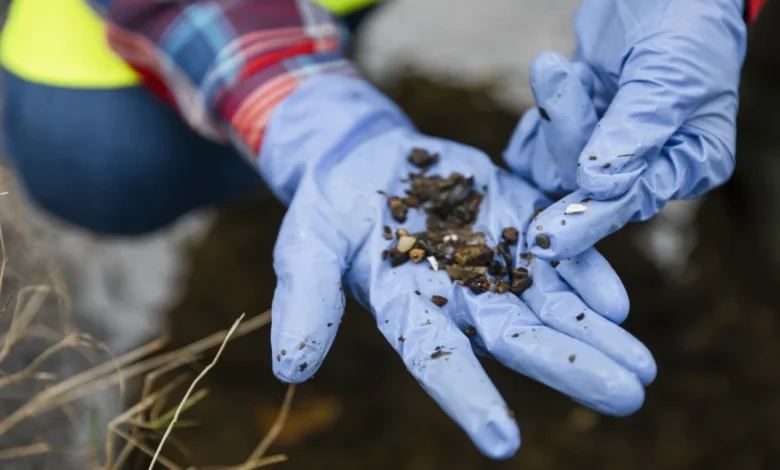
The integrity of global food systems faces an emerging and largely invisible threat as new research confirms that microplastics are not merely static contaminants in our soil, but active agents that facilitate the spread of hazardous chemicals and antibiotic-resistant bacteria. A comprehensive five-year, EU-funded research initiative—the Minagris project—has revealed that microplastics function as a "Trojan horse," hitchhiking into the environment and delivering concentrated doses of pesticides, heavy metals, and harmful microbes deep into the earth.
The study, which encompassed 227 agricultural fields across 11 European countries, found that 100% of the sampled sites contained microplastics. This pervasive contamination suggests that decades of industrial farming practices, coupled with the slow degradation of synthetic materials, have fundamentally altered the chemical and biological composition of the world’s most productive land.
A Chronology of Accumulation
The presence of plastic in agricultural soil is not a new phenomenon, but the scale of the crisis has only recently come into sharp focus. The following timeline outlines the progression of this environmental concern:
- 1950s–1980s: The widespread adoption of "plasticulture"—the use of plastic films for mulching, greenhouse coverings, and irrigation piping—begins to revolutionize agricultural efficiency. While crop yields increase, the long-term environmental cost of these materials is largely ignored.
- 2010s: Environmental scientists begin shifting their focus from oceanic plastic pollution to terrestrial ecosystems. Small-scale studies start to identify microplastics in wastewater sludge used as fertilizer.
- 2020–2021: The EU-funded Minagris project launches, bringing together an international consortium of researchers to quantify the extent of microplastic infiltration in European farmland.
- 2023–2024: Preliminary findings from the consortium begin to circulate in the scientific community, highlighting the interaction between plastic surfaces and agrochemicals.
- 2025–2026: Peer-reviewed data from 22 distinct studies under the Minagris umbrella are finalized, providing the most robust evidence to date that these particles act as vectors for ecological disruption.
The Plastisphere: A Microbial Hotspot
One of the most concerning findings of the research is the creation of the "plastisphere"—a unique, man-made microbial habitat that forms on the surface of plastic fragments. As plastics break down into smaller pieces, their surface-area-to-volume ratio increases, making them highly effective at adsorbing environmental pollutants.
Professor Edoardo Puglisi of the Catholic University of the Sacred Heart in Piacenza, Italy, notes that the smaller the plastic particle, the more potent it becomes as a vector. These fragments do not just sit in the dirt; they interact with existing soil stressors. Researchers observed that the plastisphere acts as a breeding ground for antibiotic-resistant genes. When combined with the chemical residues of pesticides, these surfaces amplify the resilience of harmful pathogens, potentially disrupting the delicate balance of the soil microbiome.
This interaction is particularly problematic because soil organisms, such as earthworms, are highly sensitive to these changes. Earthworms are the engineers of the soil; by consuming organic matter and churning the earth, they facilitate nutrient cycling and aeration. The Minagris study found that the presence of microplastics interferes with these critical biological processes, potentially lowering the long-term fertility of the land.
Supporting Data and the Myth of Biodegradability
For years, the agricultural industry has promoted "biodegradable" plastics as a panacea for the plastic waste crisis. However, the Minagris findings cast significant doubt on this solution. Data from the project suggest that many materials labeled as biodegradable do not break down into harmless organic matter under field conditions. Instead, they fragment into microplastics that remain in the soil for years, if not decades.
The research also highlighted the synergistic effect of pollution. A study conducted in Switzerland demonstrated that fields with high concentrations of tire-wear particles—which are washed into fields via irrigation or runoff—also contained the highest levels of toxic metals. When these pollutants occur simultaneously, their toxicity is often higher than the sum of their individual parts.
In laboratory settings, the impact on plant health was quantifiable and severe. Lettuce plants exposed to high concentrations of microplastics exhibited:
- Reduced leaf surface area.
- Decreased chlorophyll content, hindering the plant’s ability to photosynthesize.
- Lower overall biomass, suggesting potential long-term risks to global crop yields.
When researchers simulated drought conditions, the plants fared even worse, indicating that microplastic contamination leaves crops less resilient to climate change-induced water stress.
Official Perspectives and Regulatory Gaps
The scientific community and agricultural policymakers are currently grappling with how to address a pollutant that is, as researcher Esperanza Huerta Lwanga of Wageningen University put it, "practically impossible to remove" once it has fragmented into the ground.
The current regulatory framework is largely insufficient because it evaluates pollutants individually. Environmental agencies typically set safety limits for specific pesticides or heavy metals, but they rarely account for the way these substances "hitchhike" on plastic particles. The Minagris researchers argue that a paradigm shift is necessary: policy must begin to recognize plastic contamination as a central pillar of soil degradation.
Calls for reform are intensifying. Experts are now advocating for:
- Standardized Monitoring: A global protocol for measuring microplastic density in agricultural soil, which currently varies wildly between regions.
- Manufacturer Transparency: Mandatory disclosure of the chemical composition of agricultural plastics to allow for more accurate risk assessments.
- Comprehensive Risk Assessments: Future toxicity testing must include multi-stressor scenarios, evaluating how plastic interacts with pesticides, veterinary drugs, and climate-related stressors.
Broader Implications for Food Security
The implications of these findings extend far beyond the laboratory. Soil health is the foundation of the global food supply. If the soil’s ability to cycle nutrients is compromised, or if the microbiome is shifted toward a state that favors antibiotic-resistant pathogens, the long-term sustainability of agriculture is at risk.
Furthermore, there is a looming question regarding the translocation of these pollutants. If microplastics and their associated chemical loads are present in the soil, to what extent are they being absorbed by crops and subsequently entering the human food chain? While the Minagris project focused on the soil environment, the evidence suggests that the "Trojan horse" effect is a problem that will require urgent, systemic intervention.
"To protect long-term food production and soil health, policy must catch up," Lwanga stated in a recent press briefing. The research indicates that we are currently operating in a blind spot. While the industrial use of plastics provided the world with unprecedented agricultural output during the late 20th century, we are now beginning to pay the interest on that debt in the form of degraded land and altered ecosystems.
As the climate changes and the global population grows, the preservation of fertile, healthy soil has never been more critical. The findings from the Minagris project serve as a stern warning: the plastic era has left a permanent mark on the planet’s crust, and addressing this contamination will require a fundamental rethink of how we manage the materials we introduce into the earth that feeds us.
Related posts: