California Environmental Reparations Bill Moves to Direct Cash Payments to Impacted Inglewood Families

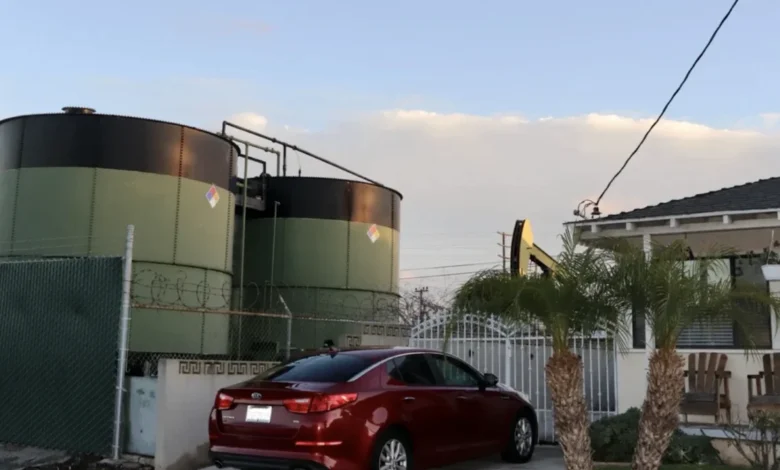
Governor Gavin Newsom is poised to sign landmark legislation that marks a significant shift in how the state addresses the legacy of industrial pollution in marginalized communities. Assembly Bill 1661, which recently cleared the California legislature, directs $5 million in penalties collected from low-producing oil wells in the Inglewood area to be distributed as direct cash aid to 1,000 households that have suffered documented respiratory or reproductive health impacts. This initiative, spearheaded by Assemblymember Isaac G. Bryan, represents one of the most explicit attempts in the United States to utilize financial restitution—often described as "environmental reparations"—to address the generational health and economic burdens borne by residents living near fossil fuel extraction sites.
The legislation focuses on the neighborhoods surrounding the Inglewood Oil Field, a sprawling site that has operated for over a century. For decades, residents in predominantly Black communities such as Ladera Heights, Baldwin Hills, and Inglewood have lived in the shadow of oil pumpjacks. The initiative seeks to acknowledge that these residents have not only endured the daily physiological toll of breathing contaminated air but have also faced significant financial strain due to medical expenses and diminished property values associated with industrial proximity.
A Century of Industry and Inequity
The history of oil drilling in Los Angeles is inextricably linked to the history of urban development and racial segregation. Throughout the 20th century, the expansion of oil infrastructure frequently coincided with the establishment of Black residential areas. This pattern of land use, often facilitated by historical redlining, placed a disproportionate burden of toxic emissions on Black families.
Scientific studies have consistently established a correlation between proximity to oil and gas drilling and adverse health outcomes. Research from various academic and environmental health institutions has linked emissions from these sites—which include particulate matter, benzene, and hydrogen sulfide—to increased rates of asthma, cardiovascular disease, low birth weights, and various forms of cancer. For residents like Regina Martin, who grew up near the Inglewood field in the mid-20th century, the persistent odor of sulfur and the resulting health struggles were not viewed as an industrial injustice at the time, but as a normalized feature of daily life. It is only in recent decades that these personal experiences have been aggregated into a broader public health narrative, forcing policymakers to confront the systemic nature of the harm.
Chronology of the Legislative Effort
The path to AB 1661 is the result of years of grassroots organizing and legislative maneuvering. The current effort builds upon a foundation laid by Assemblymember Bryan’s previous legislative success, AB 2716, signed into law in 2024.
- 2024: Governor Newsom signs AB 2716, mandating the closure of the Inglewood Oil Field by 2030 and establishing a stringent penalty structure for low-producing wells. The law imposes a monthly fine of $10,000 per well on operators to discourage the continued use of inefficient, polluting infrastructure.
- Early 2026: Legislators and community advocates begin drafting frameworks for the "community repair and reinvestment fund," funded by the penalties generated under AB 2716.
- September 2026: AB 1661 passes the California legislature, formalizing the distribution of the $5 million fund toward direct cash assistance for affected households.
- October 2026 (Expected): Governor Newsom is expected to sign the bill into law, triggering the implementation phase managed by Los Angeles County.
Data and Scope of the Relief Program
The $5 million fund is structured to provide payments of up to $5,000 to each of the 1,000 qualifying households. While this amount is significant, it serves as a pilot program rather than a comprehensive settlement for the entire population living near the site. The 2.5-mile radius surrounding the Inglewood Oil Field encompasses tens of thousands of residents, making the selection of 1,000 households a complex logistical and ethical challenge for local authorities.
To ensure that the financial aid reaches the intended recipients without creating insurmountable barriers, advocates like Tianna Shaw-Wakeman of Black Women for Wellness have urged the state to adopt "self-attestation" models for eligibility. The concern is that traditional medical documentation requirements could disproportionately exclude low-income families who may lack consistent access to specialized healthcare or formal medical records confirming their conditions. By simplifying the application process, supporters hope to prevent the program from becoming another bureaucratic hurdle that alienates those it aims to support.
Official Responses and Political Implications
The bill has received broad support from environmental justice organizations, with roughly three dozen community groups coalescing behind the effort. There was no organized public opposition during the legislative hearings, signaling a shift in the political climate regarding industrial accountability.
Assemblymember Isaac G. Bryan has framed the legislation as a moral imperative. "The company has essentially just been extracting from the community with no investments in the community, no care in the community, and what feels like no regard at times for the broader community," Bryan stated. He emphasizes that this is not merely a charitable gesture but a long-overdue act of repair.
Furthermore, the state has bolstered the impact of this legislation by passing companion laws that shield these specific reparation payments from state taxation. Assemblymember Tina McKinnor, who introduced the tax-exemption legislation, noted that the state must ensure recipients derive the "full benefit" of the compensation, preventing the government from clawing back portions of the aid through tax liabilities.
Broader Impact: A National Model?
The California experiment is being closely watched by policymakers and activists across the United States. As cities and states grapple with the "just transition" away from fossil fuels, the question of what is owed to communities that served as the "sacrifice zones" for the energy industry is becoming increasingly central to climate policy.
If successful, the Inglewood model could provide a blueprint for other states to hold corporations accountable for the long-term health and economic damages caused by industrial sites. However, experts warn that cash payments, while helpful, are only one component of a necessary structural shift.
Addressing the Risks of Gentrification
A critical point of concern for community advocates is the potential for these environmental improvements—and the closure of oil fields—to trigger rapid gentrification. As the industrial machinery is removed and the land is remediated, property values in neighborhoods like Inglewood are expected to rise. There is a palpable fear that the very families who have suffered the most from the pollution could be priced out of their homes before they can enjoy the benefits of a cleaner environment.
"We can’t replace toxic oil extraction with gentrification," says Shaw-Wakeman. She emphasizes that the fight against pollution is intrinsically linked to the fight for housing stability. Moving forward, the success of the Inglewood initiative will be judged not only by the distribution of the $5 million fund but by whether the state can implement policies that protect long-term residents from displacement as the area undergoes transition.
Ultimately, AB 1661 serves as a test case for whether the government is prepared to move beyond the traditional regulatory framework of "preventing future harm" and into a more proactive role of "repairing past harm." While the 1,000 households represent only a fraction of those impacted, the precedent being set in California could redefine the social contract between industrial operators, the state, and the communities that host them.
Related posts: