The Legal Showdown Over Climate Superfund Laws: States Versus Big Oil in a High-Stakes Constitutional Battle

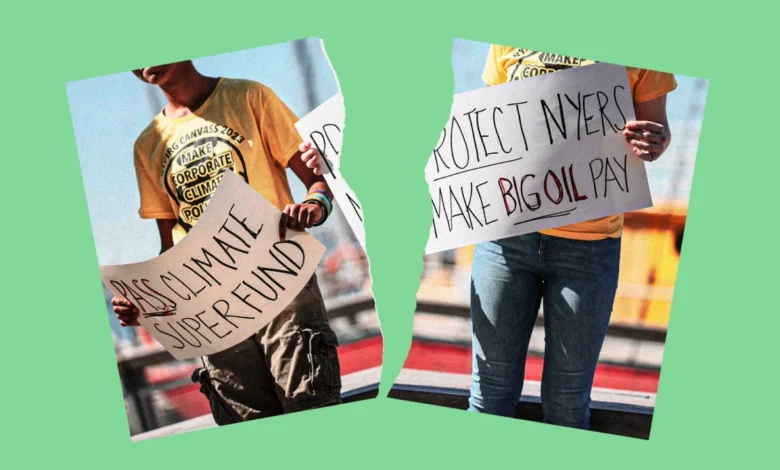
On the fourth day of New York’s annual Climate Week, a significant judicial development has reshaped the landscape of environmental litigation. Federal Judge P. Kevin Castel issued a ruling striking down New York’s Climate Change Superfund Act, a landmark piece of legislation designed to hold major fossil fuel companies financially liable for the costs of climate-related infrastructure damage. The decision represents a substantial victory for the Trump administration and a coalition of industry stakeholders, asserting that state-level attempts to regulate global emissions through financial liability overstep constitutional boundaries.
This ruling, which follows a parallel decision by Judge Brenda Sannes just weeks prior, centers on the principle of federal preemption. According to the court, the New York statute interferes with the federal government’s authority under the Clean Air Act and its exclusive power to manage foreign affairs. By attempting to impose state-specific financial penalties on multinational corporations for their historical global carbon footprints, the law was deemed an unconstitutional intrusion into federal jurisdiction.
A Legislative Strategy Under Fire
The New York law, enacted in 2024, was envisioned as a state-level answer to the federal government’s perceived inaction on climate regulation. Drawing inspiration from the federal Comprehensive Environmental Response, Compensation, and Liability Act (CERCLA)—the 1980s-era "Superfund" program that required companies to pay for the cleanup of toxic waste sites—New York legislators sought to apply a "polluter pays" framework to the climate crisis. The bill would have compelled fossil fuel companies to pay $75 billion over a 25-year period to support climate adaptation, grid resiliency, and disaster recovery.
Since the introduction of the New York bill in 2023, the strategy has gained traction in other Democratic-leaning states. Policymakers in Minnesota, Washington, Connecticut, and Vermont have all explored or enacted similar mechanisms, framing them as essential tools to manage the ballooning costs of extreme weather. However, the recent federal court decisions have cast a long shadow over these initiatives, providing a legal blueprint for industry groups and the Department of Justice to challenge similar measures nationwide.
The Financial Burden of Climate Change
The impetus for these laws is rooted in the escalating economic impact of climate-driven disasters. According to data tracked by Climate Central—which assumed stewardship of the Billion-Dollar Weather and Climate Disasters database following its closure by the Trump administration—the frequency of high-cost weather events has risen sharply. Minnesota alone has recorded 62 disaster events costing more than $1 billion between 1980 and 2024.
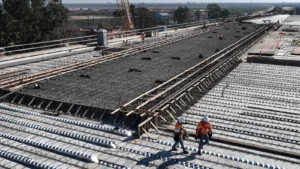
State Representative Athena Hollins, a deputy floor leader for Minnesota’s Democratic-Farmer-Labor Party, has been a vocal proponent of state-level action. She estimates that Minnesota could face $20 billion in climate-related infrastructure costs by 2040—a figure equivalent to roughly one-third of the state’s current annual budget. For proponents like Hollins, the legal debate is fundamentally a question of equity: whether the financial burden of repairing roads, bridges, and power grids should fall on taxpayers or on the entities whose business models are scientifically linked to the rise in greenhouse gas concentrations.
A Nationwide Patchwork of Legal Battles
The legal landscape remains fragmented. While the New York and Vermont rulings provide a powerful argument for industry defense, legislators in states like California, Illinois, and Massachusetts continue to advance their own versions of the legislation.
Washington State, in particular, is attempting to synthesize its existing environmental framework to mitigate legal risks. Representative Shaun Scott, who spearheaded the state’s Wildfire Alleviation Support Act—which levies fees on data centers to fund wildfire resilience—views the New York ruling as a "silver lining." By observing where the New York law encountered "landmines," Washington lawmakers hope to craft legislation that is more resilient to constitutional challenges.
In Connecticut, the debate is equally urgent. Following the devastation caused by Hurricane Sandy in 2012, which damaged approximately 3,000 homes in the state, lawmakers have proposed a cost-recovery program that would calculate a firm’s share of emissions since 1995. Representative Josh Elliott, a key proponent, maintains that the externalities of fossil fuel production must be internalized by the producers themselves to prevent a collapse in state tax bases.
The Federal Government’s Role
The U.S. Department of Justice (DOJ) has played a pivotal role in these proceedings, consistently opposing state-level liability laws. In 2025, the DOJ filed motions for summary judgment against both the New York and Vermont statutes. DOJ official Adam Gustafson has repeatedly emphasized the government’s stance: that the federal government, not the states, holds the mandate to regulate global pollution.
This position exists in a complex political context. While the EPA under the current administration has rescinded its own authority to regulate certain greenhouse gas emissions, the Justice Department remains highly active in defending the industry against state-led litigation. In a statement regarding the dismissal of a similar climate lawsuit in Michigan, the DOJ characterized such actions as "aggressively anti-energy" and vowed to protect "American energy from this sort of state overreach."
The Supreme Court and the Path Forward
As lower courts continue to interpret the scope of state authority, the focus of the environmental legal community has shifted toward the Supreme Court. The upcoming hearing on Suncor Energy v. Boulder—a case questioning whether a Colorado municipality can sue fossil fuel companies for climate damages—is widely expected to set a new precedent.
While the Suncor case is legally distinct from the Superfund statutes, the Supreme Court’s eventual ruling will likely dictate the boundaries of climate litigation for years to come. Legal scholars suggest that the Supreme Court’s reasoning will be "borrowed" by lower courts almost immediately to evaluate the constitutionality of the state-level Superfund bills.
The Future of the "Polluter Pays" Movement
Despite the setbacks in New York and the ongoing litigation in Vermont, proponents of these bills appear undeterred. A recent study by Brown University’s Climate and Development Lab highlighted a significant gap between public opinion and lobbying power: while public support for these measures often polls at a 3-to-1 ratio, the influence of industry lobbying remains a formidable hurdle for state legislatures.
For Vermont State Senator Anne Watson, whose state is currently defending its law against a challenge by the U.S. Chamber of Commerce and the American Petroleum Institute, the legal fight is a necessary evolution. "The costs of climate change were falling on residents, on business owners, and on municipalities that all simply could not afford it," she said.
As states wait for the next series of judicial rulings, the fundamental question remains unresolved. If federal courts continue to strike down state attempts to hold fossil fuel companies liable, the debate will likely shift back to the halls of Congress. However, with the current federal administration showing little interest in establishing a national climate liability framework, the tension between state governments and the energy industry is expected to persist, keeping this conflict at the center of American environmental law for the foreseeable future.
Related posts: