Attorney General Todd Blanche vows to release more 9/11 records while denying claims of protecting foreign governments

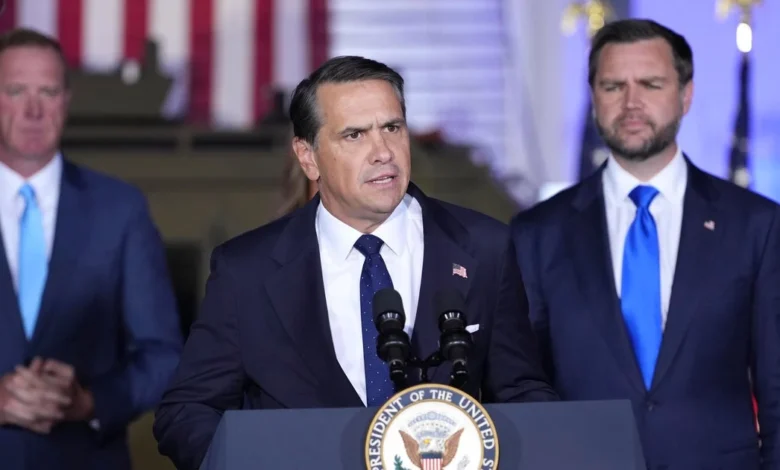
KANSAS CITY, Missouri — Attorney General Todd Blanche has issued a formal commitment that the United States government will continue the systematic declassification and release of records pertaining to the September 11, 2001, terrorist attacks. The pledge, made during an exclusive interview with CBS News on Monday, follows intense public pressure from families of the victims who, on the 25th anniversary of the tragedy, demanded greater transparency regarding potential Saudi Arabian links to the hijackers.
Despite persistent allegations from advocacy groups that successive presidential administrations have withheld evidence to shield the Kingdom of Saudi Arabia from legal accountability, Blanche categorically denied that national security classifications are being used as a diplomatic cover. "The one thing that we are not doing, we’re not protecting people," Blanche stated. "The reason that we’re not releasing documents has nothing to do with protecting any government or any entity. It’s just to protect genuine classified information."
A Quarter-Century of Seeking Accountability
The 25th anniversary of the attacks, commemorated this past Friday, served as a flashpoint for the families of the nearly 3,000 victims who perished at the World Trade Center, the Pentagon, and in a field in Shanksville, Pennsylvania. During the solemn reading of names at Ground Zero, Terry Strada, chair of Families United, delivered a searing indictment of Washington’s handling of the investigative files.
"For 25 years, administration after administration, including leaders in front of us here today, chose to protect the Saudis instead of standing with the 9/11 families," Strada said. Her appeal, directed toward Vice President JD Vance, underscored the perception of "one betrayal after another" regarding the government’s refusal to declassify specific intelligence reports that might clarify the degree of assistance provided to hijackers Nawaf al-Hazmi and Khalid al-Mihdhar upon their arrival in the United States.
The frustration is not merely rooted in rhetoric but in a long-standing federal lawsuit. Thousands of family members have pursued litigation against Saudi Arabia, arguing that individuals with ties to the Saudi government provided logistical support to the terrorists. While the Saudi government has consistently denied any state-sponsored involvement, recent judicial developments have bolstered the families’ arguments.
The Emerging Evidence: From San Diego to the Capitol
The legal battle has already compelled the release of evidence that was previously obscured from public view. One of the most significant figures in these proceedings is Omar al-Bayoumi, a Saudi national who facilitated housing and financial support for the hijackers in San Diego.
While al-Bayoumi long claimed his interaction with the hijackers was coincidental, investigative evidence has suggested a far more calculated involvement. Among the items seized from al-Bayoumi’s United Kingdom apartment in 2001 was a video recording of the U.S. Capitol’s entrances. The footage, which shows him pointing out the structure’s proximity to the Washington Monument, includes audio references to a "plan."
Furthermore, the discovery of an airplane sketch and a complex mathematical formula—seized from the same residence but left unanalyzed by the FBI for years—has become a cornerstone of the families’ claims. When finally presented to aviation experts, the formula was identified as a calculation for the rate of descent required to hit a target on the horizon. This evidence had remained buried in archives, unshared with field investigators or intelligence analysts, until the plaintiffs’ legal team brought it to light. The existence of this material has reignited the theory that the U.S. Capitol was the intended target for Flight 93, which ultimately crashed in Pennsylvania due to the heroic intervention of its passengers.
A Chronology of Investigation and Classification
To understand the current tension between the Department of Justice and the families, it is necessary to view the arc of the investigation:
- January 2000: Hijackers Nawaf al-Hazmi and Khalid al-Mihdhar arrive in California and are met by associates, including Omar al-Bayoumi.
- September 11, 2001: Terrorist attacks occur; immediate intelligence and law enforcement investigations begin.
- 2004: The 9/11 Commission Report is published. It finds no evidence of the Saudi government as an institution funding al-Qaeda, but acknowledges that Saudi-sponsored charities may have inadvertently or intentionally diverted funds to the organization.
- 2016: The "28 pages" of the 9/11 Commission Report, previously classified, are released, detailing potential ties between hijackers and Saudi government officials.
- August 2025: U.S. District Judge George B. Daniels rules that the lawsuit against Saudi Arabia can proceed, finding sufficient evidence regarding the actions of al-Bayoumi and Fahad al-Thumairy to justify a trial.
- September 2026: The CIA releases 71 President’s Daily Briefs, the largest single release of such material to date, ahead of the 25th anniversary.
The Scope of Recent Declassifications
On the eve of the 25th anniversary, CIA Director John Ratcliffe announced the declassification of 71 intelligence products dating from before the attacks through the day after. While these documents offer unprecedented insight into the intelligence community’s assessments of Osama bin Laden and early warnings regarding al-Qaeda’s capabilities, they do not satisfy the specific demands of the plaintiffs.
The families remain focused on the "missing" pieces—the tactical communication and financial records that detail the specific support network in California. Attorney General Blanche acknowledged that while the government has been judicious in its classification, there are instances where transparency has been improperly delayed.
"Sometimes there’s documents that are classified and they shouldn’t be," Blanche noted. "And so those are the ones that we’re going to release." However, he stopped short of providing a concrete timeline for the next tranche of documents, emphasizing that the Department of Justice must balance the public’s right to know with the protection of sensitive intelligence gathering methods that remain relevant today.
Broader Implications for U.S.-Saudi Relations
The legal and political ramifications of this ongoing declassification process extend far beyond the courtroom. For decades, the U.S.-Saudi relationship has been defined by a complex mixture of energy policy, regional security cooperation, and human rights concerns. The persistent allegations regarding the 9/11 attacks remain a significant irritant in bilateral ties.
The Biden-Trump transition, and the subsequent administration’s handling of the case, reflects a shift in the executive branch’s willingness to allow the judiciary to weigh evidence that may implicate a foreign state. By allowing the lawsuit to proceed past the motion-to-dismiss phase, the federal courts have effectively challenged the traditional doctrine of sovereign immunity in cases involving acts of terrorism.
For the victims’ families, the goal is not merely a financial judgment but a historical accounting. As the nephew of a victim killed in the World Trade Center told President Trump during the ceremony, "President Trump, you’re our last hope."
The Justice Department now faces the delicate task of maintaining the integrity of national security protocols while demonstrating a commitment to the closure that only full disclosure can provide. As Blanche concluded in his remarks to the families, the government’s pursuit of the truth is ongoing: "There’ll be more records coming out. And so, to the families that are still looking for answers, we are, too. And that’s what we’re going to deliver to them."
As the nation moves into the second quarter-century following the attacks, the intersection of legal discovery and declassification will likely remain a defining feature of the legacy of September 11. Whether the remaining documents will finally resolve the lingering questions regarding state-level support remains to be seen, but the pressure for transparency appears to be at an all-time high.