Former Army Secretary Dan Driscoll praises Ukraine military innovation in first public remarks since leaving the Trump administration

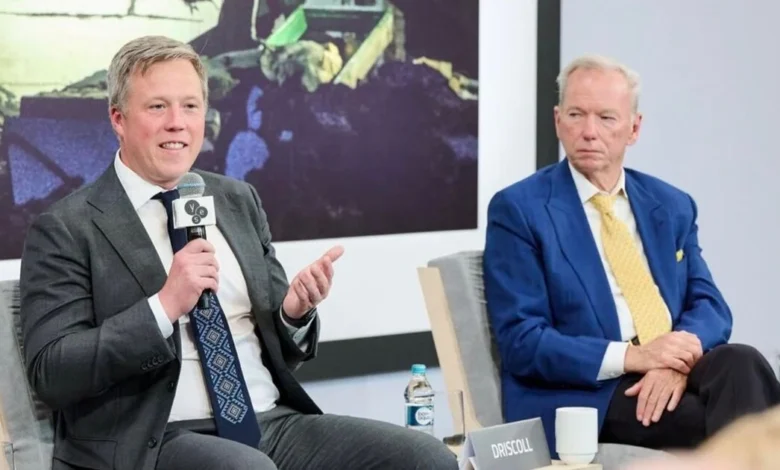
Kyiv — In a high-stakes appearance that underscored the deepening divide between traditional defense procurement and the rapid evolution of modern warfare, former U.S. Army Secretary Dan Driscoll delivered a pointed critique of global military inertia on Saturday. Speaking at the Yalta European Strategy (YES) forum in Kyiv, the former Pentagon official warned that the world’s most powerful militaries are failing to adapt to the velocity of contemporary combat, specifically highlighting Ukraine’s battlefield innovations as a template for future security.
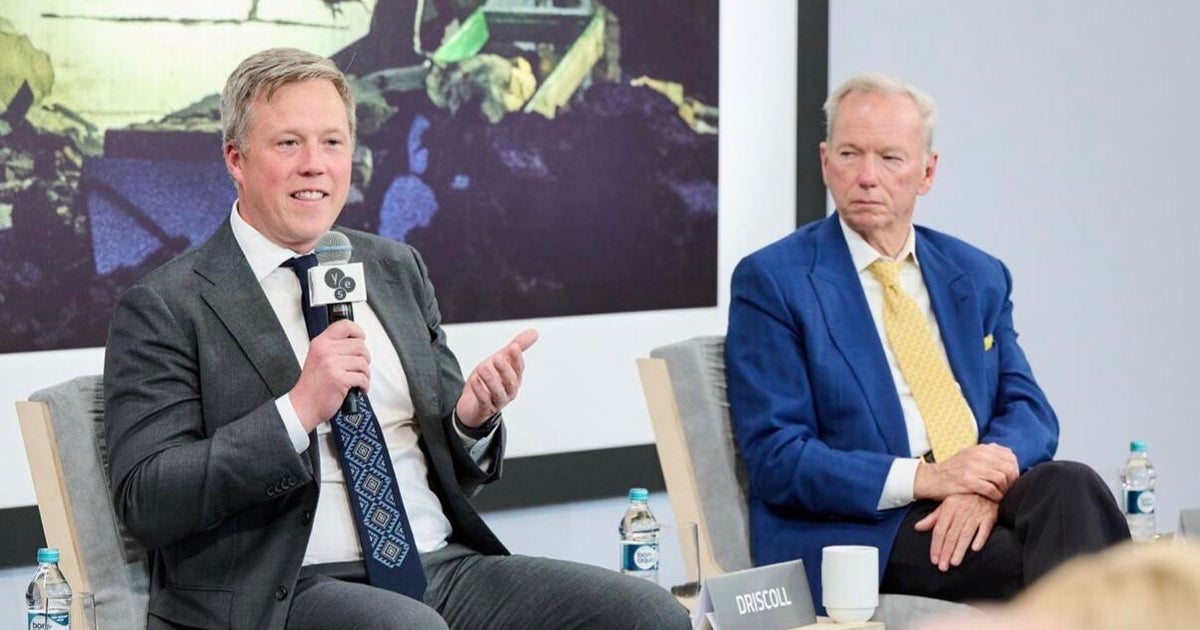
The conference, an annual gathering of international policymakers and security experts organized by the Victor Pinchuk Foundation, provided a dramatic backdrop for Driscoll’s first public remarks since his resignation from the Trump administration on August 31, 2026. Clad in a tie featuring a traditional Ukrainian pattern, Driscoll shared the stage with Eric Schmidt, former Google CEO and current head of the defense-tech firm Perennial Autonomy. The session, moderated by CNN’s Fareed Zakaria, served as a diagnostic on the current state of Western security, with a particular focus on how Ukraine’s decentralized, tech-forward approach has outperformed traditional bureaucratic military models.
The Delta Advantage: Software as a Weapon
At the heart of Driscoll’s argument was the success of "DELTA," a sophisticated Ukrainian software ecosystem that has redefined situational awareness. By aggregating data streams from diverse sources—ranging from tactical radars and frontline sensors to individual soldier feedback—DELTA provides a holistic, real-time map of the theater of operations.
Driscoll, a veteran of the Iraq War with a background in venture capital, asserted that the platform represents a leap forward that exceeds current U.S. military capabilities. "This is not merely about incremental upgrades to existing hardware," Driscoll explained. "It is an inflection point in warfare. We are seeing a shift where processing power, AI integration, and rapid data synthesis are proving more decisive than massed artillery alone."
The former Secretary posited that as Ukraine scales its artificial intelligence capabilities, the country possesses a unique window to gain a permanent technological edge over Russian forces. By leveraging this "scrappy, fast, and iterative" development cycle, Driscoll argued that Kyiv can "outrun, out-innovate, and out-partner" its adversary, ultimately tilting the balance of the conflict in its favor.
Chronology of a Departure
Driscoll’s presence in Kyiv follows a turbulent 18-month tenure as the Secretary of the Army. His departure in late August 2026 was widely reported as the culmination of mounting friction within the Department of Defense.
- January 2026: The U.S. Army initiates aggressive procurement reforms designed to accelerate the delivery of battlefield technology, heavily influenced by lessons from the Ukrainian theater.
- Early 2026: Tensions escalate between the Army leadership and Defense Secretary Pete Hegseth regarding the forced retirement of senior officers and the direction of military modernization.
- August 2026: Reports surface regarding the phasing out of a critical drone battalion specifically tasked with analyzing Ukrainian tactical lessons.
- August 31, 2026: The White House announces the resignation of Dan Driscoll. No official reason is provided, though sources cite policy disagreements with the broader administration.
- September 12, 2026: Driscoll makes his first public appearance at the Yalta European Strategy forum.
The firing or forced retirement of key figures such as former Army Chief of Staff Gen. Randy George and the former commander of U.S. Army Europe and Africa, Gen. Christopher Donahue, has fueled concerns among defense analysts that the U.S. is abandoning the very lessons it needs to survive a peer-to-peer conflict.
The Drone Gap and the Perennial Autonomy Model
A critical tension discussed at the forum was the disparity between state-sponsored production and the agile, private-sector support currently sustaining Ukraine. The ongoing conflict with Iran has exposed significant gaps in Western air defense, particularly regarding cheap, disposable drone swarms.
Eric Schmidt shared an anecdote during the panel that highlighted the dysfunction of traditional government procurement. When the U.S. military realized it lacked adequate defenses against Iranian-made Shahed drones, it did not turn to the traditional "Big Five" defense contractors. Instead, Schmidt’s company, Perennial Autonomy, stepped in to provide 13,000 "Merops" interceptor drones and 10,000 "Bumblebee" reconnaissance and strike units.
"The question is not whether the private sector can innovate," Schmidt noted. "The question is whether the government could have had a multi-year plan to anticipate these threats, rather than relying on reactive, ad-hoc solutions."
The scale of this disparity was further illustrated by a heated exchange during the panel. When moderator Fareed Zakaria noted the U.S. projection of purchasing 300,000 drones this year, former CIA Director David Petraeus interjected from the audience, noting that Ukraine’s current production trajectory is closer to 10 million units annually. This staggering figure serves as a stark reminder of the "industrial-scale" nature of modern drone warfare, a reality that the U.S. has yet to fully internalize in its own planning.
Implications for Future U.S. Security Policy
Driscoll’s critique carries significant weight given his former role in overseeing the U.S. military’s modernization efforts. His assertion that he can be more effective "on the outside" suggests a shift toward a more vocal role in influencing defense policy through private sector and think-tank channels.
However, the political implications remain complex. While Driscoll defended the administration’s "unflinching" desire for Ukraine’s success, he acknowledged the disconnect between Washington’s stated goals and the reality of the aid provided. The phasing out of the Army’s drone battalion—an entity specifically designed to bridge the gap between Ukrainian battlefield experience and American doctrine—suggests an institutional resistance to the very innovations Driscoll championed.
For the international community, the message from the YES forum is clear: the era of static, slow-moving military procurement is over. The success of Ukraine’s "scrappy" innovation cycle is not just a wartime necessity; it is a preview of the requirements for future global dominance. If major powers like the United States cannot integrate this rapid-cycle, software-defined warfare into their own structures, they risk being left behind by adversaries who are already iterating at a speed that traditional bureaucracies struggle to comprehend.
As Driscoll concluded his remarks, he emphasized that the "highest and best use" of his expertise lies in fostering these technologies outside the constraints of government. His transition from the Pentagon to the private sector mirrors a growing trend in defense, where the most consequential advancements are increasingly originating in startups and specialized tech firms rather than the halls of the Department of Defense. Whether this shift will be enough to reform the lumbering machinery of the U.S. military establishment remains the defining question for the security landscape of the late 2020s.