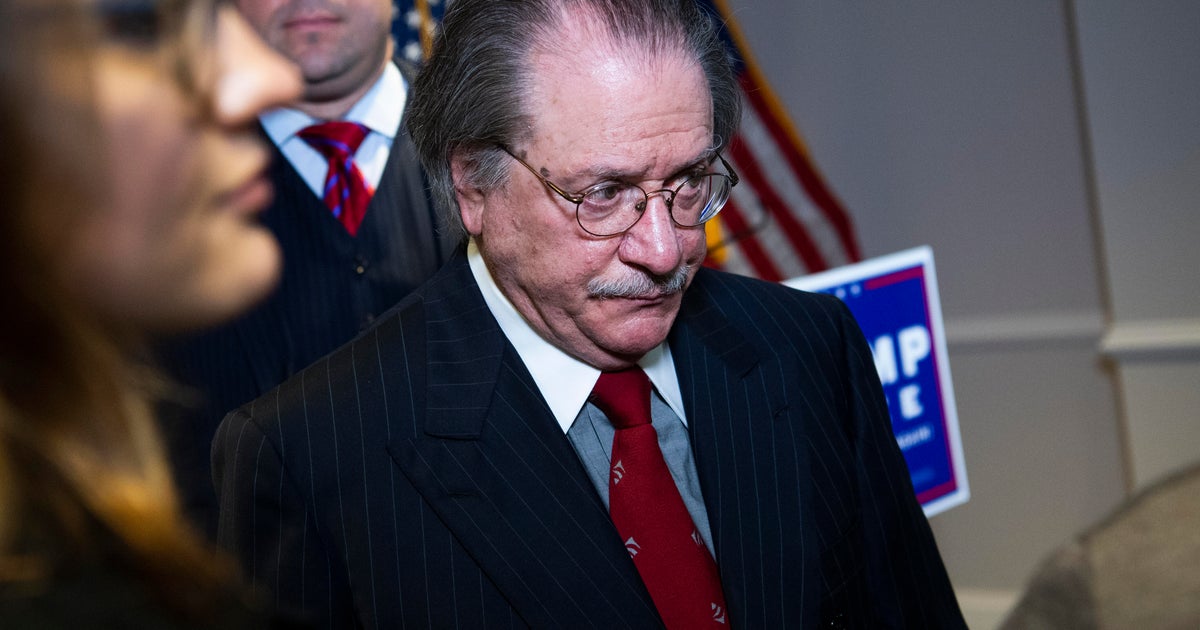
Joe DiGenova resigns from the Justice Department grand conspiracy investigation targeting Obama and Biden era officials


In a sudden development that has sent ripples through the corridors of the Department of Justice, veteran attorney Joe DiGenova announced his immediate resignation on Thursday from his role as the lead prosecutor overseeing the high-profile "grand conspiracy" investigation. DiGenova, a longtime ally of President Trump who was appointed to the position earlier this year, confirmed his departure in a brief communication with CBS News. The resignation extends to his wife and legal partner, Victoria Toensing, who has served alongside him on the federal prosecution team based in Fort Pierce, Florida.
The departure of DiGenova comes at a precarious moment for the investigation, which has been tasked with examining allegations that former Obama- and Biden-era officials engaged in a long-running, multi-layered conspiracy designed to undermine the political prospects of Donald Trump. While DiGenova offered a terse statement citing the "honor and privilege" of serving the administration, he remained silent regarding the specific catalysts behind his exit. This abrupt shift in leadership follows a flurry of recent procedural activity within the case, including the issuance of new grand jury subpoenas and an aggressive push to secure voluntary interviews with former FBI personnel involved in previous investigations into the former president’s handling of classified documents.
A Chronology of the Controversy
The investigation currently in flux was established to address a wide-ranging set of theories regarding alleged misconduct within the intelligence and law enforcement communities. To understand the significance of DiGenova’s departure, one must look at the timeline of the probe:
- April 2026: Joe DiGenova is tapped by Attorney General Todd Blanche to oversee the "grand conspiracy" investigation, replacing Maria Medetis Long. Long had been removed from the role following reports that she had expressed significant reservations regarding the evidentiary basis of the claims.
- Summer 2026: The investigation gains momentum, focusing heavily on the actions of Obama-era CIA Director John Brennan. The probe specifically examines whether Brennan misled Congress during testimony in 2023 regarding intelligence assessments of Russian interference in the 2016 presidential election.
- August 2026: John Brennan initiates litigation against the Justice Department, arguing that the administration is weaponizing the criminal justice system to settle political scores and punish perceived adversaries.
- September 8–9, 2026: Lawyers representing various witnesses involved in the probe report receiving notification that their clients are slated to receive grand jury subpoenas.
- September 10, 2026: Joe DiGenova formally submits his resignation to Attorney General Todd Blanche. Victoria Toensing is expected to conclude her tenure with the Department on Friday.
Contextualizing the Probe and Leadership Turnover
The appointment of DiGenova in April was viewed by many legal analysts as a signal of the administration’s intent to aggressively pursue the "deep state" narrative that has been a cornerstone of the President’s rhetoric. DiGenova, who served as the U.S. Attorney for the District of Columbia between 1983 and 1988, returned to the DOJ with a reputation as a staunch defender of the President. His legal career in recent years had been defined by his vocal criticism of the intelligence community, particularly his public labeling of John Brennan as the "primogenitor" of the counterintelligence investigation into the 2016 campaign.
However, the transition from Maria Medetis Long to DiGenova was not without friction. Internal sources previously indicated that the Department of Justice’s career staff harbored concerns about the direction of the inquiry. The removal of Long, a career prosecutor, in favor of a political appointee with a well-documented ideological stance on the subjects of the investigation, fueled ongoing debates regarding the politicization of the Department of Justice.
The Scope of the Investigation
The mandate of the Fort Pierce-based team has been expansive, touching upon several distinct areas of potential conflict between the current administration and its predecessors. The two primary pillars of the investigation have been:
- The "Grand Conspiracy" Allegations: This segment of the probe explores whether high-ranking officials in the Obama and Biden administrations coordinated to actively prevent Donald Trump from assuming or maintaining office.
- The Brennan Probe: A specific criminal inquiry into whether former CIA Director John Brennan provided false information to Congress in 2023. This is rooted in long-standing tensions regarding the U.S. intelligence community’s 2016 election interference assessments, which the President and his allies have frequently labeled as fabricated or politically motivated.
Legal experts have noted that the lack of formal charges after months of investigation suggests a high threshold for evidence that the team has struggled to meet. The recent outreach to former FBI agents regarding the classified records investigation suggests that the scope may have been widening, potentially in a final effort to produce actionable results before the leadership change.
Implications for the Department of Justice
The departure of both DiGenova and Toensing creates a leadership vacuum at the head of a highly contentious and sensitive investigation. The immediate impact is likely to be a period of stagnation as the Justice Department determines the future of the prosecution team.
The broader implications for the Department of Justice are significant. Critics of the current administration have long argued that the probes into Obama- and Biden-era officials are retaliatory in nature. By utilizing the DOJ to investigate political rivals, the administration has faced intense scrutiny from legal ethics organizations and former intelligence officials who argue that such actions threaten the independence of the federal justice system.
"The use of criminal process to punish the President’s perceived adversaries is a fundamental departure from the norms of the Department of Justice," stated a source familiar with the internal dissent within the agency. Conversely, supporters of the investigation argue that the probe is a necessary measure to ensure accountability for what they characterize as institutional corruption and the illegal surveillance of political figures.
Future Outlook and Official Responses
As of Thursday evening, the Department of Justice has not released a formal statement regarding who will succeed DiGenova or whether the investigations will continue under their current parameters. The timing of the resignation—occurring exactly when the probe was ramping up its subpoena activity—has led to heightened speculation regarding whether internal roadblocks or disagreements over the legal merits of the subpoenas led to the decision.
For the witnesses and legal teams involved, the departure offers a temporary respite, though many remain wary that a replacement could bring a more aggressive, or perhaps more methodical, approach to the inquiry. The legal challenge filed by John Brennan remains an active, complicating factor, as it forces the government to justify the legal basis for the ongoing investigations in open court.
The resignation of such a high-profile figure as DiGenova, particularly alongside his spouse and legal colleague, serves as a poignant reminder of the volatility currently characterizing the upper echelons of the federal government. Whether this departure signifies the end of the "grand conspiracy" investigation or merely a reset in the administration’s strategy will likely be determined in the coming weeks as the Department of Justice moves to fill the vacant lead roles. For now, the legal community and the public remain waiting for clarity on whether these investigations will yield indictments or be quietly dissolved as the administration navigates the complex fallout of its own internal personnel changes.