Healthcare and Harmony: How Austin’s Nonprofit Model Shields Local Musicians From Rising Insurance Costs


Austin, Texas, proudly markets itself as the Live Music Capital of the World, a title backed by thousands of performers who infuse the city’s streets, bars, and festivals with vibrant cultural energy. Yet beneath the neon lights and booming tourism economy lies a harsh economic reality: the artists who generate this immense cultural cachet frequently struggle to afford basic necessities, most notably health insurance.
For musician Zack Morgan, the friction between pursuing a creative career and securing personal stability came to a head in 2015 when he lost his corporate day job. For years, Morgan had balanced a dual identity, working in the tech sector by day while playing funk keyboards by night. The sudden termination felt, as he describes it, like being pushed off a cliff. Rather than immediately rushing back into the corporate grind, Morgan saw an opening. "Maybe this is my sign to try the full-time music thing," he recalled thinking. But the realization carried an immediate, sobering caveat. "Step one in that was: Get health insurance again."
To make that leap, Morgan turned to the Health Alliance for Austin Musicians (HAAM), a local nonprofit that has quietly become a lifeline for the city’s creative workforce. By partnering with local public health agencies, HAAM subsidizes the monthly insurance premiums of performing artists who purchase plans through the Affordable Care Act (ACA) marketplace. Through this coordinated safety net, many Austin musicians pay nothing out of pocket for their monthly health coverage, transforming what was once an impossible financial hurdle into a manageable part of everyday life.
The Evolution of a Musical Lifeline
The story of HAAM is deeply intertwined with the broader history of healthcare reform in the United States and Texas’ distinct policy landscape. Long before the implementation of the ACA marketplace in 2014, HAAM spent its formative years operating as a direct-care facilitator. Founded over a decade prior to the ACA rollout, the organization connected local musicians with free and heavily discounted medical care at neighborhood clinics and hospitals throughout Austin and Travis County.
Despite these early victories, a gaping vulnerability remained. Approximately 85% of HAAM members were entirely uninsured, exposing them to catastrophic financial ruin if they suffered a major illness or injury—particularly when traveling on tour to other cities and states. The passage of federal health reform offered a crucial pivot point. "When the Affordable Care Act came out, and we knew it was here to stay, it really made sense for us to start getting our musicians fully insured," explained Rachel Blair, HAAM’s chief strategy officer.
Other U.S. cities renowned for their musical heritage—such as Seattle, New Orleans, and Nashville—have established similar organizations to support artists’ health needs. Entities like the Seattle Musicians Access to Sustainable Healthcare (SMASH) and the New Orleans Musicians’ Clinic have long provided direct medical services or helped artists navigate complex enrollment procedures. However, HAAM distinguished its operational model by going a step further: it recognized that navigating the marketplace was not enough if artists still lacked the capital to pay monthly premiums.

The Financial Architecture of HAAM
The mathematical reality of Austin’s music scene makes external financial intervention essential. The average HAAM member earns roughly $30,000 a year, a modest sum in a rapidly gentrifying city facing soaring housing and living costs. Without assistance, spending a significant portion of an artist’s annual income on health insurance would be entirely unfeasible.
To bridge this gap, HAAM established a robust public-private partnership with Central Health, Travis County’s public hospital district. Central Health is a local governmental entity funded by taxpayer dollars, specifically charged with providing safety-net healthcare resources for low-income residents. Central Health also operates Sendero Health Plans, a nonprofit insurance provider offering marketplace coverage tailored to Travis County residents.
Under the current framework, HAAM members must enroll in one of Sendero’s silver-level, benchmark marketplace plans. For members whose household incomes fall between 100% and 200% of the federal poverty level, Central Health covers the remainder of the monthly premium after federal tax credits are applied. For members earning above that specific threshold, HAAM steps in with a secondary subsidy covering 50% of their remaining premium balance.
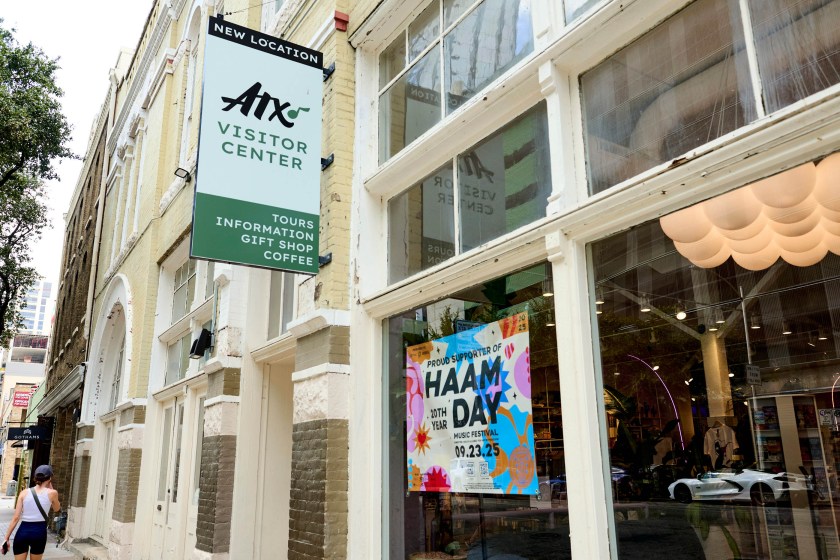
Since implementing this comprehensive premium assistance model, HAAM’s total membership has surged by 77%, expanding to more than 3,300 active participants. Today, over 90% of HAAM members are fully insured, representing a dramatic shift in health security for Austin’s creative sector. The organization sustains its roughly $4 million annual operating budget through a combination of philanthropic donations, corporate sponsorships, and signature community events like the annual HAAM Day Music Festival, which places local bands on stages across the city—from grocery stores to the steps of the Texas Capitol.
Replicating and Expanding the Model
The success of the Austin initiative has not gone unnoticed by other municipalities and local industries. In 2017, HAAM helped catalyze a similar support structure in Denton, a progressive college town north of Dallas known for nurturing notable musical talent ranging from jazz artists to indie acts. The Denton Music and Arts Collaborative adopted a slightly different operational approach, connecting members with an independent insurance agent to identify optimal health plans while providing a flat $100 monthly subsidy. Jennifer Kapinos, president of the Denton collaborative, noted that the intervention is vital to preserving the town’s unique cultural identity against the pressures of displacement and rising regional costs.
Closer to home, the framework is expanding beyond the arts and entertainment sector. In 2025, Good Work Austin—a nonprofit advocacy organization representing local restaurant and food service workers—launched a pilot initiative in coordination with Central Health. The program mirrors HAAM’s blueprint, helping hospitality workers enroll in Sendero marketplace plans and subsidizing their monthly premiums.

Kit Abney Spelce, vice president of operations for Central Health, emphasizes that partnering with established community-specific advocacy groups is critical to the program’s efficacy. Simply broadcasting a message of "free insurance" does not automatically translate to public trust or enrollment. "We are very much dependent on our partner entity to go out and connect with the community, to have that relationship and that trust," Spelce explained.
Navigating Federal Headwinds and Economic Pressures
Despite its proven track record, the model faces escalating external pressures. Healthcare and pharmaceutical costs have steadily risen nationwide, but the 2026 plan year introduced unprecedented financial strain. Across the broader ACA marketplace, average premiums spiked by 58%. Locally, Sendero adjusted its rates upward by an average of 16% for enrollees, driven by escalating medical and prescription drug expenses.
Simultaneously, a major federal policy shift compounded the crisis: Congress allowed the pandemic-era enhanced premium tax credits to expire. These temporary subsidies had previously cushioned marketplace consumers from the true cost of their coverage. A national report published in mid-2026 revealed that roughly 5 million Americans dropped their ACA coverage as a direct result of the expiring federal assistance.
For HAAM, the macroeconomic shock was immediate. "Our premiums for our members went up 60% from one year to the next," Blair noted. Although HAAM aggressively ramped up its fundraising efforts heading into 2026, the influx of capital was insufficient to meet the surging demand. The organization was forced to turn away hundreds of qualified applicants who sought financial assistance for the first time.
Nevertheless, the established partnership successfully protected existing members from losing their coverage. Central Health and HAAM prioritized stabilizing current participants, ensuring that monthly premium obligations continued to be met without interruption.
The Medicaid Expansion Dilemma
While HAAM and Central Health have built a remarkably resilient framework for low- and middle-income workers, a systemic policy barrier leaves the region’s most economically vulnerable residents stranded. Under the architectural design of the Affordable Care Act, marketplace plans and associated subsidies are intended for individuals earning between 100% and 400% of the federal poverty level. Individuals with the absolute lowest incomes—those earning below 100% of the federal poverty line, which sits at approximately $15,000 for an individual—were originally intended to be absorbed by nationwide Medicaid expansion.
Texas, however, remains one of a handful of states that has consistently declined to expand Medicaid under the ACA. Consequently, many of the poorest Texans fall into a stark coverage gap, ineligible for marketplace tax credits and locked out of traditional Medicaid benefits.
Because of this political landscape, the poorest uninsured musicians in Austin remain outside HAAM’s primary premium-assistance reach. To mitigate this gap, Central Health utilizes its Medical Access Program (MAP), a locally funded alternative to insurance that grants low-income, uninsured residents access to a network of regional care providers. HAAM has similarly established direct referral relationships with local primary care clinics to assist uninsured members.
However, program administrators readily admit that these localized stopgaps are imperfect substitutes for comprehensive state-level health reform. "It’s not a very sustainable solution, especially when there’s a really good alternative," Blair observed, pointing directly to the unrealized potential of Medicaid expansion.
Broader Implications for Urban Policy
As American cities grapple with extreme housing affordability crises, economic polarization, and the erosion of social safety nets, the Austin model offers a compelling, albeit localized, blueprint for municipal resilience. By forging strategic alliances between public hospital districts and grassroots nonprofit organizations, communities can construct targeted buffers against systemic market failures.
For musicians like Zack Morgan—who continues to perform regularly at iconic venues like the Saxon Pub alongside artists such as pop singer Ruthie Craft—the partnership represents the difference between sustaining a lifelong vocation and abandoning it entirely. As federal healthcare policy remains volatile and regional living costs continue their upward trajectory, the long-term viability of Austin’s music scene may well depend on the continued strength and adaptability of these collaborative safety nets.