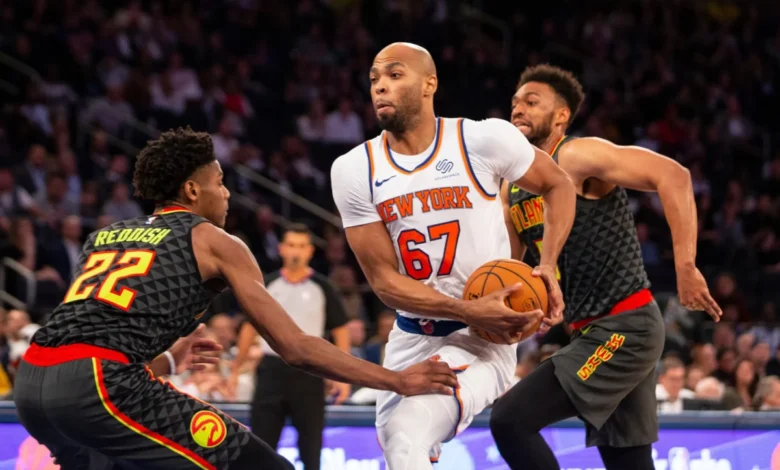
The landscape of the National Basketball Association is known for its constant evolution, where the transition from hardwood competitor to sidelines strategist marks the end of an era for some of the game’s most respected veterans. Taj Gibson, a quintessential professional whose gritty defense, high basketball IQ, and unwavering work ethic defined his nearly two-decade career, announced his official retirement from professional basketball on Monday at the age of 41. Rather than stepping away from the game entirely, Gibson’s retirement served as the prelude to a seamless transition, as the Chicago Bulls promptly announced his appointment to their coaching staff under first-year head coach Tiago Splitter.
This homecoming brings Gibson full circle to the franchise that launched his remarkable journey in 2009. Over 17 grueling seasons, Gibson carved out a reputation as an indispensable teammate, a relentless rebounder, and a consummate locker-room leader. His departure from active play closes a chapter on a career that spanned 1,012 regular-season games across multiple franchises, leaving behind a legacy defined by toughness, adaptability, and an enduring commitment to team success.
A Journey from Brooklyn Asphalt to the NBA Stage
Born in Brooklyn, New York, Gibson’s basketball foundation was forged on the unforgiving asphalt of the Fort Greene Projects. That environment instilled in him a resilient playing style that would become his trademark at every level of competition. After refining his skills at the prep level and playing standout collegiate basketball for the University of Southern California (USC), Gibson entered the national spotlight when the Chicago Bulls selected him 26th overall in the 2009 NBA Draft.
From his rookie campaign onward, Gibson wasted no time establishing his value in the league. Under the demanding tutelage of head coach Tom Thibodeau in Chicago, Gibson quickly became a cornerstone of the Bulls’ defensive identity. Known for his ferocious shot-blocking, exceptional positioning, and efficient mid-range jumper, he finished runner-up for the NBA Sixth Man of the Year award in the 2013-14 season and earned NBA All-Rookie First Team honors in 2010. During his initial eight-year tenure in Chicago, Gibson was synonymous with the blue-collar ethos that the franchise and its fan base deeply cherished.
A Globe-Trotting Career of Longevity and Adaptability

While Gibson’s heart remained deeply tied to Chicago, the modern NBA business led him across the league map. Following his initial stint with the Bulls, Gibson embarked on a well-traveled veteran journey that saw him wear the jerseys of numerous historic and rising franchises. Over the course of his 17-year career, he contributed his veteran presence to the Oklahoma City Thunder, Minnesota Timberwolves, New York Knicks, Washington Wizards, Detroit Pistons, Charlotte Hornets, and Memphis Grizzlies.
Throughout these stops, Gibson adapted his game to changing roster needs. As his athleticism naturally adjusted with age, his intellectual understanding of the game expanded. He became a mentor to younger players, a stabilizing force during turbulent organizational periods, and a high-character asset who could be counted upon to deliver quality minutes in high-leverage playoff moments. Across his 1,012 career games, Gibson averaged 8.3 points, 5.7 rebounds, and 1.0 blocks per contest, shooting efficiently from the field and earning the universal respect of opponents, executives, and coaches alike.
The Final Chapter as a Player
Gibson’s playing days concluded following a sequence of transactions late in his career. Most recently, he found himself part of a multi-player trade cycle that landed him with the New Orleans Pelicans after being acquired from the Memphis Grizzlies. However, following a subsequent roster shakeup that involved AJ Johnson, Jordan Hawks, Micah Peavy, draft capital, and pick swaps, Gibson was waived by New Orleans.
Rather than pursuing a final brief stop with another franchise, Gibson evaluated his options and recognized that the ideal moment had arrived to hang up his sneakers. Reflecting upon his career via a heartfelt statement released on social media, Gibson expressed profound gratitude for the opportunities he was afforded.
"As a kid from Brooklyn, NY, I was lucky to get a chance to display my talent on the biggest stage," Gibson wrote. "From Fort Greene Projects to USC, to the Chicago Bulls, and every team and city that came after, I’m grateful for every moment, every teammate, every coach, and every person who believed in me. After 31 years of basketball, I can walk away with no regrets, knowing I left everything on the floor. God has truly blessed me."
Transitioning to the Sidelines in Chicago

The void left by Gibson’s retirement on the court was instantaneously filled by an exciting new professional opportunity off it. The Chicago Bulls acted swiftly to secure his services, naming him as an assistant coach on Tiago Splitter’s newly formed coaching staff. Gibson joins an experienced and diverse group of assistants in Chicago, which includes Wes Unseld Jr., Blake Ahearn, Jamelle McMillan, Rex Kalamian, and Jonah Herscu.
For the Bulls, hiring a freshly retired veteran with Gibson’s locker-room pedigree is a strategic masterstroke. Splitter, embarking on his inaugural campaign as an NBA head coach, will benefit immensely from having a trusted voice who understands the internal dynamics of the Chicago organization and possesses recent, first-hand knowledge of contemporary player psychology. Gibson bridges the generational gap between the coaching staff and the modern athlete, offering immediate mentorship to the team’s frontcourt prospects and reinforcing a culture of accountability.
Broader Impact and Analytical Implications
Gibson’s pivot from player to coach highlights a growing trend in modern professional basketball, where franchises increasingly value the immediate integration of high-IQ veterans into coaching pipelines. Players who spend nearly two decades navigating the physical and tactical nuances of the NBA often make seamless instructors, possessing the unique ability to translate complex schemes into practical on-court execution.
From an analytical standpoint, the Bulls’ addition of Gibson addresses multiple intangible needs. Chicago is currently navigating a developmental phase under Splitter, balancing competitive aspirations with the integration of younger talent. Gibson’s presence on the bench ensures that the defensive principles and professional habits that characterized his playing career will be directly imparted to the next generation of Bulls players. His deep familiarity with the franchise’s history, combined with his extensive exposure to diverse coaching systems across the league, provides Splitter’s staff with a multi-faceted tactical asset.
As Taj Gibson officially trades his jersey for a clipboard, his legacy as one of the most reliable and respected forwards of his era remains secure. Whether operating in the paint against elite scorers or drawing up defensive rotations from the bench, Gibson’s enduring dedication to the sport ensures that his impact on the NBA will continue to resonate for years to come.