Formula 1 Shifts to Saturday: George Russell Secures Pole as the 2026 Azerbaijan Grand Prix Gets Underway in Baku

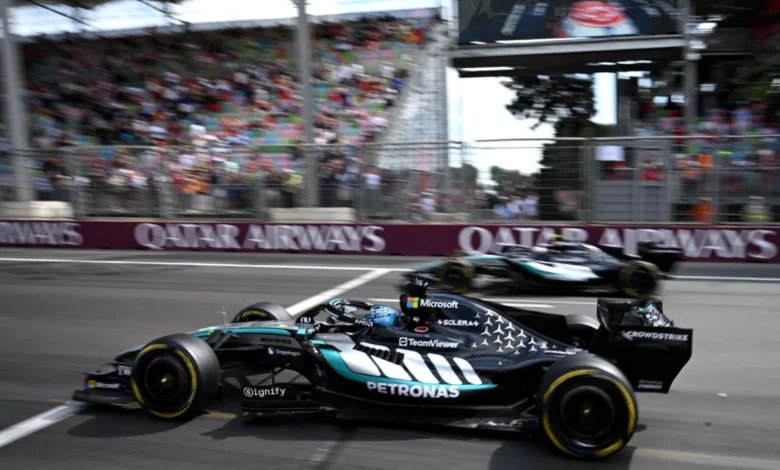
The Formula 1 World Championship has taken an unusual turn this weekend as the paddock gathers for a rare Saturday race at the 2026 Azerbaijan Grand Prix. Hosted at the demanding Baku City Circuit, the ninth annual running of this high-speed street race has been brought forward by 24 hours from its traditional Sunday slot. The schedule adjustment was made to accommodate Azerbaijan’s national Remembrance Day, observed annually on September 27, ensuring the sporting spectacle does not conflict with the country’s solemn national commemorations.
For fans in the United States, the schedule change means an early start, with the lights scheduled to go out at 7:00 a.m. ET on Saturday, September 26. As the premier motorsport category continues its global expansion and calendar adjustments, the Baku weekend stands out as a unique logistical challenge for teams, engineers, and broadcast audiences alike.
Qualifying Highlights and Grid Formation
The dramatic backdrop of the Azerbaijani capital set the stage for an intense qualifying session on Friday, where Mercedes driver George Russell delivered a stellar performance to secure pole position. Russell mastered the tricky, barrier-lined 3.730-mile layout, putting together a blistering lap that left him 0.837 seconds clear of his closest rival.
Ferrari’s Charles Leclerc, renowned for his exceptional speed over a single lap, had to settle for second place on the front row after failing to match Russell’s decisive final sector pace. The performance underscores Mercedes’ ongoing development success in the 2026 regulatory era, as the Silver Arrows look to solidify their competitive footing against a surging Ferrari squad and reigning front-runners.
The Baku City Circuit remains one of the most unpredictable tracks on the Formula 1 calendar. Featuring a blend of ultra-tight ninety-degree city corners in its medieval old town section and a massive, flat-out 1.3-mile straight along the Caspian Sea coastline, the circuit consistently punishes the slightest driver error. Drivers will navigate 20 demanding turns over the course of 51 laps, covering a total race distance of 190.170 miles.
Background Context and Event History
The Azerbaijan Grand Prix has steadily grown in stature since joining the Formula 1 calendar in 2017 (initially hosted as the European Grand Prix in 2016). Known for producing chaotic races, safety car interventions, and surprise podium finishes, Baku offers a unique engineering conundrum. Teams must balance low-downforce configurations required to maximize top speeds on the massive straight with the high-downforce agility needed to clip apexes safely through the castle section.
Moving the race weekend forward by a day required a compressed schedule for the teams. Free practice sessions were shifted to Thursday, leaving engineers with minimal time to analyze data and fine-tune setups before parc fermé conditions locked in car specifications ahead of qualifying. Team principals noted that the compressed timeline placed an immense psychological and physical strain on mechanics and strategists, who had to work through tight turnarounds to prepare the V6 turbo-hybrid power units and complex aerodynamics packages.
Broadcast Access and Streaming Evolution
As the broadcasting landscape for motorsport continues to evolve in the United States, the Azerbaijan Grand Prix marks another key weekend under the exclusive broadcast partnership between Formula 1 and Apple TV. Following the multi-year agreement established ahead of the 2026 season, all live sessions, qualifying runs, and supplemental programming—such as the popular "Race in 30" recap show—stream exclusively through the platform.
The transition to dedicated streaming ecosystems has altered how American audiences consume motorsport, offering commercial-free viewing experiences and multi-camera telemetry integrations. New subscribers can access the coverage via standard platform tiers or through integrated channel add-ons on major digital storefronts, reflecting a broader industry shift toward direct-to-consumer sports broadcasting.
Strategic Implications for the World Championship
With the 2026 season reaching its critical mid-to-late phase, every point is vital in both the Drivers’ and Constructors’ World Championships. George Russell starting from pole position provides Mercedes with a golden opportunity to dictate the pace from the front, mitigating the chaotic start-line incidents that frequently plague the opening lap in Baku.
However, race strategy on a street circuit is notoriously fluid. The high probability of safety cars or virtual safety car deployments means that race control decisions, tire degradation management, and pit wall execution will ultimately dictate the podium. Ferrari’s race pace during Friday long runs suggested that Charles Leclerc could mount a serious challenge during the Grand Prix stints, particularly if tire graining affects the rear degradation of the leading Mercedes.
As the cars line up on the grid under the bright Baku sun, the unique Saturday scheduling experiment faces its ultimate test. For the teams, drivers, and global audience, the 2026 Azerbaijan Grand Prix promises high-stakes drama, tactical ingenuity, and a fiercely contested battle for supremacy on the shores of the Caspian Sea.