Federal Court Rulings Extend Second Amendment Protections to Switchblades and Body Armor as Supreme Court Prepares for AR-15 Showdown

A wave of recent federal court decisions broadening the constitutional definition of protected "arms" has injected fresh momentum into the gun-rights movement, setting the stage for a high-stakes Supreme Court showdown over the future of semi-automatic rifle bans across the United States.
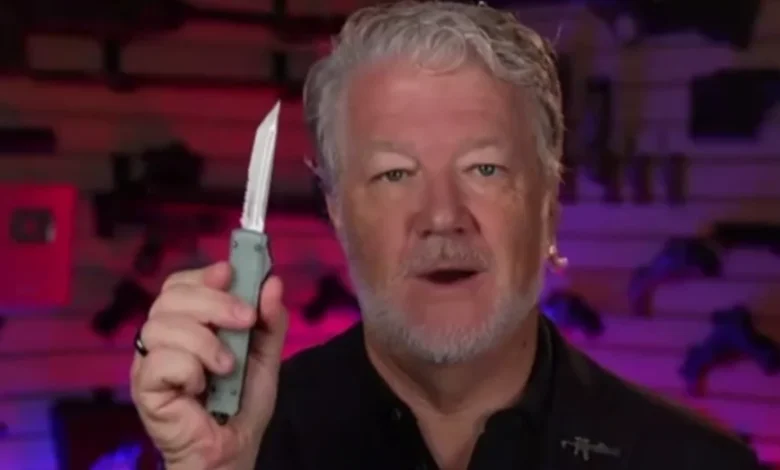
In a pair of rulings handed down on Wednesday, federal courts extended foundational Second Amendment protections beyond traditional firearms to encompass everyday tactical and defensive gear. The Fifth Circuit Court of Appeals struck down a federal law restricting the interstate commerce of switchblade knives, ruling that automatic knives qualify as protected arms under the Second Amendment. Concurrently, a federal judge in the Western District of New York dismantled state-level restrictions on civilian purchases of personal body armor, determining that defensive protective gear falls within the historic scope of rights guaranteed by the Constitution.
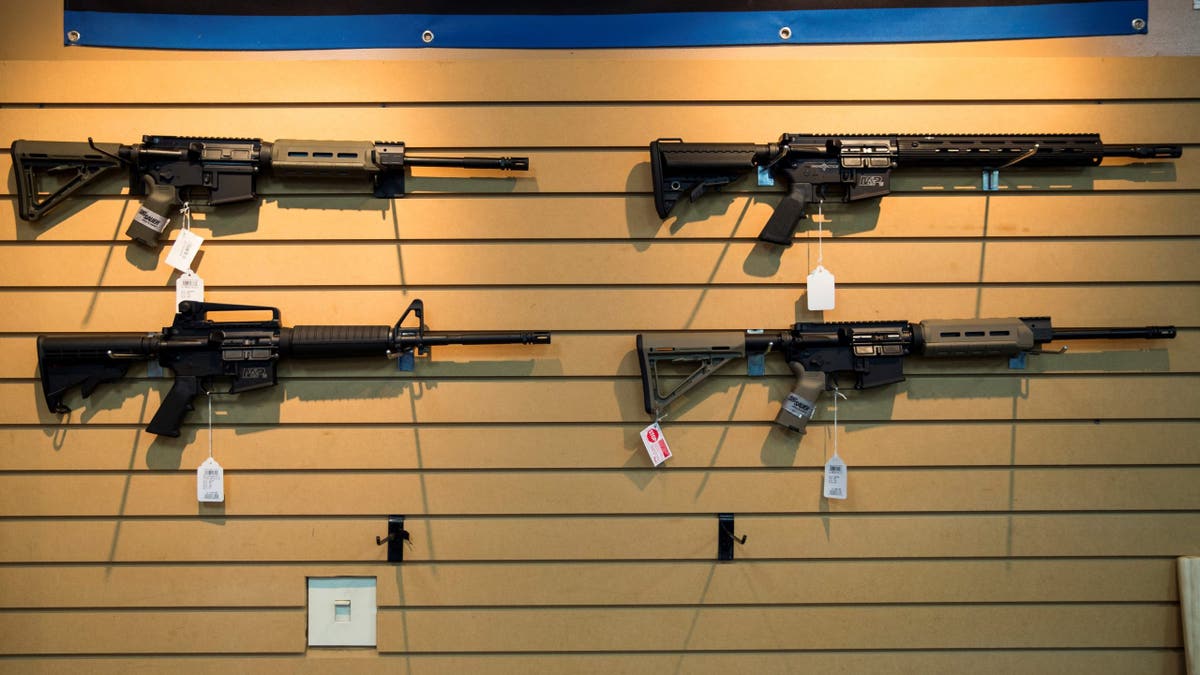
These judicial developments arrive at a critical inflection point in American constitutional law. The U.S. Supreme Court is currently preparing to hear oral arguments in Viramontes v. Cook County, a landmark case that will directly address whether AR-15-style rifles—the most popular semi-automatic rifles in the country—fall under the protective umbrella of the Second Amendment. Together, these lower-court decisions and the impending high court review highlight an expanding legal frontier centered on what precisely constitutes an "arm" in the modern era, with significant implications for federal and state firearms regulations nationwide.
Chronology and Legal Foundations of Modern Second Amendment Jurisprudence
The legal mechanisms driving these recent decisions trace back to two watershed Supreme Court rulings that fundamentally reshaped modern firearms litigation: District of Columbia v. Heller (2008) and New York State Rifle & Pistol Association v. Bruen (2022).
In Heller, the Supreme Court established for the first time that the Second Amendment protects an individual’s right to possess firearms independently of militia service, specifically for traditionally lawful purposes such as self-defense within the home. Crucially, the Heller majority held that the amendment’s protections extend to all instruments that constitute "bearable arms," even those that were not in existence at the time of the founding. However, the 2008 ruling also carved out exceptions, noting that the government may continue to enforce longstanding prohibitions on the possession of firearms by felons and the mentally ill, or laws imposing conditions on the commercial sale of arms, alongside restrictions on "dangerous and unusual weapons."
Nearly a decade and a half later, the Supreme Court turbocharged Second Amendment jurisprudence with its Bruen decision. By invalidating New York’s strict proper-cause requirement for carrying firearms in public, the high court discarded the balancing tests previously favored by lower federal courts. Instead, Bruen established a strict text-and-history standard: when the plain text of the Second Amendment covers an individual’s conduct or a specific category of weapon, the Constitution prima facie protects it. To uphold a restriction, the government bears the heavy burden of demonstrating that the modern regulation is consistent with the nation’s historical tradition of firearm regulation.
The recent rulings regarding switchblades and body armor relied heavily on this two-step Bruen framework. In the Fifth Circuit’s switchblade case, the court determined that automatic knives are commonly used bearable arms with a historical pedigree for defense, noting that the government failed to unearth historical analogues from the founding era that justified banning their interstate commerce. Similarly, in the New York body armor case, the federal district court rejected the state’s argument that tactical armor is merely an accessory rather than an arm, concluding instead that body armor is inextricably linked to the defensive nature of armed self-defense recognized in Heller.
The Supreme Court Horizon: The Viramontes Case and AR-15 Restrictions
As lower courts grapple with non-firearm gear, the ultimate battleground remains centered on semi-automatic rifles. The Supreme Court’s impending review of Viramontes v. Cook County represents the next major constitutional milestone.
The underlying dispute stems from a challenge to an Illinois municipal assault-weapons ban enacted by Cook County. Lower down the appellate ladder, the Seventh Circuit Court of Appeals upheld the prohibition, reasoning that AR-15-style rifles share characteristics with military machine guns and therefore fall outside the historical definition of protected common-use arms.
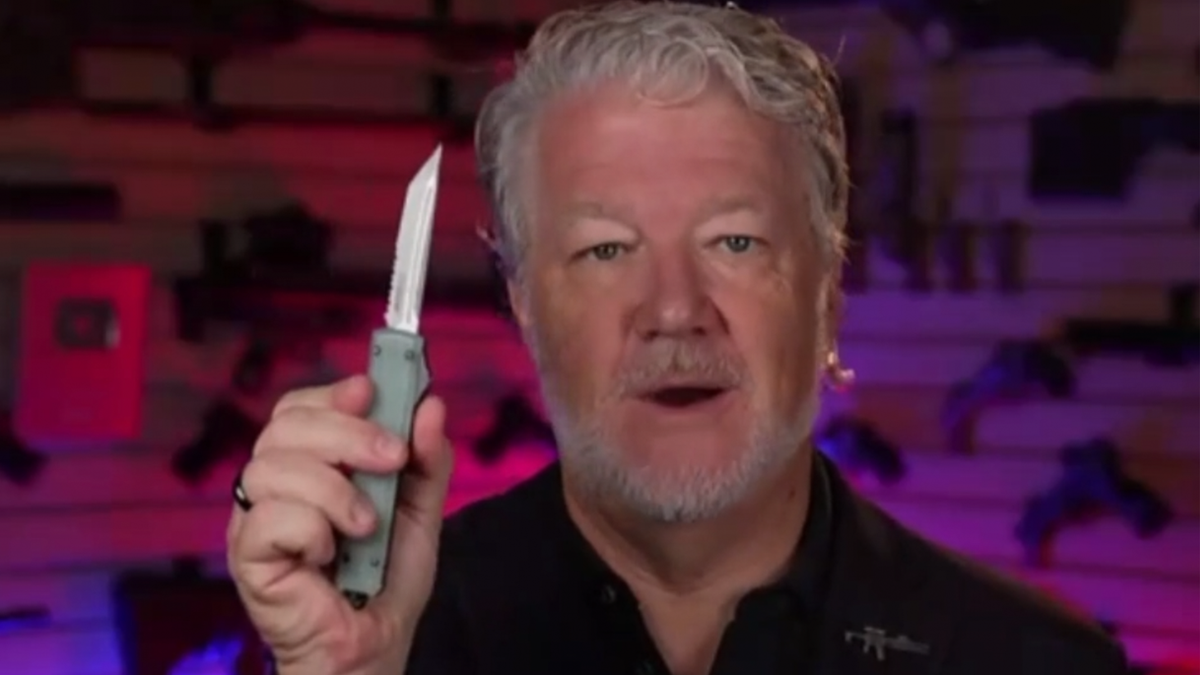
Gun-rights advocates and legal scholars have sharply criticized the Seventh Circuit’s reasoning, arguing it misinterprets both the mechanical reality of semi-automatic firearms and the core holdings of Heller. Dudley Brown, president of the National Association for Gun Rights—an organization that filed an amicus brief in the Viramontes litigation—contends that a definitive ruling from the Supreme Court against AR-15 bans could create a domino effect across the American legal landscape.
"The interesting thing about both of these cases is that they’re both going to be really decided by the U.S. Supreme Court in the Viramontes decision," Brown noted in an interview with Fox News Digital, emphasizing that a favorable ruling for gun owners could invalidate decades-old restrictions not only on rifles, but on standard-capacity ammunition magazines, tactical knives, and body armor.
George Lyon, a prominent Second Amendment attorney, echoed these sentiments, explaining that the lower courts in the switchblade and body armor cases correctly applied the Bruen methodology by putting the onus squarely on the government.
"Once what you want to do is shown to come within the text of the Second Amendment, the presumption is that the regulation is unconstitutional," Lyon said. Regarding the Seventh Circuit’s handling of semi-automatic rifles, Lyon added, "The current case at the Supreme Court, Viramontes, will address that because the Seventh Circuit had taken the position that because AR-15s are ‘like machine guns,’ they don’t constitute an arm as defined under Heller. That was just totally wrong in my view."
Broader Implications for Defensive Equipment and Modern Technology
The expanding scope of Second Amendment litigation is not limited to long guns and edged weapons. Legal analysts note that federal and state courts are increasingly forced to evaluate a wide array of auxiliary self-defense tools under constitutional scrutiny, including firearm suppressors, high-capacity magazines, stun guns, pepper spray, and specialized tactical accessories.
Representing the National Rifle Association, Director of Public Affairs Justin Davis pointed out that these ongoing legal battles reflect a fundamental philosophical debate over how constitutional originalism applies to technological innovation. Opponents of broad gun rights frequently argue that the Framers could not have anticipated modern semi-automatic technology, tactical gear, or high-velocity ammunition.
However, gun-rights advocates counter with historical and constitutional analogies from other areas of the Bill of Rights.
"They talk about how the Second Amendment only applied to muskets because that’s what existed at the time of the Founders, but we don’t apply the First Amendment only to newspapers, books or speech in public forums," Davis observed. "Social media, texting and phones didn’t exist at that time, either. The world evolves, but the core fundamental rights never change."
As the legal community awaits oral arguments in Viramontes, the cumulative impact of these decisions signals a profound shift in American jurisprudence. By systematically evaluating modern defensive technology against the historical backdrop of the Second Amendment, federal courts are dismantling long-standing regulatory regimes. Whether the Supreme Court ultimately curtails or validates this expansive trend will shape the boundaries of civilian defense and state regulatory power for generations to come.