Happy 20th Birthday, ‘Debut’! A Revealing Look Back at Taylor Swift’s Self-Titled First Album, Via a Previously Unpublished Q&A

The Modest Origins of a Global Phenomenon
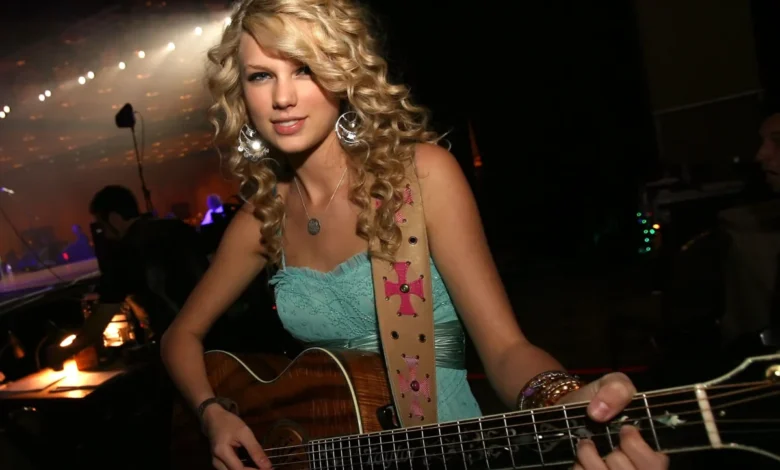
In October 2006, the landscape of country music was highly guarded. The industry was characterized by rigid gatekeepers and a traditionalist approach to radio airplay. When sixteen-year-old Taylor Swift arrived on the scene with her debut, she was an anomaly. She did not fit the established archetype of the Nashville star, and her team faced significant hurdles in securing media coverage and radio support.
At the time, the concept of a young, female, self-taught guitarist writing her own confessional lyrics about middle school social dynamics and teenage heartbreak was considered a liability. Executives at major labels were hesitant to bet on a teenager, citing the fact that no female artist of that age had found sustained, mainstream success in country music since LeAnn Rimes a decade prior. Swift’s path to the charts was marked by a series of unconventional strategies, including a heavy reliance on the nascent social media platform MySpace to cultivate a direct, unmediated connection with listeners—a move that would eventually become the industry standard for artist development.
Chronology of an Unlikely Rise
The trajectory of the album was a slow burn rather than an overnight explosion. Following the release of the record, Swift began a grueling schedule of radio tours and local performances, often characterized by her trademark four-hour-long autograph sessions.
- 2006: The debut album is released, featuring singles such as "Tim McGraw" and "Teardrops on My Guitar."
- 2007: Swift earns her first major industry recognition, including the Horizon Award at the CMA Awards. The "pop remix" of "Teardrops on My Guitar" begins to gain traction on MTV and Top 40 radio, signaling the beginning of her crossover appeal.
- 2008: The album achieves consistent, high-level chart performance, reaching the Top 10 of the Billboard 200 and solidifying her as a legitimate force in songwriting. By this time, Swift had already been nominated for a Grammy Award for Best New Artist, further distancing her from the "teen act" label and cementing her status as a serious musical talent.
The Strategy of Confessional Songwriting
Central to the album’s success was its startlingly personal, conversational songwriting style. Songs like "Our Song," which Swift famously wrote by herself for a high school talent show, resonated with listeners because of their granular, specific details. Unlike the polished, collaborative songwriting that dominated the radio at the time, Swift’s early work felt like a diary entry set to music.

This transparency was a double-edged sword. While it drew criticism from industry veterans who felt that revealing names and specific life details was unprofessional, it created an intensely loyal following. This "conversational" approach—treating the audience as a confidant—reset the expectations for what pop stars were allowed to share with their public. It established a blueprint for the "parasocial" bond that has become the hallmark of the modern celebrity experience.
Industry Impact and Data Trends
The success of Taylor Swift defied the prevailing wisdom of the mid-2000s. While her peers were often assigned songs by committees of professional songwriters, Swift insisted on maintaining control over her creative output. Her decision to walk away from a lucrative development deal with RCA Records—a move that was considered professional suicide at the time—because the label would not allow her to record her own material, proved to be a pivotal turning point.
By the time she signed with the newly formed Big Machine Records, the industry was undergoing a transition. Her success in the country sphere, followed by her seamless transition into the pop market, forced a reckoning among labels regarding the value of artist-led songwriting. Data from the era confirms that her debut was a statistical outlier; it spent weeks atop the country charts and demonstrated a longevity that few debut albums of the decade could match. Her ability to translate country radio success into mainstream pop penetration provided a roadmap for subsequent artists who sought to avoid the "genre trap."
The "Anti-Britney" Narrative and Cultural Shifts
In the early years of her career, media outlets frequently framed Swift as the "anti-Britney." This comparison, though reductive, highlighted a genuine cultural shift. In an era defined by the tabloid scrutiny of pop stars like Britney Spears and Lindsay Lohan, Swift presented a persona that was studiously composed, focused on her craft, and—by her own admission—"boring." She maintained a public image free of the scandals that plagued her contemporaries, a choice that allowed her to build a massive, cross-generational audience that included parents who felt comfortable with her as a role model for their children.
This restraint did not hinder her career; it accelerated it. By avoiding the pitfalls of the typical child star trajectory, she maintained agency over her career, her image, and her music. This level of autonomy would become the cornerstone of her business model, leading to her eventually taking unprecedented control over her masters and intellectual property.

Legacy and Modern Implications
Two decades later, the industry looks at the Taylor Swift album as a masterclass in long-term brand building. The record served as the incubator for the lyrical tropes that would define her later, multi-platinum work: the sharp, vengeful break-up anthem, the nostalgic look back at adolescence, and the keen observation of social hierarchy.
Looking back, the album serves as a reminder of the fragility of success. If one variable had changed—if she had been signed to a label that restricted her writing, or if she hadn’t taken the gamble on an unproven independent startup—the landscape of 2026 pop culture would look significantly different. The success of the record taught the industry that the most valuable asset an artist can possess is not a high-gloss production or a massive marketing budget, but an authentic, individual voice.
As the music world celebrates this anniversary, the focus remains on the shift she precipitated. She proved that a teenage girl from Pennsylvania could walk into an industry dominated by corporate committees, hand them a guitar, and insist on being heard on her own terms. The result was not just a successful debut album, but the inception of a cultural empire that continues to dictate the terms of engagement for modern music. The "wisened woman of 18" that gave those early interviews has long since become a titan of the industry, but the blueprint for that ascent is found entirely within the grooves of her 2006 debut.
Related posts: