Florence Pugh Addresses the Consequences of Public Advocacy Amidst Global Humanitarian Crisis

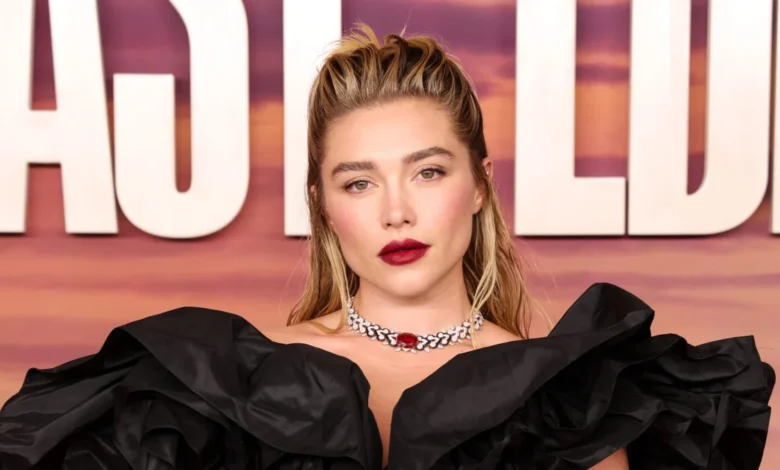
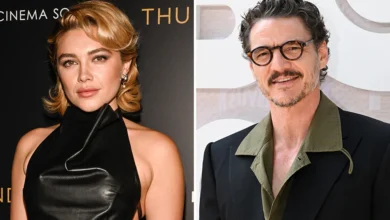
Florence Pugh has addressed the professional and personal fallout resulting from her vocal support for Palestine, confirming that she faced significant pushback, including the loss of hundreds of thousands of social media followers. In a candid cover story for Vanity Fair, the Academy Award-nominated actress reflected on her decision to speak out, maintaining that her commitment to humanitarian advocacy remained steadfast despite the potential impact on her public image and digital reach.
The actress, currently preparing for a high-profile slate of upcoming projects, including Netflix’s adaptation of East of Eden and Marvel’s Avengers: Doomsday, has become one of the most prominent Hollywood figures to address the moral dilemma of maintaining a public presence while global conflict persists. Her comments arrive at a time when the entertainment industry continues to grapple with the complexities of geopolitical discourse, individual expression, and the responsibilities of public figures.
A Timeline of Advocacy and Industry Response
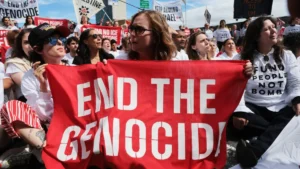
The discourse surrounding Pugh’s involvement began in earnest last September when she participated in the Together for Palestine event. During her appearance, she delivered a pointed critique of the silence prevalent in mainstream cultural circles, stating, "Silence in the face of such suffering is not neutrality, it is complicity, and empathy should not be this hard and it should have never been this hard."
This public intervention was not an isolated incident but part of a broader trajectory of engagement. Throughout the latter half of 2023 and into 2024, Pugh consistently utilized her platform to highlight the humanitarian toll of the conflict. Her decision to attend the event was particularly notable given the logistical challenges involved; as she was actively filming for the upcoming Marvel production Avengers: Doomsday, she required significant coordination to balance her professional obligations with her personal activism.
Pugh noted in her interview that she did not receive warnings or directives from her management team to refrain from speaking on the issue. This absence of institutional constraint highlights a shifting landscape in talent management, where agents and publicists are increasingly forced to navigate the tensions between a client’s personal conscience and the potential for commercial alienation.
The Cost of Public Stance: Social Media and Public Perception
In the digital age, social media follower counts often serve as a metric for an artist’s marketability. Pugh’s admission that her stance led to the loss of a substantial portion of her online audience offers a rare, quantifiable look at the "cost" of political speech for A-list celebrities.
The phenomenon of "fan attrition" following political statements has become a point of study for media analysts. When celebrities with large, diverse, and global audiences weigh in on polarizing geopolitical conflicts, they frequently face a dual reaction: a surge in engagement from supporters and a rapid exodus of followers who either disagree with the stance or prefer that their entertainment figures remain apolitical.
However, for Pugh, the loss of followers served to reinforce her conviction. "Weirdly, because so many people actively weren’t, that made me even more confused—and kind of probably even more in the right to talk about it," she explained. This reaction suggests a shift in the celebrity-fan dynamic, where the desire for authenticity—even when it creates friction—may be superseding the traditional celebrity mandate to appeal to a broad, non-confrontational base.
The Humanitarian Context and Global Suffering
Pugh’s comments reflect a deep-seated frustration with the disparity between the realities of the humanitarian crisis and the often-sanitized nature of celebrity social media curation. She expressed a profound sense of cognitive dissonance, noting the difficulty of maintaining a public-facing, "happy" persona while being aware of the ongoing suffering in Gaza.
"It’s still happening, though," Pugh stated. "Babies are still dying. Mothers are still in pain. It’s really horrible to be watching such pain when so much of our lives just seem to be moving forward."
Her statements touch upon a broader ethical debate: the "scrolling" culture of social media, where the juxtaposition of mundane lifestyle content against footage of war and displacement creates a jarring, and for many, an untenable, experience. By highlighting this contrast, Pugh is not only speaking on the conflict itself but also questioning the architecture of the platforms that facilitate such experiences.
Industry Implications and Future Projects
As Pugh moves forward with her career, the industry is closely watching how her outspokenness affects her standing within the studio system. She is set for a monumental release period, with Netflix’s East of Eden adaptation launching on October 1, followed by a double-bill of Avengers: Doomsday and Dune: Part Three on December 18.
The fact that these major studio projects are moving forward without visible interference suggests that, at least for talent of Pugh’s caliber, there remains a degree of insulation from the traditional "blacklist" fears that historically plagued actors who took controversial political stances. However, the situation remains fluid. In the current climate, studios are increasingly sensitive to the global audience, and the intersection of politics and entertainment remains a precarious tightrope walk for talent, executives, and marketing teams alike.
Analysis: The Changing Role of the Celebrity Activist
The professional trajectory of Florence Pugh provides a case study in modern celebrity activism. Historically, the "safe" route for a rising star was to avoid political controversy to ensure maximum reach across all demographic and international markets. The transition toward a model where artists feel compelled to speak out—regardless of the impact on their follower counts—represents a cultural shift.
Several factors contribute to this change:
- Direct Communication Channels: Because celebrities now communicate directly with their audiences via Instagram, TikTok, and X (formerly Twitter), they no longer rely solely on legacy media to act as a buffer. This provides more autonomy but also makes the fallout of their statements more immediate.
- Gen Z and Millennial Expectations: Younger demographics, who make up a significant portion of the audience for films like those in the Marvel Cinematic Universe, increasingly expect public figures to align with their values. Silence is often interpreted as a stance in itself.
- The Normalization of Advocacy: Following the social movements of the early 2020s, the expectation for celebrities to engage with "social issues" has become standardized. While this has led to increased awareness, it has also invited greater scrutiny of the depth and consistency of that advocacy.
Conclusion: A New Standard for Accountability
Florence Pugh’s willingness to discuss the consequences of her advocacy marks a departure from the typical "no comment" approach common in Hollywood. By framing her activism as a moral necessity rather than a public relations move, she has challenged the status quo regarding how actors are expected to interact with the world outside of their film sets.
As she prepares for the premieres of her latest works, the focus will likely remain on her performances. However, her recent comments ensure that the discourse surrounding her brand now includes an element of political engagement that is unlikely to fade. Whether this sets a new precedent for other A-list stars remains to be seen, but it is clear that for artists like Pugh, the cost of being "scared" to speak is now higher than the cost of losing followers.
Her stance serves as a reminder that the intersection of global politics and the entertainment industry is not merely a theoretical space but a tangible reality where individual choices—and their subsequent repercussions—continue to shape the cultural dialogue. As the world watches these ongoing crises, the voices of influential figures will continue to act as lightning rods for public sentiment, ensuring that the intersection of activism and entertainment remains a focal point of modern discourse.
Related posts: