The Politics of the Plate: Food Safety Emerges as a Flashpoint in Midterm Election Debates

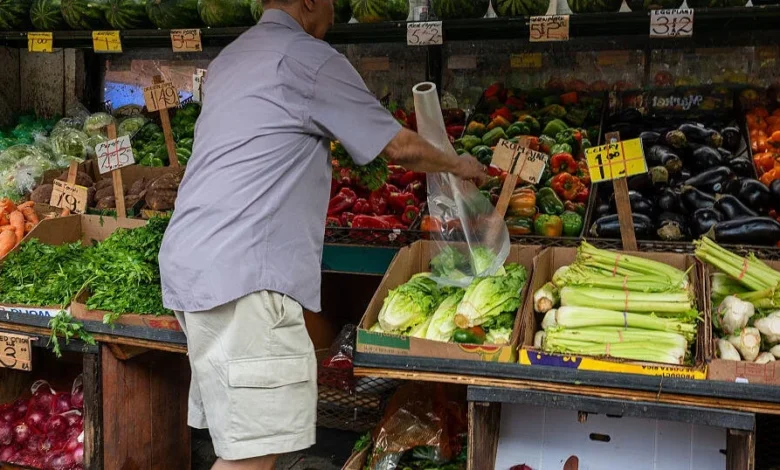
The run-up to the midterm elections has transformed into a high-stakes food fight, as a series of significant foodborne illness outbreaks and subsequent supply chain recalls have vaulted the integrity of the American dinner table to the forefront of the national political conversation. What began as a summer of localized health scares has metastasized into a broader referendum on federal oversight, regulatory staffing, and the prioritization of public health versus industrial deregulation.
The seasonal malaise, which saw thousands of Americans struck by severe gastrointestinal distress, has prompted a fierce partisan divide. Democrats are weaponizing the chaos to criticize the Trump administration’s fiscal approach to regulatory agencies, while the White House and its allies have accused their opponents of exploiting public health anxiety for narrow electoral gain. As voters head to the polls, the question of whether a salad or a burger remains a safe purchase has become a proxy for deeper anxieties regarding the effectiveness of the federal government.
A Summer of Sickened Consumers
The gravity of the situation was underscored by a massive, multistate outbreak of cyclosporiasis linked to tainted lettuce. Between May and August, the Centers for Disease Control and Prevention (CDC) recorded nearly 20,000 laboratory-confirmed cases. This figure represents a staggering increase compared to the 1,180 cases reported during the same period in 2025, solidifying the 2026 event as the largest recorded outbreak of the parasite in U.S. history.
The sheer scale of the illness—marked by symptoms that late-night comedians and public health officials alike noted for their severity—created a "real-world" impact that statistics often fail to capture. Major restaurant chains, including Chipotle and Taco Bell, were forced to pull ingredients from menus, signaling a loss of consumer trust that rippled through the agricultural sector. Teresa Murray, consumer watchdog director at the U.S. Public Interest Research Group (PIRG), noted that the combination of high-profile brand involvement and the sheer volume of illnesses transformed a routine regulatory issue into a kitchen-table concern for millions of families.
The Numbers Behind the Narrative
While the political rhetoric is heated, the data paints a nuanced picture of the U.S. food supply. According to PIRG, there have been approximately 200 food recalls so far in 2026, a figure that is largely consistent with the volume seen at this same time last year. However, when looking at a broader five-year horizon, the trend is undeniably upward. Trace One, a regulatory guidance software provider, reports that the total number of food recalls grew by 21% between 2021 and 2025.
Of particular concern to public health experts is the rise in Class I recalls—those involving products that pose a risk of serious injury or death. Despite the administration’s claims that food safety oversight is functioning optimally, consumer confidence is plummeting. A July survey by Quinnipiac University revealed that a majority of registered voters lack confidence in government oversight, with 94% of U.S. adults expressing concern about the frequency of food recalls in a separate poll by GS1 US. Furthermore, data from the University of Illinois and Purdue University shows that the percentage of consumers who believe the U.S. food system is safe to eat dropped from 40% in late 2025 to 30% by August 2026.
The Partisan Divide and Regulatory Friction
The Democratic response has been swift and aggressive. The Democratic National Committee has utilized social media to circulate lists of recalled products, framing them as tangible evidence of a government that has abandoned its protective duties. Senator Elizabeth Warren (D-Mass.) has been a vocal critic, directly linking the cyclospora outbreak to what she describes as the "slashing" of safety agencies. In a series of communications, she has demanded transparency from Health and Human Services (HHS) Secretary Robert F. Kennedy Jr. regarding the intersection of political influence and regulatory failure.
In response, the Trump administration has taken a defensive, and at times combative, posture. The FDA’s official communication channels have labeled the criticism as "fake news," asserting that fiscal year 2026 recall levels are among the lowest in a decade. However, this assertion has been met with skepticism from experts like Susan Mayne, the former director of the FDA’s Center for Food Safety and Applied Nutrition. Mayne and other analysts have pointed out that the government’s figures are skewed by the inclusion of non-food items, such as medical devices and pharmaceuticals, making the administration’s "lowest level" claim statistically misleading when applied specifically to food safety.
Historical Context and Modern Policy Shifts
Food safety has historically been a bipartisan issue, with outbreaks often serving as catalysts for systemic reform. In 1993, a devastating E. coli outbreak linked to Jack in the Box forced the Clinton administration to make food safety a centerpiece of its first Cabinet meeting, eventually leading to a complete overhaul of inspection protocols.
The current administration, however, appears to be moving in the opposite direction. Policy decisions made over the last year have drawn sharp rebuke from organizations like the Center for Science in the Public Interest. Notable shifts include the withdrawal of a proposed rule intended to limit salmonella levels in raw poultry and the decision to delay the implementation of traceability requirements—designed to help companies quickly isolate contaminated products—until July 2028.
Furthermore, administration moves to increase beef imports from countries like Brazil and Argentina—nations that have faced international scrutiny for non-compliance with rigorous antibiotic and safety standards—have added fuel to the fire. Critics argue that these actions, combined with a push to allow small livestock operations to process meat with fewer federal interventions, create a regulatory environment where the risk of contamination is likely to increase.
Official Stance on Staffing and Surveillance
The administration maintains that its core capabilities remain intact. Grace Davis Jamison, an HHS spokesperson, stated that the FDA retains the necessary personnel for outbreak investigations and that no frontline investigators were impacted by recent budget adjustments. The administration asserts that its response to the 2026 outbreaks was robust and proactive, emphasizing collaboration with state and local health departments to contain the damage.
Yet, public health experts argue that "response" is not the same as "prevention." The economic cost of these outbreaks is already being felt in the agricultural sector, where farmers have been forced to plow under fields of produce that consumers are too afraid to purchase. Sandra Eskin, chief executive of Stop Foodborne Illness, emphasizes that the burden of safety should not fall on the consumer to navigate, but on a government that is currently struggling to maintain the trust of the public.
Implications for the Election and Beyond
As the midterm elections approach, the food safety crisis serves as a microcosm of the wider debate over the role of government. For many voters, the issue transcends the political labels; it is about the fundamental promise of a secure food supply.
The disconnect between official government assertions of success and the reality of record-breaking parasite outbreaks has created a vacuum of authority. While epidemiologists, such as the University of Minnesota’s Craig Hedberg, note that the increased frequency of identifying small, localized outbreaks is a sign of improved surveillance technology, this nuance is being lost in the political noise.
Ultimately, the 2026 midterm election cycle will likely be defined by whether voters prioritize the administration’s push for deregulation and market freedom or the opposition’s demand for increased federal oversight and rigorous inspection standards. As the data suggests, the American public is increasingly anxious about the security of their next meal, and until the regulatory system can demonstrate a sustained decline in both outbreaks and recalls, the "food fight" in Washington shows no sign of cooling down.