The Legislative Overhaul of Memphis: How State Preemption is Reshaping a City’s Political and Judicial Future

The transformation of Tennessee’s 9th Congressional District from a compact, historically Black stronghold in Memphis to a sprawling, majority-white district spanning half the state represents a seismic shift in the regional political landscape. This redistricting, finalized in the spring, was swiftly followed by Republican state Sen. Brent Taylor’s bid for the seat. Taylor, a 58-year-old former funeral home owner turned politician, has spent his four-year tenure in the state legislature aggressively utilizing a legislative tool known as "preemption"—the process by which a state government strips local municipalities of their authority to govern themselves. For the residents of Memphis, this has meant that their locally elected officials are increasingly subordinate to a Republican supermajority in Nashville, fundamentally altering the city’s approach to public safety, criminal justice, and civic autonomy.
A Legislative Strategy of Preemption
The strategy of preemption is not unique to Tennessee; however, its application in the Volunteer State has been particularly robust. Across the United States, Republican-controlled legislatures have increasingly used these laws to curb the influence of liberal-leaning urban centers. In Memphis, the impact has been profound. Taylor has been the primary architect behind a series of statutes that have systematically overridden the decisions of the Memphis City Council and the Shelby County District Attorney’s office.
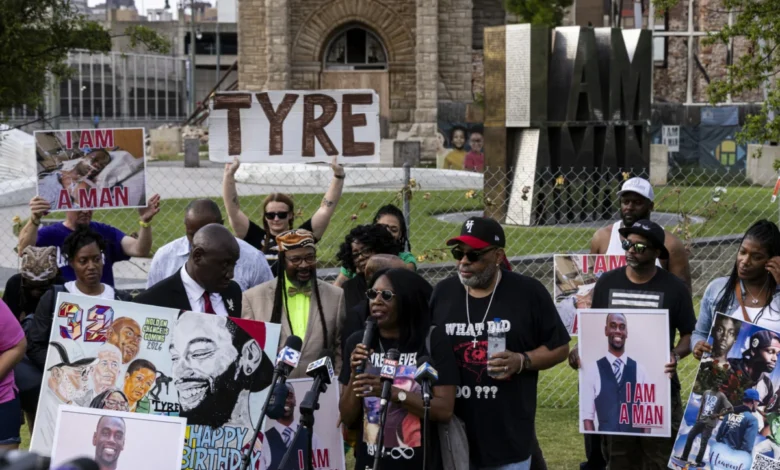
The friction between the state and the city reached a boiling point in the wake of the 2023 police killing of Tyre Nichols. Following national outcry, the Memphis City Council enacted an ordinance designed to curtail "pretextual stops"—police traffic stops for minor infractions like a broken taillight, which critics argue are frequently used to harass minority drivers and escalate into violent confrontations. Taylor and his legislative allies responded almost immediately, passing state-level legislation that effectively nullified the city’s ordinance. When RowVaughn Wells, Nichols’ mother, testified against the bill, pleading for the preservation of local reforms, Taylor defended the state’s intervention as a necessary measure to protect all seven million Tennesseans, asserting that local empathy should not override state-level public safety standards.

Chronology of Conflict: From Local Reform to State Override
The erosion of local control in Memphis has followed a distinct, accelerated timeline over the past three years:
- August 2022: A bipartisan bail reform agreement is reached in Shelby County, introducing an "ability to pay" calculator to ensure defendants are not held in jail simply due to poverty.
- January 2023: Tyre Nichols dies after a brutal beating by Memphis police.
- April 2023: The Memphis City Council unanimously bans pretextual traffic stops to address concerns about aggressive policing.
- May 2023: The Tennessee General Assembly, led by Taylor, passes legislation overturning the city’s traffic stop ban.
- 2024-2025: A series of state laws are passed, shifting power from the elected District Attorney to the state Attorney General and authorizing state oversight of local prosecution policies.
- September 2025: Federal authorities deploy a "Memphis Safe Task Force" to the city, with Taylor providing expert testimony in support of the operation.
- Spring 2026: Congressional redistricting creates a new 9th District, and Taylor launches his campaign for the U.S. House.
The Battle Over Prosecutorial Discretion
Beyond traffic stops, the most contentious battleground has been the office of District Attorney Steve Mulroy. Elected in 2022 on a platform of criminal justice reform—including the deprioritization of low-level drug offenses and a focus on rehabilitation—Mulroy has faced relentless opposition from the state legislature.
In 2023, Taylor sponsored a law that transferred oversight of certain death penalty cases from county prosecutors to the state Attorney General. The law disproportionately affected Shelby County, which houses half of the state’s death row population. Following the deployment of the Trump-era "Memphis Safe Task Force" in 2025, the state legislature went further, passing a law that allows the state Attorney General to monitor all case dispositions and bail recommendations from the District Attorney’s office.
The legislation even includes a provision that could allow the state Supreme Court to appoint a temporary, unelected prosecutor if the District Attorney refuses to pursue specific categories of crime. Mulroy has publicly criticized these measures as a violation of the constitutional principles of prosecutorial independence, characterizing the state’s intervention as an attempt to establish a "shadow DA" that operates in parallel to the will of the voters.

Supporting Data and Public Safety Realities
The debate over these policies is rooted in starkly different philosophies regarding public safety. Proponents, including Taylor and his supporters in the legislature, argue that Memphis requires "tough-on-crime" measures to reverse the city’s high violent crime rates. They point to the necessity of aggressive prosecution and incarceration as the primary deterrents to criminal activity.
Conversely, data from organizations like Just City and the University of Memphis suggest that these policies have unintended, detrimental consequences. A 2025 study from the University of Memphis found that median bail amounts in Shelby County spiked following the implementation of Taylor’s anti-reform laws. Because low-income residents, who are disproportionately Black, are more likely to be impacted by high bail, the jail population has seen an uptick in individuals who have not been convicted of a crime but are unable to pay for their release. Furthermore, since 2018, more than 65 people have died in the overcrowded Shelby County jail, fueling concerns among civil rights advocates about the human cost of current incarceration trends.
The Congressional Campaign: A Contrast in Vision
As the 2026 election approaches, the contest for the redrawn 9th Congressional District offers a clear dichotomy. Brent Taylor, a well-funded candidate who has personally contributed $1.5 million to his own campaign, frames his platform around national security, border-related crime, and the federal support of local task forces. His campaign emphasizes his alignment with national Republican priorities and his experience as a state legislator who has actively "fixed" the governance of Memphis.
His opponent, 31-year-old state Rep. Justin J. Pearson, represents the antithesis of this approach. A Black Democrat with deep ties to the Memphis community, Pearson rose to national prominence as a grassroots activist, successfully organizing against the construction of an oil pipeline in a historic Black neighborhood. His platform focuses on the root causes of crime—advocating for increased investment in public education, economic development, and community-based violence prevention programs.

Pearson’s political trajectory was solidified when he was briefly expelled from the state House for participating in a gun control protest, only to be reinstated by his constituents. His campaign has successfully outraised Taylor in small-dollar donations, signaling a significant mobilization of the Democratic base that feels disenfranchised by the current redistricting.
Broader Implications for American Federalism
The situation in Memphis serves as a microcosm for a broader, nationwide trend: the "preemption wars." Legal scholars, such as John Pfaff of the Fordham School of Law, suggest that the trend of state legislatures overriding city policy is a calculated maneuver to maintain control in an era of demographic and political shifting. By limiting the power of urban centers, rural and suburban-led state governments can effectively nullify the electoral choices of city residents.
The implications for Memphis are long-term. With the state now wielding the power to appoint oversight boards for school districts and to monitor the decisions of elected prosecutors, the city’s ability to experiment with local solutions to local problems is severely diminished. As the federal government—under changing administrations—shifts its own stance on civil rights and police investigations, the legal protections for cities like Memphis remain precarious.
The 2026 election in the 9th District will not merely determine a seat in the U.S. House; it will serve as a referendum on the future of local autonomy in Tennessee. For the residents of Memphis, the ballot box represents one of the few remaining avenues to voice their opposition to a state-led agenda that they argue ignores their local needs, threatens their civil liberties, and ultimately undermines the democratic process. As the district stretches from the urban core of Memphis to the more conservative regions of the state, the question remains whether the city can retain its political voice in a state that seems increasingly determined to silence it.