Team USA establishes early 3-2 lead over International Team in tense Presidents Cup opening day at Medinah

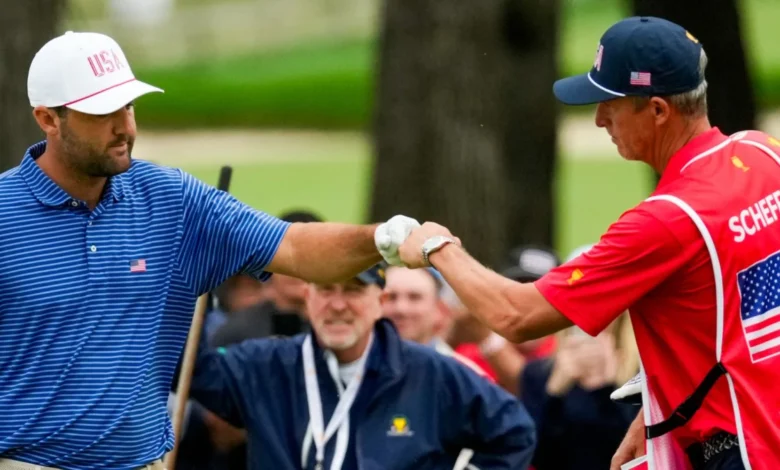
The United States golf contingent, captained by Brandt Snedeker, has successfully navigated a high-stakes opening day at the Medinah Country Club, securing a 3-2 lead over the International Team in the biennial Presidents Cup. Seeking their 11th consecutive victory in this storied competition, the American side faced a resilient challenge from their international counterparts, underscoring the narrow margins that define elite team match play. While the U.S. maintains its historical momentum—having led after the first day in nine of the last ten iterations of the event—the opening session provided a stark reminder that the International Team is determined to break their prolonged drought.
A Session Defined by Fine Margins
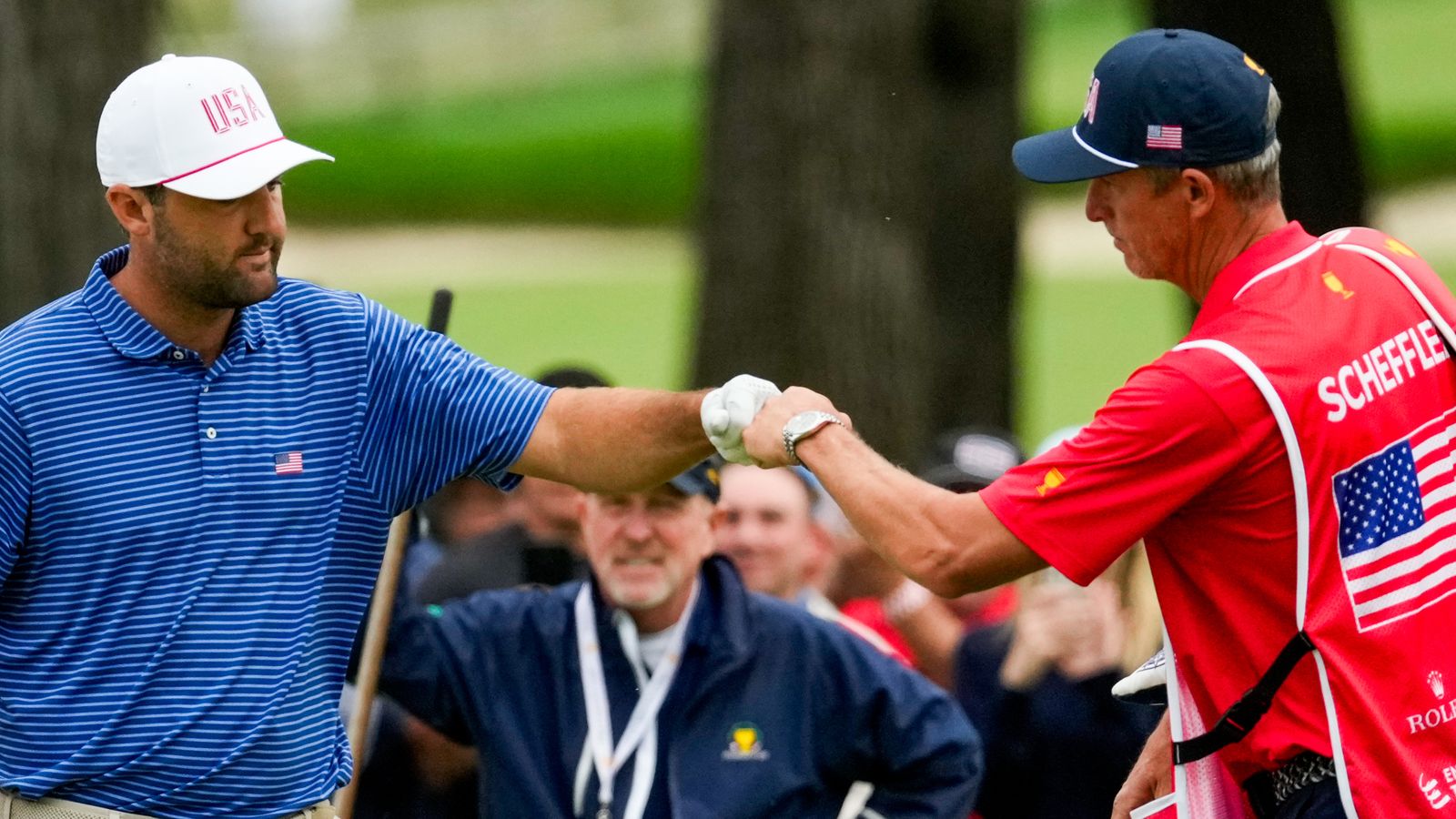
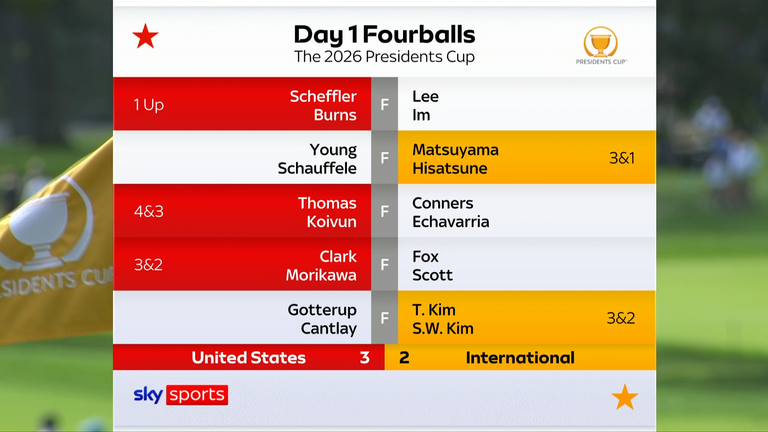
The Thursday fourballs session was characterized by fluctuating fortunes and moments of individual brilliance. Perhaps the most significant narrative of the day was the redemption of World No. 1 Scottie Scheffler. Paired with Sam Burns, Scheffler—who has faced scrutiny regarding his recent record in team formats—managed to secure a hard-fought victory against the formidable duo of Min Woo Lee and Sungjae Im. The match went the distance, concluding in a final-hole thriller that highlighted Scheffler’s ability to perform under the intense pressure of the Presidents Cup environment.
The tone for the Americans was set early by the pairing of Justin Thomas and rookie sensation Jackson Koivun. Their dominant 4&3 victory over Corey Conners and Nico Echavarria provided a necessary cushion for Team USA, demonstrating the strategic value of blending seasoned veteran leadership with fresh, high-performing talent. Koivun, participating in his first Presidents Cup, displayed composure beyond his years, effectively neutralizing the experienced Canadian-Colombian pairing.
The International Response
Despite the American lead, the International Team demonstrated significant depth and tactical flexibility. The all-Japanese pairing of Hideki Matsuyama and Ryo Hisatsune provided one of the day’s most impressive performances, dismantling the high-profile American duo of Cameron Young and Xander Schauffele with a clinical 3&1 result. Matsuyama’s precision and Hisatsune’s aggressive play style created a formidable synergy that frustrated the Americans throughout the round.
Furthermore, the bottom match of the day saw Tom Kim and Si Woo Kim secure a vital point for the International Team, defeating Chris Gotterup and Patrick Cantlay 3&2. The Kim-Kim pairing has long been considered a cornerstone of the International strategy, and their ability to close out a match against a veteran like Cantlay was a critical psychological boost for the visitors. Their performance ensured that the deficit remained manageable, preventing the Americans from establishing a runaway lead during the opening day.
Historical Context and Statistical Dominance
To understand the gravity of the current scoreline, one must look at the historical trajectory of the Presidents Cup. Since its inception in 1994, the event has been heavily skewed toward the United States, which holds a commanding 12-1-1 record. The International Team’s sole victory occurred in 1998 at Royal Melbourne, while a historic tie took place in 2003 in South Africa.
Statistically, the "home-field advantage" at Medinah has historically been a significant factor for American teams. Medinah, a venue with a rich history of hosting major championships, offers a demanding layout that rewards long, accurate driving and precise iron play. Team USA’s success in the opening fourballs can be attributed, in part, to their familiarity with these conditions, yet the proximity of the scoreline—3 to 2—suggests that the gap between the two squads is closing. Analytical models prior to the event had suggested that the International Team possessed its strongest roster in over a decade, a sentiment that appeared validated by their performance on Thursday.
Chronological Breakdown of the Day
The day’s proceedings unfolded in a sequence that tested the stamina and mental fortitude of all twelve pairings.
- Early Morning: The session commenced with high energy, characterized by Min Woo Lee’s spectacular 50-foot birdie putt on the second hole, which served as a statement of intent for the International side.
- Mid-Day: The U.S. began to assert control through the middle matches, as the Thomas-Koivun pairing leveraged their chemistry to gain an early lead that they never relinquished.
- Late Afternoon: The tension peaked in the final three matches. While Wyndham Clark and Collin Morikawa managed to hold off Ryan Fox and Adam Scott 3&2, the International Team’s late-match surge ensured they stayed within striking distance.
- Closing Stages: The conclusion of the Scheffler-Burns match effectively sealed the session for the United States, but the subsequent win by the Kims ensured that the overall momentum remained balanced as the teams prepared for Friday’s foursomes.
Official Reactions and Tactical Adjustments
While official press conferences following the session were measured, the underlying sentiment from both camps was one of cautious optimism. Brandt Snedeker praised his squad’s resilience, specifically highlighting the "grit" displayed by Scheffler and Burns in the closing holes. "In match play, it is never about the total score; it is about the moment," Snedeker noted during his post-round briefing. "We saw moments today where we could have easily folded, but the team stayed focused on the task at hand."
Conversely, the International leadership expressed satisfaction with their competitive standing. By keeping the score within a single point, the Internationals have avoided the early "blowout" scenarios that have plagued their campaigns in recent years. The focus now shifts to the alternate-shot foursomes format, a discipline that historically requires greater tactical synchronization between partners.
Implications for the Remainder of the Tournament
The narrow 3-2 margin sets the stage for a highly competitive weekend. For the United States, the primary objective remains maintaining consistency. With an 11th consecutive title on the line, the psychological weight of expectation is high. Any significant shift in momentum on Friday could embolden the International Team, who are currently playing with a "nothing to lose" mentality.
From a tactical perspective, the upcoming foursomes will require captains to re-evaluate their pairings. The alternate-shot format often exposes the weaknesses of partnerships that relied solely on individual brilliance during the fourballs. Teams that prioritize ball-striking accuracy over raw power will likely find the most success on the second day.
The implications of this result extend beyond the leaderboard. A strong performance from the International Team throughout the week could serve as a catalyst for a shift in the balance of power in international golf. Conversely, if Team USA manages to extend their lead during the Friday foursomes, it will effectively signal their intent to maintain their long-standing hegemony in the event.
As the tournament moves into its second day, all eyes will be on how the various combinations adapt to the change in format. The Friday foursomes session is scheduled to begin at 7:00 PM, with live coverage available on Sky Sports Golf. With the score delicately balanced, the Presidents Cup at Medinah is shaping up to be one of the most compelling editions of the tournament in recent memory, testing the tactical acumen of the captains and the competitive resolve of the world’s finest golfers.