A Sharp Increase in Ectopic Pregnancy Deaths Highlights Critical Gaps in Maternal Healthcare and Policy

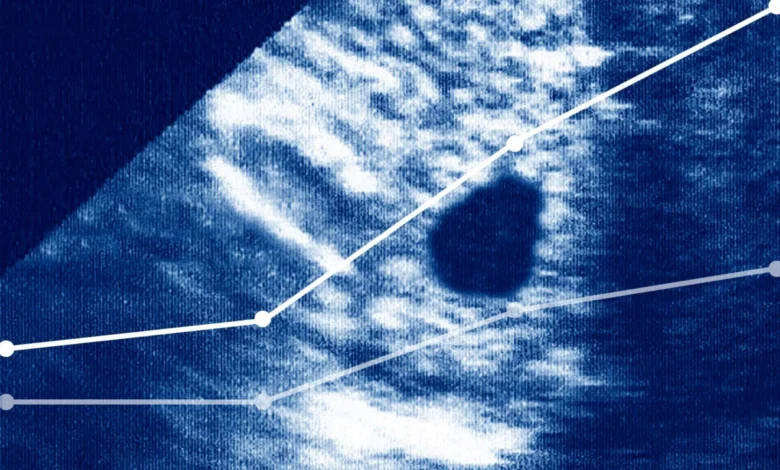
The number of women who have died from complications related to ectopic pregnancies has spiked significantly in recent years, a comprehensive analysis by ProPublica reveals. This mounting mortality rate, identified through an examination of Centers for Disease Control and Prevention (CDC) data, has occurred with minimal federal scrutiny or coordinated public health response. Between 2020 and 2025, nearly 200 women died from ectopic pregnancies—a condition that, with prompt medical intervention, is widely considered a preventable tragedy. This figure represents a near doubling of the roughly 100 deaths recorded in the previous six-year period.
An ectopic pregnancy occurs when a fertilized egg implants outside the uterus, most commonly within a fallopian tube. As the embryo develops, it eventually causes the organ to rupture, leading to life-threatening internal hemorrhage. Historically, early detection and standardized protocols for termination have ensured that ectopic pregnancies rarely result in maternal death. Dr. Alice Abernathy, an OB-GYN based in Philadelphia, described these deaths as a "never event"—a term used in medicine to describe a serious, preventable error that should never occur under proper care.
A Chronology of Declining Outcomes
The trajectory of these deaths suggests a convergence of systemic pressures. While the initial surge began during the COVID-19 pandemic, characterized by hospital overcrowding and strained emergency resources, the numbers have failed to plateau or decline in the years since.
The timeline of this crisis aligns with the 2022 Supreme Court decision to overturn Roe v. Wade, which triggered a wave of state-level abortion bans. In the years following the ruling, medical providers in states with restrictive abortion laws have increasingly faced legal uncertainty. While these laws typically include exceptions for the life of the mother, the threat of severe criminal penalties—including decades of imprisonment—has created a chilling effect. Clinicians report hesitation to intervene in pregnancy complications that are not yet definitively confirmed as ectopic, despite clinical suspicion, for fear that their medical judgment will be scrutinized by law enforcement or local prosecutors.
Data Analysis and the Impact of State Restrictions
ProPublica’s analysis indicates a widening divide in maternal outcomes between states with strict abortion bans and those without. While ectopic mortality has increased nationally, the climb is substantially steeper in jurisdictions that have enacted bans or severe restrictions on abortion since 2022.
The data specifically highlights a concerning trend in Texas, a state with some of the most stringent restrictions in the country. A review of hospital data shows that in 2023 and 2024, approximately 310 more patients experienced substantial blood loss following an ectopic pregnancy compared to the 2018–2019 baseline, marking a 29% increase in morbidity. This suggests that the impact of these policies extends beyond mortality to include a rise in severe, life-altering health complications.
The analysis also dispels the argument that telehealth abortion services are to blame for the surge. Anti-abortion advocates have posited that the rise in online-prescribed abortion pills may lead to more undiagnosed ectopic pregnancies. However, academic research contradicts this, showing that ectopic rates are significantly lower among telehealth abortion patients than in the general population. These services employ rigorous screening protocols, and researchers note that the causal link between telehealth and rising ectopic deaths lacks empirical support.
Individual Accounts and Medical Uncertainty
The human cost of these policy shifts is reflected in the harrowing experiences of patients like Kyleigh Thurman and Leitaea Lowrimore. In 2023, Thurman was sent home from two emergency departments in Texas despite presenting with clear indicators of an ectopic pregnancy. Regulators later determined that the facilities failed to perform adequate screenings or consult an OB-GYN, violating both hospital policy and the federal Emergency Medical Treatment and Labor Act (EMTALA), which mandates that hospitals stabilize patients regardless of their ability to pay or the nature of their condition. Thurman’s fallopian tube eventually ruptured, requiring an emergency procedure.
Similarly, in early 2025, Leitaea Lowrimore of Oklahoma was denied treatment at multiple hospitals despite suffering from severe abdominal pain and hemorrhaging. Doctors explicitly cited fear of legal repercussions, with one clinician noting the risk of a ten-year prison sentence. It was only after traveling to Kansas, where abortion remains legal, that Lowrimore received the necessary care. These cases highlight the "gray area" created by current legislation, where a doctor’s fear of prosecution overrides the standard of care.
Official Responses and Institutional Silences
In response to public outcry, some states have attempted to clarify their statutes. Texas, for example, passed the "Life of the Mother Act" in 2025, explicitly adding ectopic pregnancies to the list of permissible abortions. However, the Texas Medical Board’s guidance remains narrow, focusing on cases where the ectopic pregnancy is clearly visible on an ultrasound. This creates a dangerous loophole for early-stage pregnancies where the location cannot yet be confirmed, leaving doctors vulnerable to legal challenges if they act before a definitive image is produced.
A spokesperson for the Texas Medical Board maintained that the guidance is not intended to cover every scenario and that physicians following evidence-based protocols face "minimal risk." However, legal experts argue that such reassurances are insufficient in a climate where the threat of a 99-year sentence for "illegal" abortions looms over the profession.
The Erosion of Federal Research Capacity
The broader public health implications are compounded by a decline in federal research and monitoring. Under the current administration, the CDC’s Division of Reproductive Health has seen its staff headcount reduced by approximately 100 positions, according to legal filings. Furthermore, the Pregnancy Risk Assessment Monitoring System (PRAMS)—a cornerstone of maternal health data collection—has been sidelined, with key researchers placed on administrative leave.
This decline in institutional capacity limits the government’s ability to "see" the problem. Unlike the United Kingdom, which identified a similar spike in ectopic deaths in 2021 and 2022 and responded with national investigations and policy updates, the United States has largely failed to conduct a coordinated federal review. The lack of standardized tracking for ectopic risk factors—such as history of pelvic inflammatory disease or prior tubal issues—means that the U.S. is currently operating in the dark.
Implications for the Future of Maternal Health
The lack of data is not merely a technical oversight; it is a policy failure with life-or-death consequences. As Dr. Courtney Schreiber of the University of Pennsylvania observed, reproductive health is uniquely sensitive to policy changes. When legal environments shift, the standard of care follows, often with disastrous results for the most vulnerable patients.
Economist Caitlin Myers of Dartmouth College emphasized that these findings warrant immediate and rigorous investigation. "This is a potentially profound consequence of the regulation," she noted. Without a federal effort to understand why these deaths are occurring, medical professionals remain caught between their oath to "do no harm" and the risk of criminalization.
For now, the burden of advocacy has shifted to legal clinics and independent researchers. Attorneys like Michelle Maloney continue to represent women denied emergency care, arguing that "specific exemptions do not address the massive gray areas that arise in pregnancy." As states continue to diverge in their approach to reproductive rights, the gap in maternal outcomes is expected to grow. Whether the medical establishment can regain the autonomy required to treat life-threatening conditions without the threat of incarceration remains the defining question of the current maternal health crisis in the United States. Without systemic reform, training for emergency responders, and a renewed commitment to objective health research, experts fear that the preventable deaths of women like those in the ProPublica analysis will become a permanent feature of the American healthcare landscape.