The complexities of modern legal practice often extend far beyond the mastery of case law, statutory interpretation, and courtroom procedure. For many emerging practitioners, the most daunting challenges do not occur behind a mahogany bench or in a deposition room, but rather in the social ballrooms and high-end dining rooms where business development and networking take place. Recognizing a growing gap in professional socialization, particularly among those whose early careers were shaped by the isolation of the COVID-19 pandemic, the Richland County Bar Association (RCBA) recently launched an initiative titled "Dinner with Decorum" to equip the next generation of South Carolina attorneys with the "soft skills" necessary for high-level corporate success.
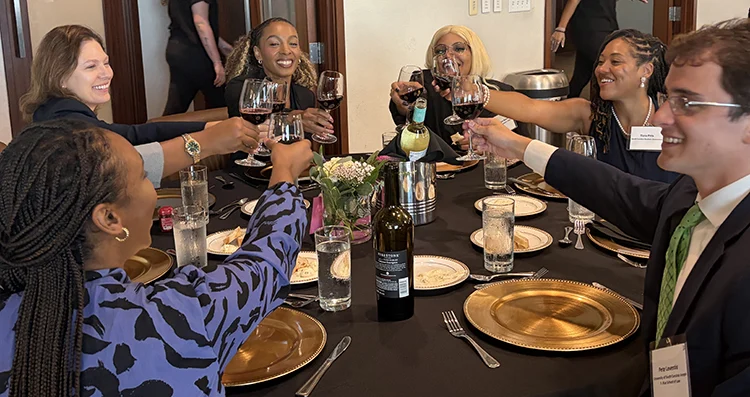
The inaugural event, held on July 9, 2026, at the Columbia offices of Nelson Mullins Riley & Scarborough, brought together a diverse cohort of 40 young lawyers and 10 law students. The curriculum was designed to demystify the often-unspoken rules of professional etiquette, ranging from the mechanics of a multi-course meal to the strategic placement of a name tag. For participants like Kate Mills, an associate at Adams & Reese who specializes in complex commercial disputes, the event provided practical solutions to physical maneuvers that are rarely covered in law school.
“You put the plate between your bottom two fingers, and the wine glass you hold with your top two fingers and rest it on top of the plate. And your napkin is underneath,” Mills explained, describing the intricate balance required to hold a drink and hors d’oeuvres while remaining ready to shake hands with a potential client or senior partner. Mills, who served as co-chair for the event, emphasized that these skills, while seemingly minor, are essential components of a lawyer’s professional toolkit.
The Genesis of Dinner with Decorum
The concept for the event originated with Shannon Bobertz, the President of the Richland County Bar Association and Chief of Staff for the South Carolina Department of Natural Resources. During her attendance at the American Bar Association (ABA) Bar Leadership Institute, Bobertz learned of a similar initiative spearheaded by the Connecticut Bar Association. Recognizing that her own administration’s theme focused heavily on engaging and supporting young lawyers, she saw an opportunity to bring a high-level corporate etiquette program to Columbia.
The motivation for the program was two-fold: addressing the "COVID gap" and supporting social mobility within the profession. Mandy Wren, the Executive Director of the RCBA, noted that many attorneys who graduated or began their practice between 2020 and 2023 missed out on the traditional cycle of firm mixers, bar galas, and face-to-face networking. This "lost period" of social professionalization left many young lawyers feeling ill-at-ease in formal settings that their predecessors took for granted.
Furthermore, the program aimed to level the playing field for first-generation lawyers. In an industry that has historically been criticized for its "hidden curriculum"—the set of social norms and behaviors often passed down through legacy families—the RCBA sought to provide a transparent guide to professional behavior. "Confidence building is the biggest thing that comes to mind," Wren said. "If you weren’t in a family or a setting where this was commonplace, I would hate for anyone to feel that they were lesser because they didn’t know some of it."
A Curriculum of Professional Polish
The event was facilitated by Anna Mills Polatty Cox, founder of Amplified Communications and a certified corporate etiquette consultant. The program was structured around a seated, four-course dinner, interspersed with four focused sessions. These sessions covered a broad spectrum of social interactions, including:
- Reception Maneuvers: Techniques for circulating through a room, entering and exiting conversations gracefully, and the aforementioned "one-handed" plate and glass management.
- Conversational Dynamics: Strategies for remembering names, finding common ground with strangers, and maintaining professional boundaries in social settings.
- Table Manners: The "geography" of a formal table setting, the proper use of specialized utensils, and how to handle difficult-to-eat foods without attracting negative attention.
- The Lasting Impression: The etiquette of the "follow-up," including hand-written thank-you notes and the appropriate timeline for digital outreach after a meeting.
During the first course—a chilled gazpacho—the practical nature of the training became immediately apparent. Bobertz recounted how a participant asked for clarification on which spoon to use for the soup. "You could ask real-time questions, and no one was shaming anyone or judging anyone," Bobertz said. This environment of psychological safety allowed participants to admit to gaps in their knowledge without fear of professional repercussions.
Addressing the "Soft Skills" Gap in the Legal Industry
The RCBA’s initiative reflects a broader trend in the legal industry toward recognizing the value of emotional intelligence and social grace. While law schools excel at teaching "how to think like a lawyer," industry data suggests that "how to act like a lawyer" is increasingly important for career longevity. According to a 2023 survey by the National Association for Law Placement (NALP), law firms have identified "client-facing skills" and "professionalism" as top priorities for associate development, second only to substantive legal knowledge.
The lack of these skills can have tangible consequences. As Kate Mills noted, something as simple as the placement of a name tag can influence a senior attorney’s perception of a junior colleague. "It goes on your left-hand side, so that when you shake with your right hand, you don’t cover up your name," Mills explained. "It’s something you might not think of as a young lawyer, but when meeting a seasoned attorney or politician… it’s something they will notice, and you might not even know you just got a ‘ding.’"
In a profession where reputation is a primary currency, these "dings" can accumulate, potentially affecting promotion tracks or client assignments. By providing this training for free, the RCBA removed financial barriers that might have prevented public defenders, solo practitioners, or law students from accessing high-level coaching that is typically reserved for associates at "Big Law" firms.
Chronology and Future Impact
The planning for Dinner with Decorum began in late 2025, following Bobertz’s return from the ABA leadership conference. The RCBA executive committee worked to secure a venue and sponsorship to ensure the event remained free for members. The choice of Nelson Mullins Riley & Scarborough as the host site provided an authentic "corporate" atmosphere, further immersing participants in the environment they were learning to navigate.
The diverse attendance at the event—which included federal prosecutors, public defenders, in-house counsel, and students—underscored the universal need for such training across different legal sectors. Bobertz noted that even seasoned lawyers expressed interest in the program. "When I told them about this, they said, ‘Why are you just doing it for young lawyers? I think I could use some practice with this,’" she said.
The success of the July 9 event has sparked discussions within the South Carolina legal community about making such training a recurring feature of bar membership. There is a growing consensus that as the legal profession continues to evolve in a post-digital, post-pandemic landscape, the "human" element of the practice—the ability to connect, dine, and converse with dignity—remains a cornerstone of professional excellence.
Conclusion: The Return to Professionalism
As the legal world grapples with the integration of artificial intelligence and the permanence of remote work, the Richland County Bar Association’s focus on the physical and social aspects of the profession serves as a reminder of the enduring importance of personal presence. By equipping young lawyers with the confidence to navigate a formal dinner or a high-stakes networking event, the RCBA is not merely teaching manners; it is fostering a more inclusive and professional legal culture.
For the 50 attendees who left the Nelson Mullins office on that July evening, the takeaway was clear: professional success is a multifaceted endeavor. Whether it is knowing which spoon to use for gazpacho or how to exit a conversation with a senior partner, these skills provide the foundation upon which a lasting and respected legal career is built. In the Palmetto State, where a tradition of courtly manners remains a point of pride, "Dinner with Decorum" has set a new standard for how bar associations can support the holistic development of their members.