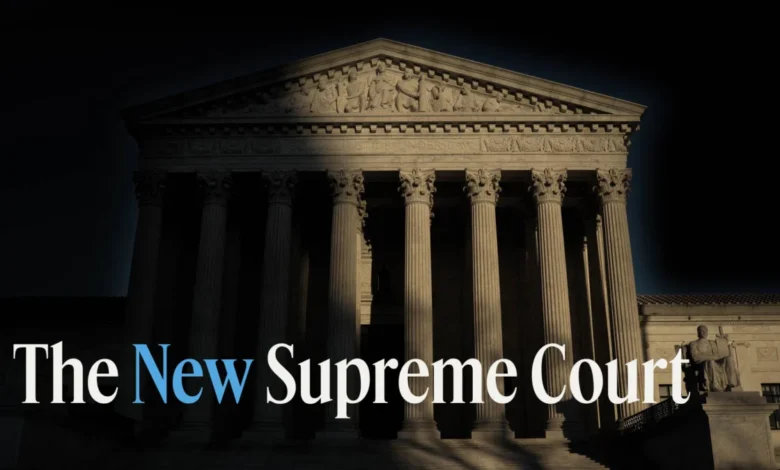
The Supreme Court of the United States is currently undergoing a structural transformation that is fundamentally altering how American law is shaped, interpreted, and applied. While the public focus often remains on the high-profile, fully briefed cases that dominate headlines during the traditional October-to-June term, a vast and opaque reservoir of judicial power has been growing in the background. Recent data analysis of the Court’s online archives reveals a startling milestone: during the term that concluded in 2025, the justices issued more substantive rulings via the emergency docket—frequently termed the "shadow docket"—than through the traditional, argued process of open court. This shift marks a departure from historical norms, raising significant questions regarding judicial transparency, the nature of legal precedent, and the erosion of the public-facing deliberative process that has defined the institution for over two centuries.
The Mechanics of the Shadow Docket
The emergency docket is technically designed for urgent matters requiring immediate intervention, such as requests for stays of execution, injunctions against government policies, or time-sensitive administrative disputes. Historically, these requests were infrequent, narrow in scope, and typically handled with brief, unsigned orders. However, the modern Supreme Court has increasingly utilized this mechanism to resolve complex constitutional questions without the benefit of full briefing, oral arguments, or transparent vote counts.
When the Court decides a case on the shadow docket, it bypasses the standard "merits" track. In a normal case, parties submit exhaustive briefs, lower courts provide detailed records, and the justices engage in public oral arguments. These proceedings culminate in a written opinion, signed by one or more justices, outlining the legal reasoning and providing a clear guide for lower courts to follow. In contrast, shadow docket rulings are often issued as unsigned orders. They rarely provide an explanation of how the justices arrived at their decision, and they frequently obscure the ideological split among the nine members of the bench.
A Statistical Shift in Judicial Practice
The transition toward shadow docket reliance was not an overnight occurrence, but rather a gradual trend that accelerated significantly over the last decade. By parsing tens of thousands of case files from the Supreme Court’s official docket, it becomes clear that the volume of substantive intervention via emergency filings has reached an unprecedented level.
During the 2024-2025 term, the number of emergency orders that effectively settled major constitutional disputes surpassed the number of cases decided through the traditional merits process. This is not merely a quantitative change; it is a qualitative one. Many of these orders have granted stays that effectively block federal regulations, state laws, or executive actions, often without the Court providing a clear "test" or legal framework for why a stay was warranted. This lack of guidance leaves lower courts, government agencies, and the public in a state of legal uncertainty, as they are left to interpret the tea leaves of an unsigned, unexplained order to understand how the Court views the constitutionality of a given policy.
The Chronology of Increased Usage
To understand the evolution of the shadow docket, one must look at the timeline of the Court’s recent activity. In the years following the transition of the Court’s ideological composition, the emergency docket became a preferred vehicle for parties seeking to halt government action.
- 2017-2019: The frequency of emergency stays began to rise, particularly in cases involving immigration policy and environmental regulations.
- 2020-2022: During the height of the COVID-19 pandemic, the Court issued numerous shadow docket rulings regarding public health mandates and religious freedom, often creating a patchwork of legal standards that varied from state to state.
- 2024: The Court began utilizing the emergency docket not only for procedural stays but to issue substantive, outcome-determinative rulings on issues ranging from voting rights to administrative law.
- 2025: Data indicates that for the first time in modern history, the emergency docket overtook the merits docket in terms of substantive impact on national policy.
This progression reflects a Court that is increasingly comfortable exercising its power through rapid, non-transparent directives. As of the summer recess in 2025, the Court has continued to issue such rulings, ensuring that the shadow docket remains the primary engine of judicial decision-making even during the months when the Court is not in session.
Responses and Political Friction
The expansion of the shadow docket has not gone unnoticed by the political sphere, though the criticism comes from unexpected quarters. Recently, former President Donald Trump, who appointed three of the current justices, publicly expressed dissatisfaction with the Court’s output. In a post on his social media platform, Truth Social, Trump criticized the bench, suggesting that the justices were failing to meet the expectations established during his interview and nomination process.
"It is a Court that will go down as having rendered some of the most destructive, hurtful, and damaging decisions in our Country’s history," Trump wrote. His remarks highlighted a growing frustration among political leaders who find the unpredictability of the shadow docket to be a double-edged sword. While the Court has often been viewed as a conservative bulwark, the lack of a clear, coherent judicial philosophy in unsigned shadow orders means that even political allies of the current bench may find themselves on the losing end of rulings that lack any explanatory text.
The Supreme Court, for its part, has maintained a policy of silence regarding these inquiries. Representatives from the Court did not respond to requests for comment regarding the methodology behind emergency rulings or the impact of this trend on public trust in the judiciary.
The Broader Implications for American Law
The shift toward the shadow docket carries profound implications for the rule of law. Legal scholars argue that the essence of a democratic judiciary is transparency—the ability of the public to see not just the result of a case, but the logic that justifies it. When the Court decides a case in the shadows, it denies the legal community the ability to critique the reasoning.
Furthermore, the shadow docket undermines the principle of stare decisis—the legal doctrine of adhering to precedent. Without a written opinion, it is difficult to determine whether an emergency order constitutes a binding precedent for future cases. This ambiguity encourages a "rush to the courthouse," where litigants file emergency motions hoping for a favorable, if unexplained, order, rather than pursuing the long, arduous process of building a case through the lower courts.
The cumulative effect of this practice is a judiciary that acts more like an administrative supervisor than an arbiter of constitutional principles. By intervening in the minutiae of policy implementation without the constraints of a formal record, the Court risks politicizing its own image. As the shadow docket continues to dominate the Court’s output, the distinction between the judicial branch and the political branches begins to blur.
Looking Ahead to the New Term
As the Court approaches the start of its new term on October 5, the legal community is bracing for the possibility that this trend will continue. The reliance on the shadow docket has effectively created a "two-track" system of justice: one for the public, where arguments are heard and opinions are written; and one for the powerful, where urgent requests can bypass the traditional filters of judicial review.
Whether the Court will eventually return to its historical reliance on the merits docket remains to be seen. However, the data from the 2025 term serves as a clear indicator that the shadow docket is no longer an exception—it is a central feature of the modern Supreme Court. For observers, the challenge lies in demanding the transparency required to hold the nation’s highest court accountable, ensuring that the decisions shaping the future of the United States are made in the light, rather than in the shadows.
The ongoing reliance on these emergency powers ensures that, until the formal term resumes, the nation will continue to be governed by a series of unexplained, unsigned directives, leaving a complex and opaque legacy for the justices to address when they return to the bench.