President Trump Calls for Federal Review of Judicial Scientific Manual Amid Allegations of Political Bias

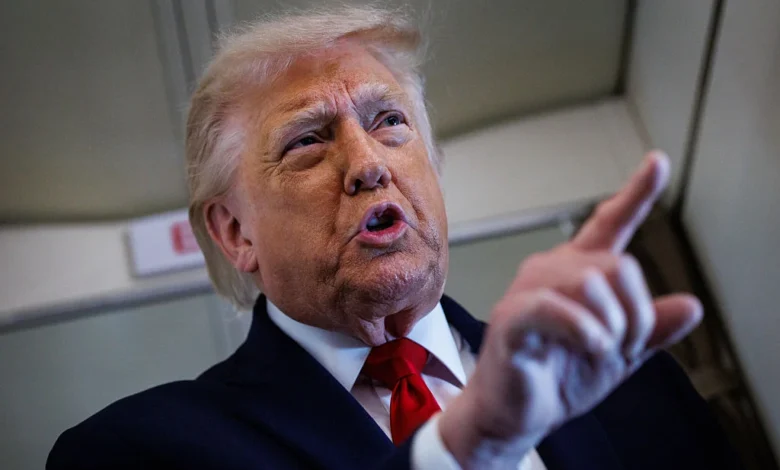
President Donald Trump has formally called for a comprehensive federal review of the Reference Manual on Scientific Evidence, a cornerstone resource used by the federal judiciary, alleging that the publication has been compromised by partisan interests and "radical left" ideologies. In a statement released Sunday via his social media platform, Truth Social, the President announced that he would direct federal suspension and debarment officials to evaluate the National Academy of Sciences (NAS) and its role in producing the manual. This move marks a significant escalation in the administration’s ongoing friction with scientific institutions and the federal court system, specifically regarding the handling of environmental litigation and climate science.
The Reference Manual on Scientific Evidence was first published in 1994 as a joint venture between the Federal Judicial Center (FJC) and the National Academy of Sciences. For over three decades, it has served as the primary guide for federal judges tasked with managing complex scientific testimony under the Daubert standard, which requires judges to act as "gatekeepers" to ensure that expert testimony is both relevant and reliable. President Trump’s recent demands focus on the manual’s treatment of climate change, which he characterized as "fraudulent, biased, and misleading."
The Scope of the Presidential Demand
The President’s directive targets the National Academy of Sciences, a private, nonprofit institution established by an Act of Congress in 1863 to provide independent, objective advice to the nation on matters related to science and technology. By calling for an investigation by "federal suspension and debarment officials," the President is signaling a potential move to strip the NAS of its eligibility for federal contracts and grants—a move that would have seismic implications for the American scientific community.
"The National Academy of Sciences has been run by radical left Democrats who have turned a once-respected institution into a political weapon," Trump wrote in his Sunday post. He further alleged that the manual is being used to improperly "indoctrinate" federal judges on environmental issues, leading to rulings that he claims are detrimental to American industry and energy independence.
The manual covers a broad spectrum of technical subjects, including DNA identification, forensic analysis, engineering, statistics, and artificial intelligence. However, the President’s ire is specifically directed at the recently updated sections on climate change. According to the administration, the manual’s description of greenhouse gas effects and ecological "tipping points" serves as a biased roadmap for trial lawyers and environmental activists seeking to sue oil and gas corporations in federal court.
Historical Context and the 2026 Controversy
The current controversy did not emerge in a vacuum. It follows a period of heightened tension between Republican state officials and the Federal Judicial Center. In February 2026, a coalition of Republican state attorneys general sent a formal letter to Congress, arguing that the Reference Manual on Scientific Evidence had lost its neutrality. The attorneys general argued that the handbook’s climate science chapter presented a one-sided view of environmental data, specifically designed to favor plaintiffs in climate-related tort litigation.
Shortly after the delivery of that letter, the Federal Judicial Center took the unprecedented step of removing the chapter on climate science from its digital repository. At the time, the FJC stated that the removal was intended to allow for further review and to ensure that the content met the highest standards of judicial neutrality. However, the President’s recent announcement suggests that the removal of the chapter was insufficient to address the administration’s concerns regarding the underlying influence of the NAS on the judiciary.
A Chronology of the Reference Manual on Scientific Evidence
To understand the weight of this dispute, it is necessary to examine the timeline of the manual’s development and its role in the American legal system:
- 1863: The National Academy of Sciences is incorporated by President Abraham Lincoln to provide expert advice to the federal government.
- 1993: The U.S. Supreme Court decides Daubert v. Merrell Dow Pharmaceuticals, Inc., establishing that federal judges must evaluate the methodology and reliability of scientific evidence.
- 1994: The Federal Judicial Center publishes the first edition of the Reference Manual on Scientific Evidence to assist judges in fulfilling their Daubert gatekeeping duties.
- 2000: The second edition is released, expanding the manual to include new developments in forensic science and toxicology.
- 2011: The third edition is published in collaboration with the National Research Council, the operating arm of the NAS, adding chapters on neuroscience and mental health evidence.
- 2024–2025: Work begins on the fourth edition, intended to address emerging fields such as artificial intelligence, machine learning, and updated climate attribution science.
- February 2026: Republican attorneys general challenge the neutrality of the climate science chapter, alleging it targets the energy sector.
- February 2026: The FJC removes the climate science chapter pending further review.
- July 2026: President Trump calls for a formal debarment review of the NAS and a total overhaul of the manual’s oversight.
Supporting Data: The Manual’s Influence on the Bench
The Reference Manual on Scientific Evidence is not merely a textbook; it is a foundational document for the 870 authorized federal judgeships in the United States. According to data from the Administrative Office of the U.S. Courts, the manual is cited in hundreds of federal opinions annually. It is a staple in judicial education programs and is often provided to every newly appointed federal judge as part of their orientation materials.
The manual’s influence is particularly pronounced in multi-district litigation (MDL) and class-action suits involving environmental damage, pharmaceutical liability, and toxic torts. In these cases, judges must often decide whether to admit expert testimony that could determine the outcome of billions of dollars in claims. By challenging the manual’s credibility, the administration is effectively challenging the "cheat sheet" that judges use to determine what constitutes "good science" in the courtroom.
Official Responses and Potential Legal Challenges
While the National Academy of Sciences has not yet issued a formal rebuttal to the President’s Sunday post, sources close to the organization suggest that any attempt to debar the NAS would be met with vigorous legal challenges. The NAS operates under a unique congressional charter, and legal experts argue that the President may lack the authority to unilaterally disqualify the institution from federal participation based on the content of its scientific publications.
Democratic lawmakers have quickly condemned the President’s move as an assault on the separation of powers. "The President is attempting to dictate what science is acceptable for federal judges to read," said a spokesperson for the House Judiciary Committee’s minority leadership. "This is a blatant attempt to tip the scales of justice in favor of corporate interests by suppressing established scientific consensus."
Conversely, supporters of the President’s initiative argue that the NAS has strayed from its mission of objective inquiry. They point to the fact that many contributors to the manual’s climate chapter have also served as expert witnesses for plaintiffs in environmental lawsuits, creating what they describe as an inherent conflict of interest.
Broader Implications for Judicial Independence
The demand for a review of the manual raises profound questions about the relationship between the executive branch and the judiciary. If the executive branch can successfully influence the educational resources provided to judges, it could represent a shift in how judicial independence is viewed in the 21st century.
There is also the matter of scientific integrity. The Reference Manual on Scientific Evidence relies on peer-reviewed data and the consensus of the scientific community. If a political administration can label such a consensus as "fraudulent" and trigger administrative sanctions against the authors, it may create a chilling effect on scientists who collaborate with the government or the judiciary.
Furthermore, the focus on "suspension and debarment officials" is a tactical choice. Debarment is typically reserved for contractors who engage in financial fraud or criminal activity. Applying this administrative tool to a scientific advisory body over the content of a judicial manual is an unprecedented expansion of executive power. It suggests that the administration intends to use the federal procurement system as a means of enforcing ideological conformity across non-governmental organizations.
Analysis of Potential Outcomes
As the administration moves forward with its review, several outcomes are possible:
- Administrative Sanctions: If the debarment officials find evidence of what they term "politicization," the NAS could lose millions in federal funding, potentially crippling many of its research initiatives.
- Judicial Pushback: Federal judges, who value their independence, may continue to use the manual regardless of its official status, or they may turn to alternative sources that are less susceptible to executive pressure.
- Legislative Intervention: Congress may act to clarify the status of the NAS or to provide specific funding for the Federal Judicial Center to develop its own independent scientific resources, free from both the NAS and executive oversight.
- A Redefined Manual: The FJC may choose to rewrite the manual using a different set of experts, potentially including more voices from industry-aligned scientific groups to satisfy the administration’s demands for "balance."
The outcome of this conflict will likely set a precedent for how scientific expertise is integrated into the American legal system for decades to come. As environmental litigation continues to proliferate in federal courts, the definition of "reliable science" remains one of the most contested frontiers in the battle between the executive branch, the judiciary, and the scientific community.