The Crisis of Aging Inmates and the Search for Compassionate Long-Term Care Solutions


As the American prison population ages, correctional facilities across the United States are increasingly grappling with a profound humanitarian and financial dilemma: how to care for elderly, chronically ill, and dying inmates. Driven by decades of stringent "tough-on-crime" legislation enacted in the late 20th century, state and federal correctional systems have unintentionally transformed into high-cost, ill-equipped nursing homes. While many jurisdictions have statutory mechanisms for "compassionate release"—permitting the early release of inmates whose advanced age or terminal illness mitigates the need for continued incarceration—these policies are frequently paralyzed by a critical bottleneck. Traditional long-term care facilities nationwide categorically reject individuals coming directly from correctional backgrounds, leaving sick and dying prisoners trapped behind bars despite having legal clearance to leave.
This systemic failure has placed an unsustainable burden on prison medical infrastructure, prompting criminal justice reformers, health policy experts, and state officials to search for viable models of transitional care. Among the few exceptions to this nationwide gridlock is a specialized network in New England pioneered by former Connecticut Governor Dannel Malloy, which offers a potential blueprint for addressing a crisis projected to escalate dramatically over the coming decade.
Background Context and the Evolution of the Mass Incarceration Crisis
The roots of the current crisis lie in the sentencing reforms and penal policies of the 1980s and 1990s, which emphasized mandatory minimums, "three-strikes" laws, and the virtual elimination of parole in many jurisdictions. These measures caused a massive surge in the overall prison population, but their secondary effect—the graying of America’s prisons—is only now being fully realized.
According to data compiled by the Prison Policy Initiative from the Bureau of Justice Statistics, the demographic makeup of state and federal prisons shifted dramatically between 1991 and 2021. During this thirty-year window, the percentage of incarcerated individuals aged 55 and older skyrocketed from just 3% to 15%. Projections from the American Civil Liberties Union (ACLU) indicate that this trend will only accelerate, estimating that by 2030, more than one-third of all individuals in United States prisons will be 55 or older.
This demographic shift has radically altered the operational reality of correctional institutions. Prisons, which are fundamentally designed for security and punitive confinement, are ill-suited to serve as medical sanctuaries for aging populations. Incarcerated older adults frequently suffer from debilitating conditions that mirror—and often exceed—the medical challenges of their peers in the free world. A 2025 study conducted by the Johns Hopkins Bloomberg School of Public Health’s Department of Health Policy and Management revealed that elderly inmates experience disabilities at nearly double the rate of non-incarcerated adults of the same age. Most notably, the study found that 15% of incarcerated individuals aged 55 and older reported cognitive impairments, compared to only 7% among the general population outside prison walls.
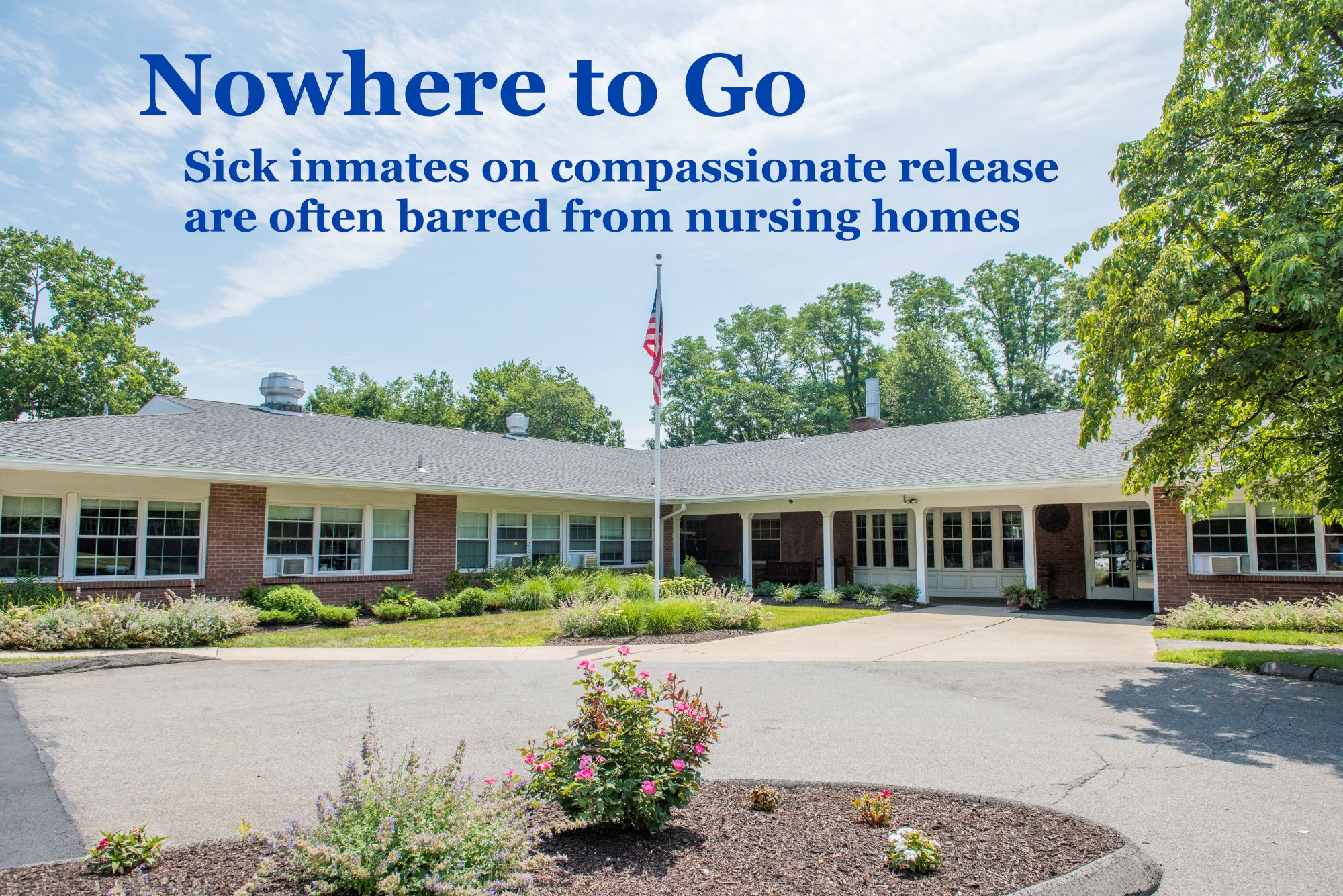
Chronology of Reform: Connecticut’s Pathfinding Initiative
The recognition that prisons were becoming dysfunctional nursing homes motivated early administrative reforms in Connecticut. Shortly after taking office in 2011, then-Governor Dannel Malloy initiated a comprehensive review of the state’s criminal justice system. Drawing on his earlier career as a prosecutor in Brooklyn, New York, Malloy grew increasingly disturbed by the prevalence of elderly and debilitated inmates who remained imprisoned long past the point where they posed a public safety threat.
In many instances, these individuals were legally granted parole or medical release, but administrative barriers kept them locked away. Nursing homes across the state refused to accept patients with criminal records, and federal Medicaid rules historically prohibited the subsidization of healthcare delivered inside correctional facilities.
"Keeping them in institutions that can’t meet their needs doesn’t make a whole lot of sense, especially when there are dollars available to pay for their care—not in prison but in other facilities," Malloy observed.
Acting on the governor’s directive, the state of Connecticut issued a formal request for proposals (RFP) to establish a dedicated nursing facility capable of housing paroled inmates who required specialized medical and behavioral health care. In 2013, the state partnered with the iCare Health Network to open "60 West" in Rocky Hill, a town near Hartford.
The 95-bed facility was established as the nation’s first long-term nursing center specifically tailored for individuals who are formerly incarcerated or otherwise difficult to place due to complex mental illness and behavioral health challenges. After navigating regulatory hurdles, the facility secured approval for federal Centers for Medicare & Medicaid Services (CMS) funding. Over the ensuing decade, the 60 West model has drawn national attention as a functional prototype for managing the care of aging and infirm prisoners.
"It’s just the decent thing to do," said Malloy, who transitioned to academia and now serves as the chancellor of the University of Maine System. "If someone is sick, to not give them the care that might help resolve their pain or disease is inhuman."

The Nationwide Bottleneck: Compassionate Release in Theory Versus Practice
Despite the success of the Connecticut model, the state remains a distinct outlier. While the vast majority of U.S. states and the federal system possess statutory provisions for compassionate release—also known as medical parole or clemency—the mechanism is rarely utilized effectively.
Molly Crane, counsel at FAMM, a national advocacy organization promoting fair and effective criminal justice policies, notes that the compassionate release process is fraught with procedural obstacles. Inmates suffering from advanced illnesses often find the application process overwhelmingly confusing, are physically too incapacitated to navigate the bureaucracy, or lack the financial resources to retain legal counsel. To counter this, advocacy groups like FAMM frequently step in to pair critically ill state prisoners with pro bono lawyers and medical experts to secure their release.
However, legal victory is often only the first hurdle. Once an older adult is granted compassionate release, they frequently discover that physical freedom does not equate to placement. Nationwide, commercial nursing homes routinely and categorically decline to admit individuals coming from correctional facilities.
Crane highlights a striking example from North Carolina, where state social workers reported contacting more than 400 different nursing homes in a desperate attempt to find a placement for an elderly, sick prisoner. Every single facility refused.
"They get, ‘Absolutely no,’ when they call," Crane said. "People hang up on them. And sometimes nursing homes even say, ‘Ew,’ as in, gross."
Similar exclusionary practices have been documented by investigative reports in Rhode Island, New York, Colorado, and Hawaii. Sean Sanada, CEO of the Hawaii Health Systems Corp.’s Oahu region, which oversees two state-funded long-term care facilities, noted that his administration has reviewed dozens of compassionate release referrals but has systematically declined all of them. Citing safety concerns and a lack of specialized resources, Sanada summarized the prevailing industry sentiment: "The risk is just too high in most of those instances."

Addressing Safety and Community Concerns
The reluctance of long-term care facilities to accept formerly incarcerated individuals is rooted primarily in concerns over staff safety, resident security, and potential liability. These anxieties have frequently manifested as fierce public opposition when specialized facilities attempt to open their doors.
When iCare Health Network established 60 West in Rocky Hill, Connecticut, the project faced immediate pushback from local municipal officials and nearby residents. The town of Rocky Hill filed lawsuits alleging that the nursing facility violated local zoning laws by admitting non-traditional patients, while local homeowners filed separate complaints arguing that the center posed a threat to public safety and would depress property values.
Ultimately, a state judge ruled in favor of iCare Health Network, and the local plaintiffs subsequently withdrew their legal challenges, according to David Skoczulek, vice president of business development and communications for the network. Similar community friction arose when iCare Health sought to expand its MissionCare Health program to Bennington, Vermont, in 2024. In response, the organization hosted extensive public informational meetings attended by more than 100 local residents to address community apprehensions directly.
To mitigate safety risks and satisfy regulatory standards, iCare Health Network enforces a rigorous screening protocol. Every prospective resident—regardless of their legal history—must undergo a federally mandated Preadmission Screening and Resident Review (PASRR) to evaluate whether they genuinely require nursing home-level care rather than acute psychiatric intervention. In addition to this federal mandate, MissionCare Health conducts its own exhaustive in-person clinical evaluations, comprehensive interviews, detailed medical chart reviews, and individualized risk analyses prior to admission.
"Some individuals may have serious criminal histories, but by the time they require nursing home care, their age, medical condition, and level of functional impairment can significantly change their risk profile," Skoczulek explained.
Furthermore, MissionCare facilities are staffed at ratios significantly higher than traditional nursing homes, incorporating specialized training for personnel, robust mental health support services, and tailored social and recreational programs designed to meet the complex psychological needs of residents. Following the success of 60 West in Connecticut, the network expanded its footprint by launching MissionCare at Holyoke in Massachusetts in 2021, followed by the Vermont facility in 2024.

Expanding Care and Systemic Implications
With all three existing MissionCare Health facilities currently operating at or near full capacity, the organization is actively searching for new geographic locations. Skoczulek reports that he has held strategic consultations with officials from at least 15 states currently experiencing severe systemic strain due to aging prison populations.
Federal regulators have also signaled an awareness of the issue. In 2016, the Centers for Medicare & Medicaid Services issued updated guidance clarifying federal compliance requirements for healthcare delivery to formerly incarcerated individuals. The guidance emphasized that nursing homes and transitional facilities must ensure that patient care aligns with essential rights and safety standards for all admitted individuals, regardless of their past.
In parallel, advocacy groups are experimenting with innovative local strategies to bridge the gap between correctional institutions and community healthcare providers. In Rhode Island, for example, individuals granted compassionate release are assigned dedicated outreach workers who act as continuous points of contact, providing administrative and logistical support to both the patient and the accepting nursing home. Molly Crane of FAMM has also organized educational initiatives, coordinating site visits where nursing home administrators tour prison infirmaries to better understand the true medical condition of incarcerated patients.
Despite these localized successes, experts emphasize that systemic reform requires a two-pronged approach. In the short term, states must invest in educating long-term care providers and supplying administrative support when they agree to accept patients with criminal backgrounds. In the long term, however, policy advocates argue that the entire criminal justice framework must evolve.
"Big picture, we need more expansive compassionate release so that people aren’t so incapacitated that nursing homes are the only option," Crane concluded. Until broader legislative and cultural shifts occur, the intersection of mass incarceration and eldercare will remain one of the most pressing and complex challenges facing the American healthcare and legal systems.