Alaska Man to Plead Guilty to Threatening to Assault and Murder Supreme Court Justices and Family Members

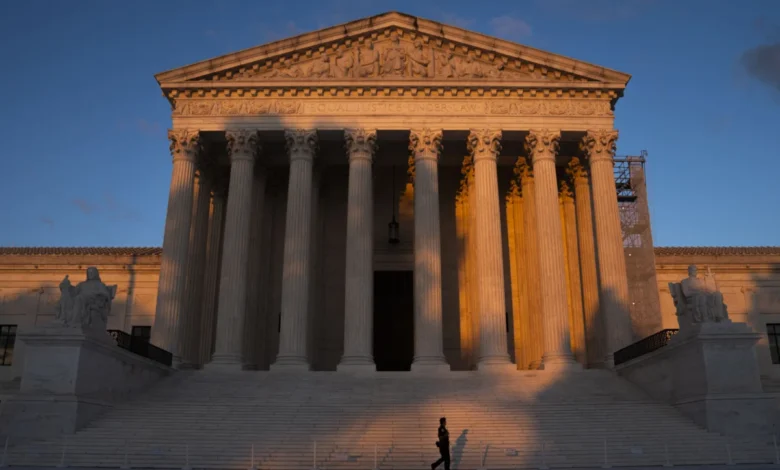
Panos Anastasiou, a 77-year-old resident of Alaska, has reached an agreement with federal prosecutors to plead guilty to multiple felony charges stemming from a prolific campaign of violent threats directed at six U.S. Supreme Court justices and their families. The case, which highlights an alarming trend of escalating vitriol and physical threats against the federal judiciary, was detailed in a court filing submitted on April 10, 2026, in the U.S. District Court for the District of Alaska. According to the agreement, Anastasiou will admit to sending more than 500 messages containing graphic descriptions of assassination, torture, and execution, as well as unlawfully possessing a firearm as a previously convicted felon.
The investigation into Anastasiou’s activities revealed a sustained and aggressive effort to intimidate members of the nation’s highest court. Between 2023 and 2024, the defendant allegedly utilized various communication channels to transmit messages that federal authorities described as being infused with violent, racist, and homophobic rhetoric. The threats were not limited to the justices themselves but also targeted two of their family members, creating a climate of fear that has become increasingly common in the modern political landscape. This plea agreement marks a significant development in the Department of Justice’s ongoing efforts to prosecute those who attempt to influence the judicial process through coercion and terror.
The Scope and Nature of the Threats
The federal indictment against Anastasiou paints a disturbing picture of the volume and intensity of the communications. Prosecutors alleged that over the course of approximately one year, the defendant sent hundreds of electronic messages that were far beyond the scope of protected political speech. The messages reportedly called for the "assassination, torture, and hanging" of the targeted justices. In many instances, the communications made specific references to the use of firearms, suggesting a level of premeditation and intent that elevated the messages to the level of criminal threats.
The rhetoric employed by Anastasiou was characterized by investigators as particularly vitriolic. In addition to the threats of physical violence, the messages contained slurs and derogatory language targeting the justices’ perceived political leanings, race, and personal lives. By targeting the family members of the justices, Anastasiou allegedly sought to maximize the psychological impact of his campaign. Under federal law, threatening a federal official or their immediate family with the intent to impede, intimidate, or interfere with the performance of their official duties is a serious felony, carrying significant prison time.
Legal Proceedings and the Plea Agreement
According to the filing in the U.S. District Court for the District of Alaska, Anastasiou has agreed to plead guilty to one count of making threats against a federal judge and one count of being a felon in possession of a firearm. The firearm charge stems from a prior felony conviction in 1991, which legally prohibited him from owning or possessing guns. During the investigation, federal agents discovered that Anastasiou was in possession of at least one firearm, a violation that added a layer of potential physical danger to his verbal and written threats.
Despite the severity of the charges, federal prosecutors have indicated they will recommend a relatively lenient sentence. The plea agreement suggests a term of probation and a period of home confinement rather than a traditional prison sentence. This recommendation is based on several mitigating factors related to the defendant’s age and deteriorating health. Anastasiou, who is 77, suffers from a history of throat cancer and has been diagnosed with dementia. Prosecutors noted that these medical conditions, particularly the cognitive decline associated with dementia, played a role in the decision to seek an alternative to incarceration. However, the final sentencing decision remains at the discretion of the presiding federal judge, who must weigh the defendant’s health against the need for general deterrence and the protection of the judiciary.
A Chronology of the Case
The timeline of the Anastasiou case reflects a year-long escalation of behavior that eventually drew the attention of the U.S. Marshals Service and the FBI.
- Early 2023: Anastasiou begins sending messages to the U.S. Supreme Court through public-facing contact portals and other electronic means. The initial messages are described as highly critical but eventually transition into explicit threats of violence.
- Late 2023: The frequency of the messages increases. Federal authorities begin monitoring the communications after security protocols at the Supreme Court flag the messages as "high-risk."
- January – March 2024: The threats become more specific, mentioning "hanging" and "torture." References to the justices’ home addresses and family members begin to appear in the communications.
- Mid-2024: Following a coordinated investigation between the FBI and the U.S. Marshals Service, Anastasiou is identified as the source of the messages. A search of his Alaska residence reveals evidence of the communications and the illegal firearm.
- Late 2024 – 2025: Anastasiou is indicted on multiple counts of making threats and firearm violations. Legal maneuvering and medical evaluations of the defendant’s competency follow.
- April 10, 2026: A formal plea agreement is filed in federal court, outlining the terms of the guilty plea and the sentencing recommendations.
The Rising Tide of Judicial Threats
The case against Panos Anastasiou is not an isolated incident but rather part of a documented increase in threats against the federal judiciary. Data from the U.S. Marshals Service (USMS), which is responsible for the protection of federal judges, indicates a sharp rise in "threats and inappropriate communications" over the last decade. In 2023 alone, the USMS investigated thousands of such incidents, a significant jump from figures reported just five years prior.
Experts attribute this rise to several factors, including increased political polarization, the prevalence of social media, and high-profile, controversial rulings by the Supreme Court on issues such as reproductive rights, gun control, and executive power. The 2022 Supreme Court Police Parity Act was passed by Congress in direct response to these concerns, providing increased security for the families of justices following the leak of the Dobbs v. Jackson decision and a subsequent assassination plot against Justice Brett Kavanaugh.
The targeting of the judiciary is seen by legal scholars as a direct threat to the "Rule of Law." When judges and their families are subjected to threats of violence, it creates a risk of judicial intimidation, where rulings might be influenced—or perceived to be influenced—by fear rather than legal precedent. Attorney General Merrick Garland has repeatedly emphasized that the Department of Justice will "not tolerate" threats against public servants, stating that such actions are an attack on the very foundations of American democracy.
Official Responses and Public Safety
While the Supreme Court traditionally does not comment on specific security matters or ongoing criminal cases, the administrative arm of the federal courts has been vocal about the need for increased protection. Chief Justice John Roberts has highlighted the importance of judicial independence in several year-end reports, noting that judges must be able to perform their duties without fear of retribution.
In the Anastasiou case, the U.S. Attorney’s Office for the District of Alaska emphasized the balance between holding the defendant accountable and acknowledging the realities of his health. "The threats made in this case were abhorrent and had the potential to incite real-world violence," a spokesperson for the office might state, reflecting standard prosecutorial logic. "However, the justice system must also account for the physical and mental state of the accused. A recommendation of home confinement ensures that the defendant is monitored and restricted while receiving the necessary medical care for his condition."
Broader Implications and Analysis
The plea agreement for Panos Anastasiou raises complex questions about the intersection of mental health and political extremism. As the American population ages, the legal system is increasingly encountering defendants with cognitive impairments, such as dementia, who engage in criminal behavior. Determining the level of criminal intent in a defendant with a deteriorating brain is a challenge for both prosecutors and defense attorneys.
Furthermore, the case underscores the geographical reach of modern threats. Despite being located in Alaska, thousands of miles from Washington D.C., Anastasiou was able to launch a sustained campaign of intimidation against the highest court in the land. This "digital proximity" means that federal law enforcement must maintain a nationwide vigil to protect officials who are headquartered in the capital.
The recommendation for probation and home confinement may be met with mixed reactions. Some may argue that the sheer volume of threats—over 500—warrants a more stringent punishment to serve as a deterrent to others. Others may see the decision as a pragmatic approach to a defendant whose health issues make him a low risk for physical flight but a high burden for the prison system.
Ultimately, the resolution of the Anastasiou case serves as a stark reminder of the volatility surrounding the U.S. Supreme Court. As the nation remains deeply divided on fundamental legal issues, the safety of those tasked with interpreting the law remains a paramount concern for federal law enforcement. The conviction of Anastasiou, regardless of the final sentence, sends a clear message that the federal government will track and prosecute those who cross the line from heated political discourse to criminal threats of violence.
As the court prepares for the final sentencing hearing, the focus will likely remain on the necessity of maintaining a secure environment for the judiciary. The outcome of this case will be closely watched by judicial security experts and civil rights advocates alike, as it sets a precedent for how the legal system handles elderly, ill defendants who engage in high-stakes political threats. For now, the plea agreement brings a close to a disturbing chapter of judicial harassment, though the broader trend of threats against the court shows no signs of abating.
Related posts: