Polls Reveal Wide Disconnect Between Utah Politicians and Public Over National Monument Reductions

In a move that has reignited one of the most contentious land-use debates in American history, President Donald Trump recently signed executive orders to drastically reduce the size of Bears Ears and Grand Staircase-Escalante national monuments. While Utah’s top Republican officials have lauded the decision as a victory for "local control" and "fairness," a mounting body of empirical data suggests that the move stands in direct opposition to the expressed will of the majority of Utah residents. Multiple independent polls conducted over the last several years indicate that a significant majority of Utahns, as well as residents across the broader Mountain West, favor the preservation of these protected lands over the industrial and extractive uses prioritized by the current administration.
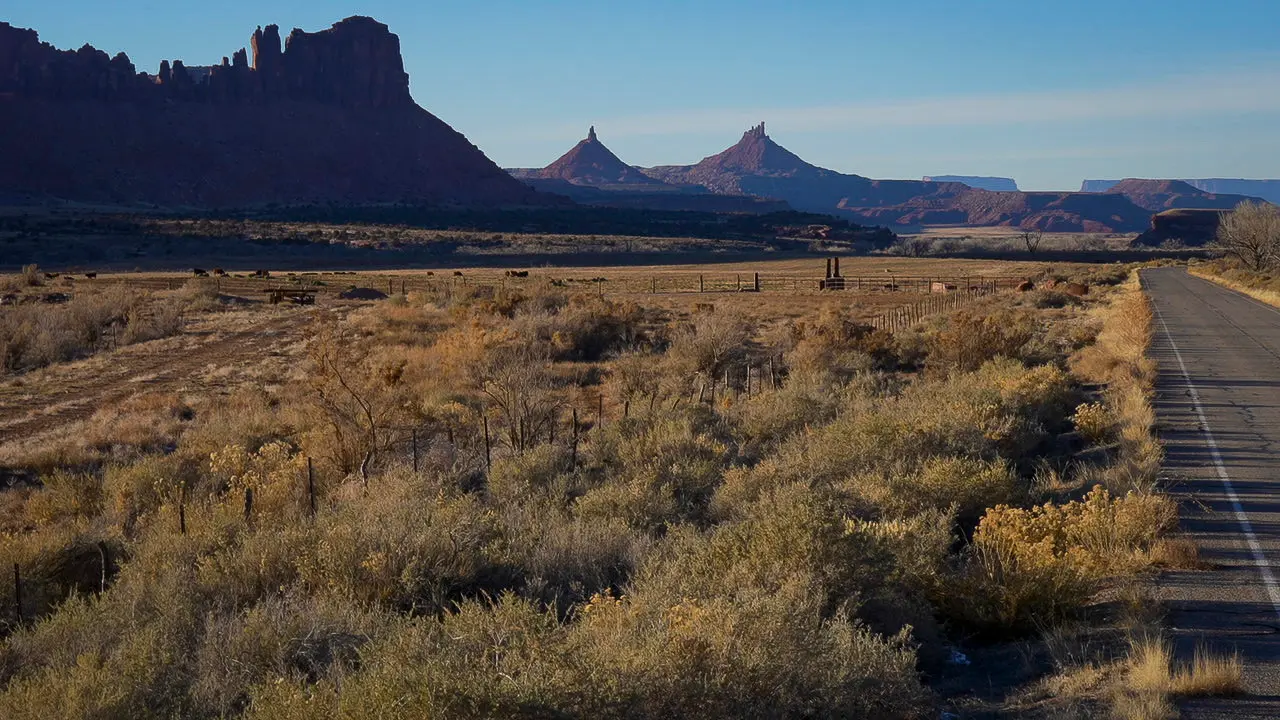
The executive orders, signed during a high-profile ceremony in the Oval Office, slashed the protections for both monuments by approximately 90 percent. Bears Ears National Monument, which previously spanned 1.35 million acres of culturally and archaeologically rich landscape, has been reduced to roughly 121,000 acres. Similarly, Grand Staircase-Escalante, a 1.9-million-acre expanse known for its unique geology and paleontological discoveries, was cut to just over 181,500 acres. The administration’s justification centered on the need to access "critical minerals"—specifically copper, nickel, and uranium—which officials argue are essential for national security and economic growth.
The Disconnect in Public Opinion
The central tension of this policy shift lies in the rhetoric used by Utah’s elected leaders. During the signing, Representative Celeste Maloy and Governor Spencer Cox argued that the reductions were a response to the concerns of "locals" who feared the loss of multiple-use access to federal lands. Representative Maloy specifically stated that the President was "listening to the people of Utah." However, data from Utah State University (USU) and other polling organizations tell a different story.
In comprehensive surveys conducted throughout 2024 and 2025, researchers at USU’s Community and Natural Resources Institute found that 61 percent of Utahns supported or strongly supported the preservation of Bears Ears as a national monument. In contrast, only 19 percent expressed opposition. When asked specifically about reducing the monument’s size, 53 percent of respondents were opposed, while only 26 percent supported the cuts.
Michaelann Nelson, a professor of environmental rhetoric at USU and lead author of the study, noted that the political narrative being pushed by the state’s delegation is "contradictive" to the actual findings. According to Nelson, the political leadership appears to be "picking and choosing" which constituents they represent, favoring industry stakeholders over the general populace.
A Regional Trend Toward Conservation
The sentiment in Utah is not an outlier but rather a reflection of a broader trend across the American West. The annual "Conservation in the West" poll, conducted by Colorado College, has tracked public opinion on public lands for over a decade. Their 2026 data shows that 91 percent of voters across eight Mountain West states—Arizona, Colorado, Idaho, Montana, Nevada, New Mexico, Utah, and Wyoming—want existing national monument designations kept in place.
This support for conservation transcends traditional partisan divides. The Colorado College poll found that 87 percent of Republicans, 92 percent of independents, and 96 percent of Democrats in the region favor maintaining current protections. Perhaps most surprisingly, support among those identifying with the MAGA movement rose from 81 percent in 2025 to 87 percent in 2026. Lori Weigel, a principal with New Bridge Strategies, noted that the data consistently shows a public desire for more, not fewer, protections for public lands.
In Utah specifically, a December 2024 survey by New Bridge Strategies found that 71 percent of voters supported keeping Bears Ears protected, and 74 percent felt the same about Grand Staircase-Escalante. These figures suggest that the "locals" cited by politicians as being anti-monument represent a vocal minority rather than the state’s demographic consensus.
A Century of Conflict: The Chronology of the Monuments
The legal and political battle over these lands is rooted in the Antiquities Act of 1906, which grants presidents the authority to protect "objects of historic or scientific interest." The current conflict is the latest chapter in a decades-long struggle:
- 1996: President Bill Clinton designates Grand Staircase-Escalante National Monument, totaling 1.7 million acres (later expanded to 1.9 million). The move is met with fierce opposition from Utah Republicans.
- 2016: President Barack Obama designates Bears Ears National Monument (1.35 million acres) following a historic proposal by a coalition of five Native American tribes.
- 2017: During his first term, President Trump issues executive orders to significantly reduce both monuments. This leads to a multi-year legal battle.
- 2021: President Joe Biden signs an executive order restoring the original boundaries of both monuments, citing their cultural and ecological importance.
- 2024-2026: Following a shift in administration, President Trump again targets the monuments, leading to the current 90 percent reduction and the disbanding of tribal management commissions.
The legal crux of the argument used by Governor Cox and Senator Mike Lee rests on a clause in the Antiquities Act that directs presidents to reserve "the smallest area compatible with the proper care and management of the objects to be protected." Utah leaders argue that multimillion-acre designations violate this "smallest area" requirement, though conservationists argue that the "objects" being protected—such as entire watersheds, migration corridors, and vast archaeological districts—require landscape-scale preservation.
The Role of Extractive Industries
While the administration has framed the reductions as a matter of public access and "fairness," critics point to the influence of the mining and energy sectors. Records from the 2017 reduction showed that uranium mining companies had actively lobbied the administration to redraw boundaries to exclude known deposits.
The most recent proclamations explicitly cite the need for domestic supplies of copper, nickel, and uranium. These minerals are vital for various industries, including the transition to renewable energy and defense manufacturing. However, environmental groups like the Southern Utah Wilderness Alliance (SUWA) argue that the "critical minerals" argument is a pretext for opening pristine wilderness to industrial degradation. They point out that many of the mineral deposits in these areas are of low quality or would be economically unfeasible to extract without significant federal subsidies.
Cultural and Tribal Implications
One of the most significant casualties of the reduction is the intertribal management framework for Bears Ears. The monument was unique in that it was the first to be requested by a coalition of tribes—the Navajo Nation, Hopi Tribe, Ute Indian Tribe, Ute Mountain Ute Tribe, and Pueblo of Zuni. These tribes consider the land ancestral and sacred, containing thousands of archaeological sites, cliff dwellings, and burial grounds.
The 2016 designation established a commission to ensure tribal expertise was integrated into federal land management. Trump’s latest order disbanded this body, a move that contradicts public sentiment. According to the 2024 New Bridge Strategies survey, 90 percent of Utahns support Native American tribes having a strong role in managing their ancestral lands. By removing the tribal commission, the administration has effectively silenced the voices of those with the deepest historical ties to the landscape.
Addressing Misconceptions About Access
In his remarks during the signing ceremony, President Trump claimed that the monument designations had "closed off" the land, stating, "You can’t do anything. You can’t go hunting. You can’t go fishing… You can virtually not even walk on it."
However, these claims are factually inaccurate. National monument status under the Bureau of Land Management (BLM) and the U.S. Forest Service typically allows for continued hunting and fishing, subject to state regulations. It also allows for the use of off-road vehicles on designated trails and general hiking. The primary activities prohibited by monument status are new mining claims, oil and gas leasing, and large-scale industrial development. By framing the issue as a loss of personal recreation, the administration’s rhetoric has been characterized by sociologists like Jessica Schad as an attempt to "politicize" land management at the expense of factual accuracy.
Future Outlook and Legal Challenges
The reduction of Bears Ears and Grand Staircase-Escalante is unlikely to be the final word on the matter. Minutes after the executive orders were signed, environmental groups and tribal coalitions announced their intent to file lawsuits. They argue that while the Antiquities Act gives a president the power to create a monument, it does not explicitly grant the power to abolish or drastically diminish one—a power they argue is reserved for Congress.
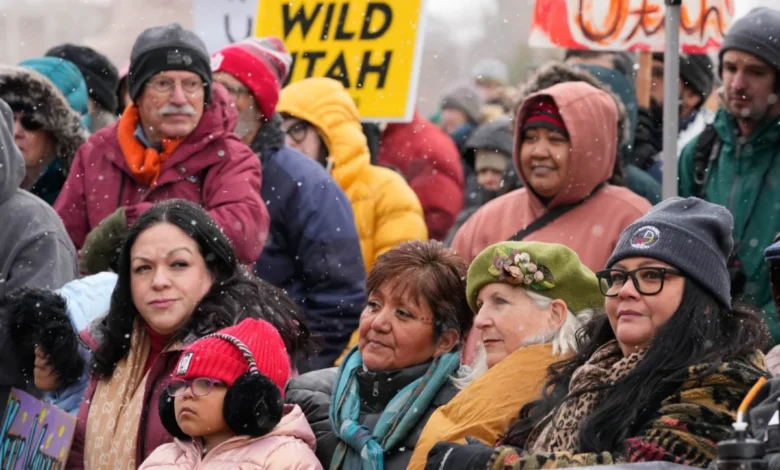
As the legal battle moves to the courts, the political fallout continues. Protests have already erupted at the Utah Capitol and the Governor’s Mansion. With over 60 percent of the state’s population favoring protection, the decision to prioritize mineral extraction over conservation may become a pivotal issue in upcoming election cycles. For now, the vast red-rock canyons and archaeological treasures of southern Utah remain at the center of a profound struggle over the identity and future of the American West.
Related posts: