
Israel Relationship Ukraine Denmark 2
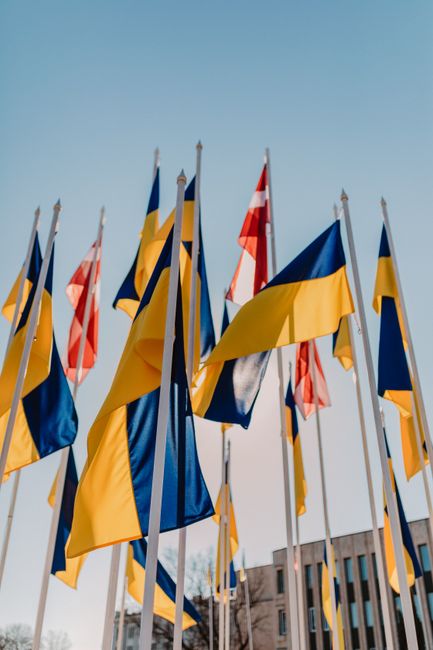
Israel, Ukraine, and Denmark: A Complex Interplay of Geopolitics, Humanitarian Aid, and Evolving Alliances
The contemporary geopolitical landscape is characterized by intricate webs of relationships, where historical ties, shared values, and strategic interests converge. Within this dynamic, the trilateral relationship between Israel, Ukraine, and Denmark presents a fascinating case study of how these factors influence foreign policy, aid provision, and diplomatic maneuvering. While seemingly disparate entities, these three nations have found themselves increasingly intertwined, particularly in the wake of Russia’s full-scale invasion of Ukraine in February 2022. Understanding the nuances of Israel’s engagement with both Ukraine and Denmark, and Denmark’s own position relative to these two, is crucial for comprehending broader regional and global security dynamics.
Israel’s Position: A Balancing Act Between Historical Empathy and Geopolitical Realities
Israel’s relationship with Ukraine is deeply rooted in historical and demographic connections. Ukraine is home to one of the world’s largest Jewish diasporas, and for decades, Israel has maintained significant diplomatic and economic ties with Kyiv. The invasion by Russia presented Israel with a profound dilemma. On one hand, there is a strong humanitarian imperative and historical empathy towards Ukraine, a nation seeking to defend its sovereignty and its people. Many Israelis, acutely aware of the fragility of Jewish existence throughout history, felt a visceral connection to Ukraine’s struggle against an aggressor. Furthermore, a significant portion of the Ukrainian population, particularly within the Jewish community, has ties to Israel through immigration.
On the other hand, Israel’s security calculus is heavily influenced by its relationship with Russia. Russia maintains a significant military presence in neighboring Syria, where Israel routinely conducts airstrikes against Iranian-backed targets. Russia’s agreement with Israel to deconflict these operations is seen as vital for Israeli security. This creates a delicate balancing act for Jerusalem, as it seeks to support Ukraine without jeopardizing its critical security arrangements with Moscow. Consequently, Israel’s approach has been characterized by a measured response, prioritizing humanitarian aid over direct military assistance, and carefully navigating its diplomatic pronouncements. While publicly condemning the invasion and voting in favor of UN resolutions against Russia, Israel has refrained from providing offensive weaponry to Ukraine, citing its security concerns. This stance has been met with mixed reactions, with Ukraine expressing a desire for more robust military support, while some Western allies have understood Israel’s pragmatic approach.
Denmark’s Role: A staunch Advocate for Ukraine and a Key NATO Ally
Denmark, in contrast to Israel’s nuanced position, has been one of Ukraine’s most fervent supporters, both politically and militarily, since the beginning of the Russian aggression. As a member of the European Union and a key NATO ally, Denmark has consistently aligned itself with the Western consensus on condemning Russia’s actions and providing comprehensive support to Ukraine. This support has manifested in substantial financial aid, humanitarian assistance, and crucially, the provision of advanced military equipment, including artillery systems, anti-tank weapons, and fighter jets. Denmark’s commitment to Ukraine’s defense is driven by a strong belief in international law, the principle of national sovereignty, and the need to deter further Russian expansionism in Europe.
Denmark’s proactive stance on Ukraine also reflects its own security concerns. As a frontline state in the Baltic region, Denmark views Russia’s aggression in Ukraine as a direct threat to European security and stability. Its robust support for Ukraine is therefore not only an act of solidarity but also a strategic investment in its own security and the broader transatlantic alliance. This has led to a significant increase in Denmark’s defense spending and a strengthening of its military readiness.
The Intersecting Dynamics: Humanitarian Aid and Diplomatic Coordination
Despite their differing approaches to military assistance, Israel and Denmark have found common ground in their commitment to humanitarian aid for Ukraine. Both nations have provided substantial financial and material support to alleviate the suffering of the Ukrainian population, including medical supplies, food, and shelter. This shared commitment to humanitarian principles underscores a crucial area of cooperation, even when diplomatic and strategic priorities diverge.
Furthermore, there is a degree of diplomatic coordination between Israel and Denmark, particularly within multilateral forums. Both nations are active members of the United Nations and participate in various international initiatives aimed at addressing the humanitarian crisis in Ukraine and seeking a peaceful resolution to the conflict. While their specific national interests may lead to differing tactical approaches, their overarching strategic goals of supporting Ukraine’s sovereignty and promoting stability in the region often align.
The Impact of the Russia-Ukraine War on Israel’s Regional Standing and Danish Foreign Policy
The ongoing war in Ukraine has had a profound impact on Israel’s regional standing and has further solidified Denmark’s role as a prominent security player in Europe. For Israel, the conflict has highlighted the complex realities of its geopolitical position. While it has received praise from some quarters for its humanitarian efforts, its reluctance to provide direct military aid has also drawn criticism, particularly from Ukraine and certain Western partners. This has led to ongoing diplomatic engagement and a continuous recalibration of Israel’s foreign policy in light of evolving regional and global dynamics. The war has also underscored Israel’s dependence on Russia in the Syrian theater, a factor that significantly constrains its freedom of action.
For Denmark, the war has been a catalyst for a significant reorientation of its foreign and security policy. The conflict has removed any lingering doubts about the imperative of strengthening its defense capabilities and its commitment to NATO. Denmark has emerged as a leading voice within the EU and NATO advocating for robust support for Ukraine and a firm stance against Russian aggression. This has enhanced Denmark’s profile on the international stage and solidified its position as a key security provider in Northern Europe. The war has also prompted a renewed focus on energy security, with Denmark, a significant producer of natural gas, playing a role in efforts to diversify European energy supplies away from Russia.
Navigating the Future: Potential Areas of Deeper Engagement and Divergence
Looking ahead, the relationship between Israel, Ukraine, and Denmark is likely to continue to evolve. For Israel and Ukraine, the future of their relationship will hinge on the eventual resolution of the conflict and the subsequent geopolitical landscape. If Ukraine emerges victorious and solidifies its Western orientation, Israel may find itself under increased pressure to reconsider its military assistance policies. Conversely, if the conflict leads to a protracted stalemate or a Russian resurgence, Israel’s pragmatic approach may be viewed as prescient.
Denmark’s unwavering support for Ukraine is likely to continue, potentially leading to even deeper military and economic ties. Denmark’s experience in providing advanced weaponry and its commitment to Ukraine’s reconstruction efforts could position it as a key partner in the long-term rebuilding of the Ukrainian state.
The trilateral relationship, while not always perfectly aligned, demonstrates the interconnectedness of global affairs. Shared humanitarian concerns, evolving security threats, and the pursuit of national interests create a dynamic environment where seemingly distant nations can find themselves in a complex and often delicate dance of diplomacy and action. Understanding the motivations and constraints of each actor – Israel’s intricate security balancing act, Ukraine’s desperate struggle for survival, and Denmark’s resolute commitment to European security – is essential for grasping the broader implications of their interactions. The ongoing war in Ukraine serves as a stark reminder that even established alliances can be tested and that new, unexpected partnerships can emerge in response to unprecedented challenges. The future trajectory of these relationships will undoubtedly shape regional security and international diplomacy for years to come.
