Legal Filings Reveal Texas Comptroller Targeted Islamic Schools Based on Discredited Allegations from Libel-Prone Source

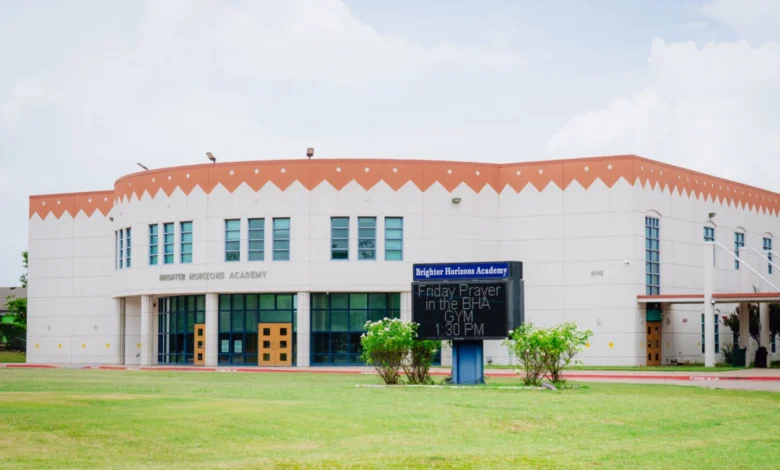
New legal disclosures from a lawsuit against the Texas Comptroller of Public Accounts have unveiled that the state’s investigation into Islamic private schools was prompted by claims from a researcher with a history of defamation judgments. The filings, which include an eight-hour deposition from the comptroller’s chief counsel, suggest that the state used taxpayer resources to conduct extensive counter-terrorism probes into nearly 50 educational institutions based on information from sources later characterized as unreliable or ideologically driven.
The controversy centers on the implementation of Texas’s new school voucher program, an initiative designed to provide families with taxpayer-funded accounts for private education or homeschooling. While the state publicly maintained that delays in admitting certain Islamic schools were due to administrative accreditation issues, internal documents and testimony now indicate a targeted effort to exclude institutions based on unverified allegations of ties to foreign extremist groups and the Chinese Communist Party.
The Role of Sam Westrop and the Middle East Forum
A primary figure in the state’s investigation is Sam Westrop, a researcher currently employed by the Texas Public Policy Foundation. Nearly a decade ago, Westrop was the subject of a significant legal defeat in a British court. In that case, a judge ordered Westrop to pay the equivalent of more than $173,000 in libel damages after he falsely labeled the founder of a London-based Islamic television channel a “convicted terrorist.”
In the UK ruling, the presiding judge noted there was “simply no evidence” to support Westrop’s claims. Westrop eventually admitted the underlying evidence was unreliable and issued a correction. Despite this history, Westrop’s more recent research—which alleged that Islamic private schools in Texas had connections to extremist groups such as Hamas—was treated as a credible catalyst for state action.
As early as the fall of 2024, Westrop began sharing his findings with the Texas Comptroller’s office. His research was also published through the Middle East Forum, an organization that describes its mission as protecting the West from Middle Eastern threats. According to legal filings, the comptroller’s office acted swiftly on this information. In one instance, Bayaan Academy, an Islamic school, was initially approved for the voucher program only to have that approval revoked two hours after Westrop sent an email containing his allegations to state officials in January.
The Discrepancy Between Public Narrative and Internal Action
Throughout the initial rollout of the voucher program, the comptroller’s office, then led by acting Comptroller Kelly Hancock, insisted that the delay in approving certain schools was not discriminatory. The agency’s public stance was that several schools were part of a broader review of approximately 700 institutions accredited by Cognia, a nonprofit vetting organization. The state claimed it needed to verify that all schools had up-to-date accreditations, as required by Texas law.
However, the May deposition of Murl Miller, the comptroller’s chief counsel for general litigation, offers a different account. Miller testified that the agency had been receiving targeted information since the summer of 2024 regarding 50 schools with alleged links to radical Islamic organizations or the Chinese government.
Furthermore, Miller confirmed that the state hired two third-party investigators—Reuben Katz and Lara Burns—to conduct deep-dive research into these specific schools. Burns is a retired FBI agent currently associated with George Washington University’s Program on Extremism. The investigators produced detailed dossiers on the schools, cross-referencing staff and leadership against government terrorism databases. This level of scrutiny was notably absent for the vast majority of the more than 2,600 other private schools that applied for and received approval for the program.
When asked during the deposition if he had researched Westrop’s background or the prior defamation judgment against him, Miller admitted he had not performed a basic search of Westrop’s history, relying instead on the investigators’ assertions of Westrop’s credibility.
Chronology of the Voucher Exclusion Effort
The timeline of events suggests a coordinated effort between the Comptroller’s office and the Texas Attorney General’s office to create a legal framework for excluding specific religious schools:
- Summer/Fall 2024: The Comptroller’s office begins receiving dossiers from Westrop and the RAIR Foundation, an activist group focused on combating "Islamic supremacists."
- December 2024: Acting Comptroller Kelly Hancock formally asks Attorney General Ken Paxton for a legal opinion on whether the state can exclude schools with ties to the Chinese government or those that have hosted events for the Council on American-Islamic Relations (CAIR).
- January 2025: Attorney General Paxton issues a ruling confirming the Comptroller’s authority to stop taxpayer funds from reaching schools with such ties, citing national security and state interests.
- January 2025: Several Islamic schools, including Bayaan Academy, see their voucher program status delayed or revoked following specific communications from Westrop.
- March 2025: Four Islamic school campuses file a lawsuit against the state, alleging religious discrimination and a violation of constitutional rights.
- March 24, 2025: Kelly Hancock writes to Paxton, reiterating claims against the principal of the Houston Quran Academy and urging the Attorney General to strip the school of its corporate charter due to alleged "terror ties."
- May 2025: Murl Miller’s deposition reveals that the internal investigation found no evidence to support the terrorism allegations, contradicting Hancock’s public and private assertions.
Broader Political Context and Anti-Muslim Rhetoric
The investigation into the Islamic schools did not occur in a vacuum. It follows a period of heightened anti-Muslim rhetoric within Texas politics. In November 2024, Governor Greg Abbott issued an executive order designating CAIR as a foreign terrorist organization, a move CAIR is currently challenging in court as a violation of due process and federal law.
The political climate was further evidenced during the Texas Republican Party convention in June, where some members attempted to remove Muslim delegates from the party. High-profile figures, including former pastor Rick Scarborough, publicly confronted Muslim attendees, with Scarborough later stating he believed they should leave the country.
Legal experts suggest that the Comptroller’s focus on Islamic schools reflects a broader trend of utilizing administrative power to target specific religious or ideological groups. Eric Hudson, the attorney representing the Islamic schools, argued that the state’s eventual decision to admit the schools into the program does not resolve the underlying issue of discrimination.
“Religious liberty is not a temporary pass issued after a lawsuit,” Hudson stated. “We’re pressing on so equal treatment is the rule—not an exception granted under pressure.”
Implications for the Texas Voucher Program
The revelation that the state used taxpayer money to investigate schools based on the work of a discredited source has raised questions about the oversight of the voucher program. The Comptroller’s office has admitted it is not equipped to conduct foreign intelligence or counter-terrorism research, yet it chose to bypass standard accreditation checks in favor of specialized investigations for a select group of religious schools.
The plaintiffs in the current lawsuit are seeking class-action certification. They argue that without a court order, the Comptroller’s office retains the authority to arbitrarily remove schools from the program based on unverified tips or political pressure.
The state’s defense, however, maintains that the issue is moot. In filings dated June 26, the state’s lawyers argued that because the four Islamic campuses were eventually approved, there is no ongoing injury to address. They further contended that a class-action claim falls outside the court’s jurisdiction.
The internal discord within the state government was also highlighted in Miller’s deposition. Miller noted that Kelly Hancock’s March letter to Paxton, which continued to allege terror ties after the internal investigation had cleared the schools, contained “a lot of mistakes and misstatements.” Miller testified that the legal team was surprised by the letter, stating, “We had determined the accusations of terrorist ties were not accurate.”
Future Outlook
As acting Comptroller Kelly Hancock prepares to step down at the end of the month, the future of the voucher program’s vetting process remains uncertain. The lawsuit continues to move through the court system, with a judge expected to rule on the class-action certification in the coming months.
The case serves as a significant test for the intersection of "school choice" policies and the First Amendment. While proponents of vouchers argue they promote religious freedom by allowing parents to choose faith-based education, the Texas experience suggests that such programs can also become venues for state-level scrutiny and exclusion of minority religious groups.
For the nearly 50 schools that were the subject of the state’s investigation, the primary concern remains the potential for future targeting. While they are currently participating in the program on equal footing with other private schools, the legal filings suggest that the mechanism for their initial exclusion remains largely intact within the state’s administrative apparatus.
Related posts: