International Criminal Court Member States to Vote on Ousting Chief Prosecutor Karim Khan Amid Sexual Misconduct Allegations

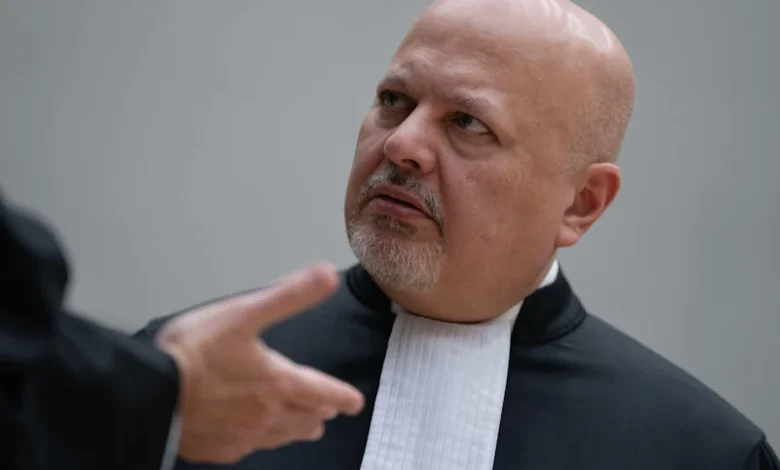
The International Criminal Court (ICC) faces an unprecedented institutional crisis as its 125 member states prepare for a high-stakes vote on July 25, 2026, to determine the future of Chief Prosecutor Karim Khan. The vote follows a series of grave allegations of sexual misconduct involving a staff member in his office, a development that has sent shockwaves through the international legal community and raised fundamental questions about the internal governance and accountability mechanisms of the world’s permanent war crimes tribunal. Khan, who has served as the court’s lead prosecutor since 2021, was formally suspended from his duties in June 2026 pending the outcome of these deliberations.
The controversy centers on allegations brought forward by a lawyer currently employed at the ICC, identified in media reports only as Sarah. According to a leaked copy of a United Nations investigative report obtained by various news outlets, Sarah served as Khan’s direct assistant during the period the alleged misconduct occurred. The report details a pattern of behavior that Sarah characterizes as a severe abuse of power and a violation of professional and personal boundaries. She alleges that Khan repeatedly subjected her to nonconsensual sexual acts, including groping, attempted kissing, and digital and genital penetration.
In a recent interview, Sarah spoke about the inherent power dynamics at play within the Office of the Prosecutor (OTP). She emphasized that the hierarchy of the ICC makes the concept of consent complex when dealing with the highest-ranking official in the organization. Sarah stated that there is no way for such interactions to be consensual when there is such a significant power disparity, noting that Khan was not merely her direct supervisor but effectively the superior of every individual within the institution. This sentiment highlights a growing concern regarding the "culture of silence" often associated with high-level international organizations, where subordinates may feel unable to report misconduct by top-tier leadership.
The Defense and Denial
Karim Khan has remained steadfast in his denial of all charges. Through his legal representative, Sareta Ashraph—the lead counsel for Khan who has also faced professional scrutiny during this period—the Chief Prosecutor has maintained that the allegations are entirely baseless. Ashraph stated that Khan denies any form of sexual contact or relationship, whether consensual or nonconsensual, with the complainant. The defense team has characterized the allegations as an attempt to undermine Khan’s professional standing and the significant work he has overseen during his tenure.
The situation was further complicated when a second woman, who served as an unpaid intern at the ICC in 2009, came forward with her own accusations of sexual misconduct against Khan. While this second allegation dates back nearly two decades, its emergence has bolstered the arguments of those calling for a thorough and transparent investigation into Khan’s historical conduct. The Assembly of States Parties (ASP), the court’s management oversight and legislative body, is now tasked with weighing these testimonies against Khan’s denials as they decide whether to permanently remove him from his post.
A Timeline of the Crisis
The trajectory of Karim Khan’s leadership and the subsequent allegations provide a timeline of a rapid descent from international prominence to institutional suspension.
- June 2021: Karim Khan, a British jurist with extensive experience in international law, is sworn in as the ICC’s third Chief Prosecutor, succeeding Fatou Bensouda. His appointment is seen as a turning point for the court as it tackles high-profile cases in Ukraine, Palestine, and Afghanistan.
- Late 2024: Sarah, a lawyer in the OTP, files a formal complaint within the ICC’s internal reporting system. Initial internal reviews are conducted, but the matter remains largely shielded from public view.
- Early 2026: A United Nations investigative body is brought in to provide an independent assessment of the allegations to avoid internal conflicts of interest. A confidential report is drafted.
- June 2026: Following the preliminary findings of the UN report and mounting pressure from several member states, the Assembly of States Parties votes to suspend Khan from his duties. An acting prosecutor is appointed to manage the day-to-day operations of the OTP.
- July 16, 2026: Leaked details of the UN report emerge in the media, including specific descriptions of the alleged misconduct and Sarah’s public statements regarding the power disparity at the ICC.
- July 25, 2026: The scheduled date for the 125 member states to vote on whether to officially oust Khan from his position.
The Role of the Assembly of States Parties
The upcoming vote is a mechanism defined under the Rome Statute, the treaty that established the ICC. The Assembly of States Parties (ASP) is responsible for the election and removal of the prosecutor. According to Article 46 of the Rome Statute, a prosecutor may be removed from office if they are found to have committed "serious misconduct" or a "serious breach of duty." Such a decision requires a majority vote of the member states.
The 125 member states represent a diverse array of legal traditions and political interests. The decision to oust a Chief Prosecutor is not one taken lightly, as it carries immense weight for the court’s reputation. Proponents of Khan’s removal argue that the integrity of the court is paramount and that the institution cannot effectively prosecute international crimes if its own leadership is mired in credible allegations of sexual violence and abuse of power. Conversely, some diplomatic circles have expressed concern about the potential for political interference, though the detailed nature of the UN report has shifted the focus primarily toward the ethical and legal implications of the conduct described.
Institutional Implications and Global Reaction
The fallout from the Khan scandal extends far beyond the walls of the ICC headquarters in The Hague. During his tenure, Khan was responsible for some of the most consequential legal filings in the court’s history, including the pursuit of arrest warrants for high-ranking officials in the Russia-Ukraine conflict and the Israel-Hamas war. Critics of the court, particularly those from non-member states such as the United States, Russia, and Israel, have long questioned the court’s legitimacy. This internal scandal provides ammunition for those who argue the court is an unaccountable body.
Human rights organizations and legal advocacy groups have expressed a mix of alarm and a demand for accountability. Many have pointed out that the ICC, as a beacon of international justice, must hold its own staff to the highest standards. If the court fails to address these allegations with total transparency, it risks alienating the victims of the very crimes it is tasked with investigating. The "Me Too" movement, which has transformed domestic workplaces globally, is now facing a critical test within the halls of international diplomacy.
The data regarding sexual harassment in international organizations suggests that Sarah’s experience is not an isolated phenomenon. Reports from various UN agencies over the last decade have indicated that the immunity often granted to international officials can create a vacuum where misconduct goes unpunished. The ICC’s handling of the Khan case is being viewed as a litmus test for whether these international bodies are capable of self-regulation.
Analysis of the Potential Outcomes
As the July 25 vote approaches, several scenarios are possible. If the member states vote to oust Khan, the ICC will begin the arduous process of selecting a new Chief Prosecutor, a search that could take months and leave the OTP in a state of flux during a period of global instability. An ouster would represent the first time in the ICC’s history that a prosecutor was removed for misconduct, setting a significant legal and ethical precedent.
If the vote fails to reach the required majority and Khan is reinstated, the court faces a different set of challenges. The relationship between the Prosecutor’s office and the staff may be irreparably damaged, and the public perception of the court’s commitment to protecting victims of sexual violence could be severely undermined. Furthermore, the presence of a second accuser from 2009 suggests that even if Khan survives the vote regarding Sarah’s allegations, his past conduct will remain under intense scrutiny.
The legal community is also closely watching the role of the Independent Oversight Mechanism (IOM), the body tasked with investigating such claims. The fact that a UN investigative report was leaked suggests a breakdown in the confidential processes intended to protect both the complainant and the accused. This leak has forced a public reckoning that many in the ASP had hoped to manage behind closed doors.
Conclusion
The International Criminal Court stands at a crossroads. The allegations against Karim Khan involve the very types of acts—sexual violence and the abuse of power—that the court was designed to eradicate on a global scale. As the 125 member states prepare to cast their votes, they carry the burden of balancing the rights of the accused with the necessity of maintaining the moral authority of the world’s most important criminal tribunal. The outcome of the July 25 vote will not only determine Karim Khan’s career but will likely define the ICC’s legacy for years to come. Whether the court emerges as a more transparent and accountable institution or one crippled by internal scandal remains to be seen. In the interim, the international community remains focused on The Hague, waiting to see if justice can be served within the very institution that promises it to the world.
Related posts: