Sheinbaum to Attend World Cup Final Amidst US-Mexico Tensions, Signaling Potential Diplomatic Pivot

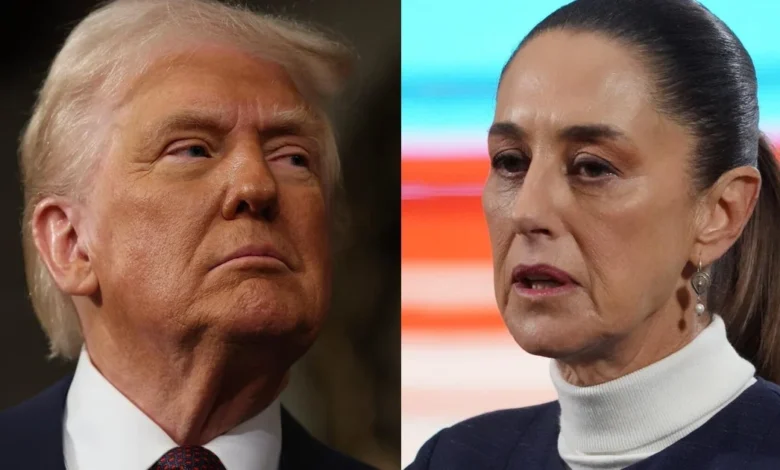
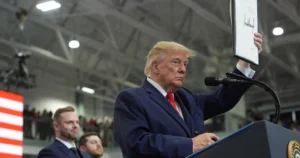
Mexican President Claudia Sheinbaum is set to attend the highly anticipated 2026 FIFA World Cup final on Sunday, July 20, in New Jersey, following a direct invitation from U.S. President Donald Trump. This high-profile encounter marks their first face-to-face meeting since the World Cup draw in December of the previous year, occurring against a backdrop of escalating diplomatic friction between the two North American neighbors. The summit, held on one of the world’s most prominent sporting stages, could serve as a critical juncture for U.S.-Mexico relations, which have been mired in disputes over security, trade, and immigration. Canadian Prime Minister Mark Carney and Spain’s King Felipe VI are also expected to be in attendance, transforming the sporting spectacle into an impromptu, high-stakes diplomatic arena.
The announcement by President Sheinbaum, delivered to Mexican media, underscores the delicate balance she navigates between domestic political messaging and international diplomacy. Her decision to attend the final contrasts sharply with her choice to skip the World Cup’s opening match in Mexico City, where she famously gave her ticket to a young Indigenous woman – a move widely seen as a symbolic gesture emphasizing her commitment to social equity and an implicit rejection of the perceived extravagance of the global event. However, the direct invitation from President Trump, whom she referred to simply as "the president of the United States," appears to have compelled a different calculation, highlighting the undeniable geopolitical weight of the U.S. relationship. Sheinbaum stated, "I decided to go because it is a direct invitation from the president of the United States, and Canadian Prime Minister (Mark) Carney will also be there." She further promised to record a message with more details, indicating the significance she attaches to this engagement.
A Chronology of Mounting Tensions
The relationship between Mexico City and Washington D.C. has been characterized by significant volatility, particularly since President Trump’s re-election and President Sheinbaum’s ascent to office. While both leaders have publicly pledged cooperation, their administrations have frequently engaged in open exchanges of barbs and taken actions that have deepened mutual distrust.
The last recorded interaction between Sheinbaum and Trump was at the World Cup draw in December 2025. At that time, while pleasantries were exchanged, underlying tensions were palpable, particularly concerning evolving border dynamics and ongoing security challenges. This preliminary interaction did little to stem the tide of subsequent escalations.
A significant point of contention emerged in May 2026, when the U.S. State Department announced it was initiating a comprehensive review of all 53 Mexican consulates operating within the United States. This unprecedented move came in the wake of the deaths of two Central Intelligence Agency (CIA) officers during a sensitive operation in Northern Mexico. While details of the operation remain largely classified, reports suggested the officers were engaged in intelligence gathering related to transnational criminal organizations when they were ambushed. The incident sparked outrage in Washington, with U.S. officials implying insufficient cooperation or, at worst, intelligence breaches from Mexican authorities. The review of consulates was framed as a necessary step to assess the security and operational protocols of Mexican diplomatic missions, but it was widely interpreted as a punitive measure and a strong diplomatic rebuke. Mexican officials, while expressing condolences for the fallen officers, pushed back against accusations of negligence, emphasizing the inherent dangers of combating sophisticated cartel networks.
Further exacerbating the strained relationship, President Trump declared in June 2026 that the United States would not extend the U.S.-Mexico-Canada Agreement (USMCA) beyond its initial term, set to expire in 2042, if current trade disputes were not resolved. The USMCA, which replaced NAFTA in 2020, represents the cornerstone of North American economic integration, facilitating over $1.5 trillion in annual trade between the three nations. Trump’s announcement, delivered with characteristic bluntness, sent shockwaves through the markets and diplomatic circles. He cited what he termed "unfair trade practices" by Mexico, particularly concerning energy policies that he argued disadvantaged U.S. companies and agricultural subsidies that distorted market competition. This non-extension threat, if realized, would have profound implications for supply chains, manufacturing, and millions of jobs across North America, reintroducing tariffs and trade barriers that could cripple regional competitiveness. The move was widely seen as a strong-arm tactic designed to force concessions from Mexico ahead of scheduled bilateral negotiations.
The World Cup as a Diplomatic Stage
The 2026 FIFA World Cup is a landmark event, marking the first time the tournament has been jointly hosted by three nations: Canada, Mexico, and the United States. This collaborative effort, spanning multiple cities across the continent, was envisioned not just as a sporting spectacle but also as a symbol of North American unity and cooperation. The final, set to be played at MetLife Stadium in East Rutherford, New Jersey, will feature defending champions Argentina against Spain – a clash of football titans that guarantees global attention. The presence of King Felipe VI of Spain further elevates the international profile of the event, adding another layer of diplomatic potential.
The decision by President Sheinbaum to attend the final, despite the ongoing diplomatic chill, underscores the unique power of sports diplomacy. Major international sporting events have historically served as informal platforms for leaders to engage, de-escalate tensions, or even initiate new dialogues away from the rigid protocols of formal state visits. The global viewership for a World Cup final, which typically reaches into the hundreds of millions, provides an unparalleled stage for leaders to project an image of collaboration and statesmanship, even if only superficially.
For Sheinbaum, the invitation from Trump presents a complex opportunity. While it forces her into proximity with a leader whose policies have often been antagonistic towards Mexico, it also offers a chance to directly engage and perhaps humanize the dialogue ahead of crucial trade talks. Her initial refusal to attend the opening match in Mexico City, opting instead to empower a marginalized citizen, resonated positively with a segment of her domestic base, signaling a leader focused on internal welfare over external pomp. Her subsequent acceptance for the final, however, could be framed as a pragmatic move demonstrating her willingness to engage in high-level diplomacy when the national interest demands it, particularly given the proximity of critical trade negotiations.
The sheer economic scale of the World Cup further emphasizes its role as a significant global event. Tickets for Sunday’s final were reportedly listed at nearly $10,000 for the cheapest seats on FIFA’s official resale platform by Saturday afternoon, reflecting intense demand and the premium placed on attending such a historic match. This financial aspect, coupled with the projected economic impact of billions of dollars for the host cities and nations, ensures that the eyes of the world, including those of global economic and political leaders, will be firmly fixed on New Jersey.
The Stakes of Upcoming Bilateral Negotiations
The meeting at the World Cup final is not an isolated event; it is a precursor to a critical round of bilateral negotiations between U.S. and Mexican officials scheduled just two days later, on July 22. These talks are expected to address the very trade issues that prompted President Trump’s threat regarding the USMCA’s extension, alongside persistent security concerns.
Trade Issues: The core of the trade disputes revolves around several key areas:
- Energy Policy: U.S. companies have expressed significant concerns over Mexico’s nationalistic energy policies under Sheinbaum’s administration, which they argue favor state-owned enterprises (Petróleos Mexicanos – Pemex, and Comisión Federal de Electricidad – CFE) over private foreign investment, violating provisions within USMCA related to fair competition and market access. These policies have impacted investments in renewable energy, oil and gas exploration, and electricity generation.
- Agricultural Subsidies: Disputes also exist over Mexican agricultural subsidies and import restrictions on certain U.S. agricultural products, which American farmers claim create an uneven playing field. Conversely, Mexico has raised concerns about U.S. agricultural support programs affecting its producers.
- Automotive Rules of Origin: While USMCA strengthened rules of origin for the automotive sector to encourage North American manufacturing, interpretations and enforcement mechanisms have led to disagreements, impacting cross-border supply chains for a vital industry.
- Labor Standards: The USMCA introduced robust labor provisions, including commitments to protect workers’ rights and freedom of association. Enforcement of these provisions has been a point of contention, with the U.S. often filing rapid response actions against Mexican factories accused of violating labor laws.
The USMCA, in its six years of existence, has underpinned substantial economic growth and integration. In 2025, total trade in goods and services between the U.S. and Mexico exceeded $800 billion, making Mexico the U.S.’s second-largest trading partner. The threat of non-extension, if not resolved, would not only reintroduce tariffs but also create immense uncertainty, potentially leading to significant divestment and economic contraction in sectors deeply integrated across the border, such as automotive, electronics, and agriculture. The scheduled negotiations are therefore not merely about tweaking trade rules but about preserving the fundamental framework of North American economic partnership.
Security Cooperation: Beyond trade, the shadow of the CIA officers’ deaths and the subsequent consulate review looms large over the bilateral relationship. Effective security cooperation is paramount for both nations, given shared challenges such as combating transnational criminal organizations, drug trafficking, human smuggling, and border security. Mexico is a critical partner in intercepting illicit flows of fentanyl and other narcotics destined for the U.S. market, and in managing migration flows from Central and South America. The recent security breaches and diplomatic fallout underscore the fragility of this cooperation and the urgent need for renewed trust and coordinated strategies. Any sustained breakdown in intelligence sharing or joint operations could have severe consequences for both countries’ national security.
Broader Implications and Analysis
The convergence of high-stakes diplomacy and a global sporting event offers a unique lens through which to analyze the intricate dynamics of U.S.-Mexico relations.
Diplomatic Thaw or Photo Opportunity? The question remains whether this meeting will genuinely signal a thaw in the strained relationship or merely serve as a pragmatic photo opportunity ahead of difficult negotiations. Sheinbaum’s attendance provides her with direct access to President Trump, potentially allowing for candid exchanges that are often difficult in formal settings. For Trump, hosting a Mexican president at such a prominent event could project an image of engagement and leadership on the North American stage, even while maintaining a tough stance on policy issues. However, the deep-seated disagreements and the history of antagonistic rhetoric suggest that a single meeting, even on a grand stage, is unlikely to resolve complex issues overnight. It may, however, set a more constructive tone for the subsequent bilateral talks.
Impact on Regional Stability: The stability of the U.S.-Mexico relationship is fundamental to the broader economic and security stability of North America. Disruptions to trade, exacerbated by the potential non-extension of USMCA, could ripple through the global economy, affecting supply chains and investment decisions far beyond the continent. Similarly, a breakdown in security cooperation could empower criminal organizations, leading to increased violence and instability along the shared border and within both countries. The World Cup meeting provides an opportunity, however brief, to re-establish a foundation for dialogue that acknowledges the profound interdependence of these two nations.
Public Perception and Political Capital: Both leaders will be keenly aware of how their interaction is perceived by their respective domestic audiences. For Sheinbaum, demonstrating her ability to engage directly with the U.S. President, even one known for his confrontational style, could bolster her image as a strong leader capable of navigating complex international challenges while protecting Mexico’s interests. For Trump, showcasing his engagement with a key neighbor, particularly one with whom he has had a contentious history, could serve as a demonstration of his "America First" diplomacy in action – asserting U.S. interests while engaging on the global stage. The imagery of leaders sharing a box at the World Cup final, despite their political differences, could subtly shift public narratives, at least temporarily.
The World Cup final, with its unparalleled global reach and symbolic significance, thus transcends its identity as a mere sporting event. It has become an unexpected, yet critical, platform for high-level diplomacy, where the future of North American trade, security, and cooperation could be subtly, yet significantly, shaped. As the final whistle blows on Sunday, the real game for Sheinbaum and Trump will just be beginning, with the subsequent bilateral negotiations holding the key to whether this sporting summit heralds a new, more cooperative chapter or merely a temporary pause in ongoing tensions. The world will be watching, not just for the outcome on the pitch, but for the diplomatic plays unfolding in the stands.