The Rise of Live Tourism: How Ari Emanuel is Redefining the Intersection of Entertainment and Global Travel

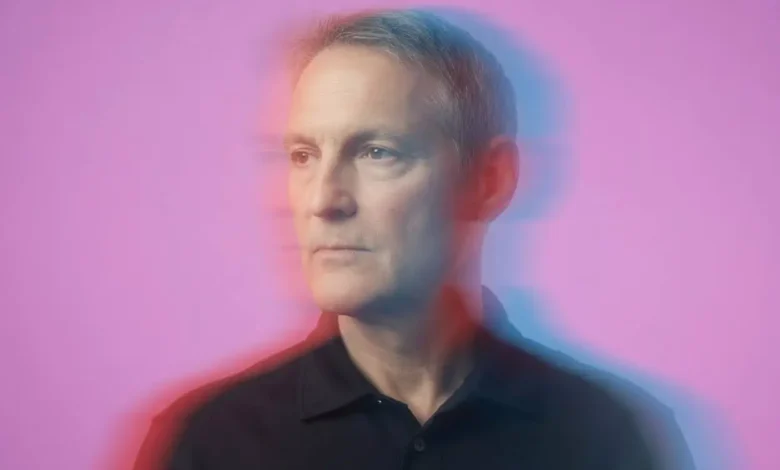
The global travel industry is currently witnessing a paradigm shift driven by the consolidation of entertainment, sports, and hospitality under a single corporate umbrella. While traditional travel giants like Expedia, Booking Holdings, and major airline groups have long dominated the landscape by servicing existing demand, a new force is emerging that aims to originate that demand at its source. At the center of this transformation is Ari Emanuel, the Hollywood super-agent and CEO of Endeavor, who is quietly assembling what may become the most consequential travel and experience company of the decade. This evolution is most visible in the unprecedented scale of the 2026 FIFA World Cup hospitality program, an operation controlled by Emanuel’s corporate interests that is set to redefine the economic impact of international sporting events.
The 2026 FIFA World Cup, scheduled to culminate in a final match at MetLife Stadium in East Rutherford, New Jersey, represents the largest sporting event in history. Spanning 16 cities across the United States, Canada, and Mexico, the tournament will feature 104 matches over a six-week period. Beyond the pitch, the event serves as a massive commercial vehicle for "Live Tourism"—a term describing travel specifically organized around scheduled, high-stakes events such as sports, music festivals, and international conventions. By controlling the hospitality rights for this tournament, Emanuel’s companies are not merely selling tickets; they are managing the entire ecosystem of the traveler’s journey, from the moment a fan decides to attend to the final whistle of the championship game.
The Shift from Servicing to Originating Travel
For decades, the travel industry has operated on a reactive model. Airlines, hotels, and online travel agencies (OTAs) wait for a consumer to decide on a destination before competing for their business through pricing and loyalty programs. In this model, the travel provider is a utility—a means to an end. However, the model championed by Emanuel and his subsidiaries, most notably On Location and TKO Group Holdings, flips this dynamic. By owning the intellectual property of the events themselves—or the exclusive rights to package them—these companies become the originators of travel.
When a fan decides to travel from London to New York for the World Cup final, or from Tokyo to Las Vegas for a UFC bout, the "decision point" happens at the level of the event. Traditional travel companies have little influence over this initial spark. Emanuel’s strategic masterstroke has been to acquire the platforms where these decisions are made and the operational infrastructure required to convert those decisions into high-margin, packaged travel experiences. This vertical integration allows for a level of data capture and revenue optimization that traditional travel firms struggle to match.
The Architecture of a New Travel Empire
The engine behind this shift is a complex web of companies under the Endeavor and TKO Group Holdings banners. The acquisition of On Location, a premium hospitality and travel business, was a pivotal moment in this strategy. Originally founded by the NFL, On Location was acquired by Endeavor in a deal valued at approximately $660 million in early 2020. Since then, it has expanded its footprint to include the Olympic Games, the Super Bowl, and now the FIFA World Cup.
In 2023, the merger of UFC and WWE into TKO Group Holdings further solidified this "Live Tourism" pipeline. TKO owns the athletes, the storylines, and the venues. When the UFC holds a "numbered" event in a destination like Abu Dhabi or Perth, the organization works directly with local tourism boards to drive international visitation. Unlike a traditional travel agency, TKO controls the supply of the "product"—the fight itself—and can bundle it with exclusive hotel stays, backstage access, and transportation, creating a closed-loop economy.
Chronology of the Live Tourism Evolution
The rise of this new model did not happen overnight. It is the result of a decade of strategic acquisitions and a keen understanding of the "experience economy."
- 2015-2016: WME-IMG (later Endeavor) begins diversifying beyond talent representation, acquiring the Professional Bull Riders (PBR) and, most significantly, the UFC for $4 billion. This marked the transition from representing talent to owning the platforms where talent performs.
- 2020: Endeavor acquires a majority stake in On Location. Despite the global pandemic grounding travel, the company bets on the long-term resilience of "bucket list" live events.
- 2021: Endeavor goes public, signaling to Wall Street that it is no longer just a talent agency but a global sports and entertainment conglomerate.
- 2022-2023: FIFA announces a shift in its hospitality model. For the 2026 World Cup, FIFA opted to bring more control in-house and partner with specialized firms to manage the highest-grossing hospitality program in sports history. On Location is positioned as a primary partner for these efforts.
- 2024: The 2024 Paris Olympics serve as a massive proof-of-concept for the On Location model, offering fans centralized, guaranteed hospitality packages that include accommodation and event access, a first for the International Olympic Committee.
Supporting Data: The Scale of the 2026 World Cup
The 2026 FIFA World Cup is projected to be an economic juggernaut, and the hospitality figures reflect this scale. With the expansion from 32 to 48 teams, the tournament will see a nearly 40% increase in the number of matches compared to the 2022 event in Qatar.
- Total Matches: 104 matches across three nations.
- Projected Attendance: Over 7.5 million fans are expected to attend matches in person.
- Hospitality Revenue Targets: FIFA has set a goal of generating over $11 billion in total revenue for the 2023-2026 cycle, a significant portion of which will come from high-end hospitality and corporate packages.
- Host Cities: 16 diverse markets including New York/New Jersey, Los Angeles, Mexico City, Toronto, and Miami.
The hospitality program managed by Emanuel’s interests is designed to cater to a wide spectrum of travelers, from corporate executives requiring private suites to "super-fans" seeking bundled hotel and ticket packages. By centralizing these offerings, the program reduces the friction typically associated with international event travel, such as the risk of fraudulent tickets or the difficulty of securing lodging in a crowded market.
Industry Reactions and Market Implications
The travel industry’s reaction to the rise of Emanuel’s Live Tourism model has been a mixture of curiosity and cautious concern. Traditional Online Travel Agencies (OTAs) are beginning to recognize that they are being cut out of the most lucrative part of the travel value chain. While a fan might still use Expedia to book a flight, the high-margin "ground" portion of the trip—hotels, local transport, and the event itself—is increasingly being captured by the event owners.
Industry analysts suggest that this model represents the "Amazon-ification" of travel. Just as Amazon controls the platform, the logistics, and often the product itself, Endeavor and TKO are seeking to control the entire lifecycle of a sports traveler. "The distinction that matters is between servicing travel demand and originating it," notes a recent industry report. "If you own the event, you own the traveler before they even open a search engine."
Tourism boards in host cities have generally welcomed this consolidated approach. For a city like Atlanta or Vancouver, having a professionalized hospitality partner like On Location means a more predictable flow of high-spending visitors and a more organized approach to managing the influx of tens of thousands of international guests.
Broader Impact: The Future of the Experience Economy
The implications of Ari Emanuel’s strategy extend far beyond the 2026 World Cup. It signals a broader trend in the global economy where "experiences" are valued more highly than physical goods. As consumers, particularly millennials and Gen Z, prioritize travel and live events, the companies that control the access points to those experiences will wield significant power.
Furthermore, this model creates a new form of "sports diplomacy" and economic development. Governments are now negotiating directly with entities like TKO and Endeavor to bring major events to their shores, knowing that these events come with a built-in travel and hospitality apparatus. This effectively turns sports and entertainment into a cornerstone of national tourism strategies.
However, the consolidation of these rights also raises questions about affordability and access. As hospitality packages become more sophisticated and bundled, the "independent" traveler may find it increasingly difficult to compete for limited hotel inventory and tickets. The "premiumization" of live events ensures high margins for companies like On Location, but it may also create a tiered system where the best experiences are reserved for those who purchase comprehensive, all-in-one packages.
Conclusion
As the world looks toward the 2026 World Cup final in New Jersey, the focus will naturally be on the athletes and the competition. Yet, behind the scenes, the tournament will serve as the ultimate validation of Ari Emanuel’s vision for the future of travel. By bridging the gap between Hollywood storytelling, professional sports, and global logistics, he is building a company that does not just wait for the world to move—it tells the world where to go.
The rise of Live Tourism marks the end of the era where travel was a fragmented series of bookings. In its place is a streamlined, integrated experience where the event is the destination, and the destination is the event. For the travel industry, the message is clear: the most valuable asset in the coming decade will not be the hotel room or the airplane seat, but the ticket that gets the traveler through the gate.