Environmental Groups and Tribes Sue Trump Administration Over Rescission of Endangered Species Act Habitat Protections

A coalition of environmental advocacy groups and Pacific Northwest tribes has filed federal lawsuits against the Trump administration, challenging a newly finalized rule that rescinds critical habitat protections for the nation’s most imperiled wildlife. The legal action, initiated in the U.S. District Court for Western Washington, seeks to block a regulation that experts describe as the most significant rollback of the Endangered Species Act (ESA) since its inception in 1973. By removing the regulatory definition of "harm" that has stood for decades, the administration has effectively opened the door for expanded industrial activity, including oil and gas drilling, logging, and large-scale development, in areas previously designated as essential for species survival.
The controversy centers on the legal interpretation of "take," a term used in the ESA to prohibit the killing or harassment of protected species. Since the mid-1970s, the Department of the Interior has defined "harm" within the context of a "take" to include "significant habitat modification or degradation where it actually kills or injures wildlife." The Trump administration’s rescission of this definition removes the requirement for private landowners and industrial developers to mitigate activities that destroy the ecosystems upon which endangered species depend.
The Legal and Regulatory Shift
The finalized rule, which was first proposed in April 2025 and is set to take effect on September 14, 2026, represents a fundamental shift in federal conservation policy. Interior Secretary Doug Burgum characterized the move as a necessary correction to decades of regulatory overreach. According to the Department of the Interior, the previous interpretation of the "harm" rule acted as a "regulatory trap" that burdened American businesses, ranchers, and local governments with unnecessary permitting costs and compliance delays.
"For years, federal agencies abused the ESA to obstruct lawful land use and burden American families and businesses," Secretary Burgum stated. He argued that the previous administration of the law expanded federal authority beyond the original intent of Congress, stifling economic growth under the guise of environmental protection.
However, the plaintiffs—including Earthjustice, the Center for Biological Diversity, the Sierra Club, Oregon Wild, the Swinomish Indian Tribal Community, and the Squaxin Island Tribe—argue that the rescission is a direct violation of the ESA’s statutory language. They contend that because habitat loss is the primary driver of species extinction, a law intended to prevent extinction cannot legally ignore the destruction of habitat.
Historical Context: The 1995 Supreme Court Precedent
The definition of "harm" has been a focal point of legal contention for decades. In 1995, the U.S. Supreme Court addressed this specific issue in the landmark case Babbitt v. Sweet Home Chapter of Communities for a Great Oregon. In a 6-3 decision, the Court upheld the Department of the Interior’s authority to include habitat modification in the definition of "harm." The Court ruled that the ESA’s broad purpose of conservation would be undermined if the government could only intervene after an animal had already been killed or physically injured.
The Sweet Home decision established that the protection of habitat on non-federal land was essential, as approximately two-thirds of all federally listed species depend on private property for their survival. Legal experts note that by rescinding this definition through the administrative rulemaking process, the Trump administration is attempting to bypass a judicial precedent that has governed environmental law for thirty years.
Scientific Data on Habitat Loss and Extinction
The scientific community has expressed profound concern over the rule change, citing empirical data that links habitat preservation to species recovery. A 2019 study published in Conservation Science and Practice analyzed species listed under the ESA between 1975 and 2017. The findings were stark: 81 percent of those species were listed primarily due to habitat loss and degradation. Direct threats, such as hunting or poaching, accounted for a significantly smaller portion of the declines.
Specific species cited in the lawsuits as being at immediate risk include:
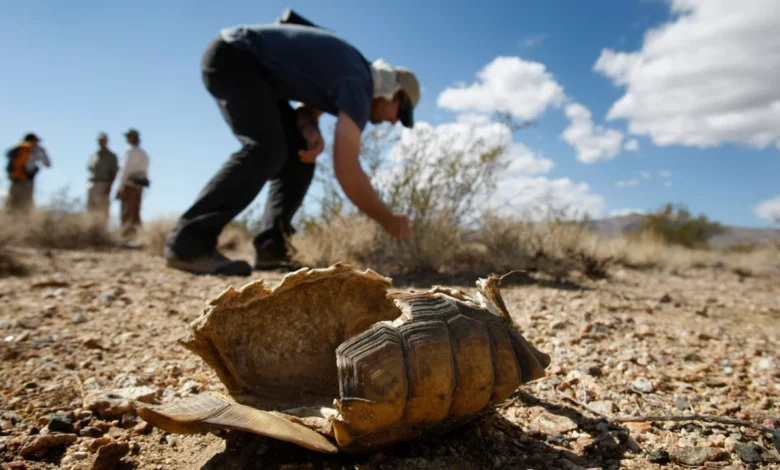
- The Desert Tortoise: Dependent on fragile Mojave and Sonoran Desert ecosystems that are increasingly targeted for solar energy projects and grazing.
- The Northern Spotted Owl: A species central to the "timber wars" of the 1990s, whose survival depends on old-growth forest canopies.
- The Rice’s Whale: One of the most endangered marine mammals in the world, currently threatened by expanded oil and gas leasing in the Gulf of Mexico.
- Pacific Salmon: Vulnerable to sedimentation and rising water temperatures caused by logging and development near spawning streams.
Pat Parenteau, an emeritus professor at Vermont Law and Graduate School, emphasized that the "harm" rule was rarely used to block projects entirely. Instead, it served as a mechanism to force developers to adopt "incidental take" permits, which required them to minimize their impact—such as by shifting construction schedules to avoid breeding seasons or adjusting the footprint of a project to preserve wildlife corridors.
The Tribal Perspective and Treaty Rights
For the Swinomish and Squaxin Island Tribes, the rescission of habitat protections is not merely an environmental issue but a threat to their sovereign rights and cultural survival. The tribes argue that the federal government has a trust responsibility to protect the resources guaranteed to them by treaty, including the salmon that are central to their diet, economy, and spiritual practices.
Tandy Wilbur, a Swinomish senator and fisheries manager, noted that the degradation of salmon habitat directly impacts the health of tribal members. "Because salmon is both food and spiritual nourishment for Swinomish Community members, I fear for the health of our people and our cultural lifeways," Wilbur said. The tribes submitted thousands of pages of scientific evidence during the public comment period, arguing that the survival of salmon is inextricably linked to the integrity of the watersheds—habitat that will now lose federal protection.
Chronology of the Policy Change
The path to the current legal showdown has been marked by a rapid series of administrative actions:
- April 17, 2025: The Trump administration officially proposes the rescission of the "harm" definition in the Federal Register, initiating a public comment period.
- May 2025: Industry groups, including the Forest Landowners Association, submit comments in support of the change, arguing it aligns the law with "original congressional intent."
- Summer 2025: Over 358,000 public comments are filed, with a vast majority of environmental groups and scientific organizations opposing the rule.
- March 2026: In a related move, the "God Squad"—a high-level committee of federal officials—grants an exemption for oil and gas activities in the Gulf of Mexico, signaling a broader strategy to prioritize energy production over ESA compliance.
- July 10, 2026: The Department of the Interior issues a press release announcing the finalization of the rule rescinding the "harm" definition.
- July 15–17, 2026: Two separate lawsuits are filed by environmental coalitions and tribal governments to stop the implementation of the rule.
- September 14, 2026: The scheduled date for the rule to officially go into effect, pending judicial intervention.
Broader Implications and Future Outlook
The outcome of these lawsuits could have far-reaching consequences for the future of conservation in the United States. If the courts uphold the administration’s rescission, the federal government’s ability to regulate activities on private land will be severely curtailed. This is particularly significant because 10 percent of endangered species reside exclusively on private property.
Furthermore, the legal strategy employed by the Trump administration reflects a broader push for "energy dominance." By weakening the ESA, the administration aims to accelerate infrastructure projects, from pipelines to highways, without the "regulatory burden" of environmental impact assessments.
However, some legal scholars warn that the plaintiffs face an uphill battle. The current composition of the U.S. Supreme Court is significantly more conservative than the Court that decided the Sweet Home case in 1995. Dave Owen, an environmental law professor at the University of California College of the Law, San Francisco, suggested that the litigation could provide the Supreme Court with an opportunity to overturn its previous ruling entirely, which would enshrine the loss of habitat protections in a more permanent legal framework.
Despite these risks, the plaintiffs remain resolute. Ben Levitan, a senior attorney at Earthjustice, stated that the law is clear: "It’s so intuitive, and it’s also the law that endangered species need to have habitat, or they can’t survive." As the September deadline approaches, the environmental and tribal coalitions are expected to seek a preliminary injunction to prevent the rule from taking effect while the cases move through the court system. The impending legal battle will likely serve as a definitive test of the executive branch’s power to reinterpret landmark environmental statutes.
Related posts: