Kirk Acevedo’s Candid Revelation on Hollywood’s Squeezed Middle Class and the Perilous Economics Facing Working Actors

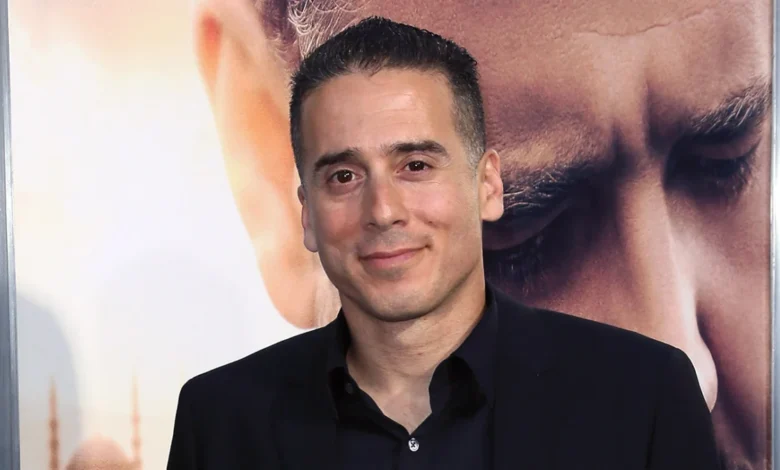
Kirk Acevedo, a name synonymous with consistent, high-caliber performances across a diverse spectrum of television and film, has stepped forward with a stark and candid assessment of the current economic realities facing many working actors in Hollywood. In a recent interview on the podcast An Actor Despairs, hosted by Ryan M. Perez, the seasoned actor detailed the profound impact of industry shifts, including consolidation, cutbacks, and the evolving streaming landscape, on the livelihoods of actors who form the crucial "middle class" of the entertainment world. Acevedo’s revelations offer a rare glimpse into the personal and professional struggles that lie beneath the glittering surface of Hollywood, revealing a precarious existence for those who are not A-list stars but are the backbone of countless productions.
A Career Forged in Acclaim and Consistency
Acevedo’s career trajectory is a testament to sustained talent and dedication. A native New Yorker, raised in the South Bronx, his formative years were spent honing his craft on the stage before catapulting into the national spotlight with a breakout role as the complex and compelling inmate Miguel Alvarez in HBO’s groundbreaking prison drama Oz (1997-2003). This early success provided a launchpad for collaborations with celebrated auteurs and icons of cinema. He joined the ranks of Hollywood elite with a role in Terrence Malick’s Oscar-nominated war epic The Thin Red Line (1998), and later contributed to the critically acclaimed World War II miniseries Band of Brothers (2001), produced by Tom Hanks and Steven Spielberg.
His resume further boasts significant contributions to major franchise properties, including the critically lauded Dawn of the Planet of the Apes (2014), and a notable presence in the superhero genre with appearances in The CW’s Arrow and Marvel’s Agents of S.H.I.E.L.D.. Beyond these high-profile projects, Acevedo has been a ubiquitous presence in popular procedurals, lending his talents to episodes of Law & Order: Special Victims Unit, Law & Order: Trial by Jury, Cold Case, Blue Bloods, various iterations of CSI, and Person of Interest, among others. Since the late 1990s, he has maintained an enviable record of consistent employment, a feat many in the acting profession strive for but few achieve.

The Shifting Sands of Hollywood Economics
Despite his extensive and impressive body of work, Acevedo finds himself grappling with the same economic pressures that are increasingly impacting mid-career actors. In his interview, he articulated how the industry’s consolidation, a trend exacerbated by the rise of streaming services and the subsequent streamlining of production budgets, has significantly altered the landscape. The loss of numerous creative jobs, coupled with the lingering effects of the COVID-19 pandemic and the recent dual Hollywood strikes, has created an environment where actors like Acevedo, who once commanded steady work and stable income, are now facing considerable uncertainty.
"The middle class always gets squeezed out," Acevedo stated, drawing a parallel to broader economic trends. "We’re getting squeezed out." This sentiment underscores a growing concern within the industry: that the economic model is becoming increasingly bifurcated, with a small tier of superstars earning astronomical sums, while the vast majority of working actors struggle to make a sustainable living.
A Personal Account of Financial Strain
The tangible consequences of these industry shifts have been deeply personal for Acevedo. He revealed that he was forced to sell his home to maintain financial stability during a period of reduced opportunities and diminished paychecks. He described a stark contrast between his previous professional life and his current reality. "I went from working non-stop to now I got to sell my house," he explained, referencing a period in the late 2010s when he was actively engaged in projects such as Arrow, 12 Monkeys, Kingdom, and the films Dawn of the Planet of the Apes and Insidious: The Last Key.
The onset of the COVID-19 pandemic in 2020 brought about a significant slowdown, followed by a challenging period of near-misses on coveted roles. Acevedo recalled coming in "second place all of 2019," losing out on significant parts in films like Birds of Prey and the Fantabulous Emancipation of One Harley Quinn and Don’t Breathe 2. These near-opportunities, while acknowledging his continued relevance, also highlighted the increasing difficulty of securing substantial roles that could provide a stable income.

"2021 comes and I’m up for some TV shows; it just goes one way, this way, and that would have saved me. That would’ve saved me," he lamented. "That doesn’t work, and I keep coming in second place, and the reality is second place, you’re the first one to lose." This poignant observation underscores the high stakes involved in the audition process and the brutal reality of being a finalist but not the chosen one in an increasingly competitive market. The financial implications of these near-misses, he explained, have been substantial, forcing difficult personal decisions. "I have so many friends, people you know, actors you don’t that had to sell their houses," he added, emphasizing that his experience is not unique but rather a shared struggle within the acting community.
The Broader Impact: A Squeezed "Middle Class"
Acevedo’s situation is not an isolated incident. The entertainment industry has been weathering a period of unprecedented change, marked by widespread cutbacks, corporate consolidations, the disruptive force of the pandemic, and the prolonged labor disputes of the WGA and SAG-AFTRA strikes. While many industry professionals have spoken out about the financial fallout, few have offered such a detailed and personal account of the impact on their livelihoods. Billy Porter, another prominent actor, publicly shared in 2023 that he, too, was compelled to sell his home due to the financial strain exacerbated by the strikes.
When approached by The Hollywood Reporter for further comment on his An Actor Despairs interview, Acevedo preferred to let the podcast episode speak for itself, indicating a desire to let his original words convey the depth of his experience. His colleagues have rallied in support, with actor Neil Brown Jr. commenting "Facts" on Acevedo’s Instagram post sharing a clip from the interview, a succinct acknowledgment of the harsh truths being shared.
The Television Pivot and Increased Competition
Acevedo’s current professional focus has shifted, with television now representing the primary avenue for earning a living. "TV is really the only place to really make a living now because it’s not in film for guys like me," he stated. This shift is driven by a confluence of factors, including increased competition and a significant devaluation of actor compensation. He points to a disturbing trend where offers for roles are often below a livable wage, particularly for actors of his standing.

The rise of streaming services has also blurred the lines between film and television, attracting major movie stars to the small screen. "All the movie stars—since there’s no more films, not the way it used to be—they’re all in TV," Acevedo observed. This influx of A-list talent into television series has intensified competition, forcing established actors like Acevedo to compete directly with individuals who were previously considered solely film actors, and often, Oscar winners.
"I’m competing with Oscar winners," he explained. "Yeah. It’s like, ‘OK, should we pay Kirk his quote or this guy that was nominated for an Oscar seven, eight, 10 years ago?’ See the problem?" This competitive dynamic, coupled with the pressure to accept lower rates, has eroded the bargaining power of actors who have built their careers on consistent work and established professional rates.
The Economic Equation for Working Actors
To illustrate the financial precariousness, Acevedo broke down the economics of a hypothetical scenario for an actor taking on multiple guest spots in a television season. "Let’s say you do 10 guest spots. That’s $100,000 grand, right?" he posited. After accounting for agent and manager commissions (typically 20%), this figure is reduced to $80,000. Factoring in taxes (estimated at 38%), the take-home pay dwindles to approximately $45,000. Even with a conservative estimate of monthly rent at $3,000, totaling $36,000 annually, the remaining income leaves little room for savings, unexpected expenses, or a comfortable lifestyle, particularly for actors who may not have the consistent bookings of a series regular.
"Can you survive off of 10 episodes? You could if you’re just starting out," Acevedo conceded. However, for "older, middle class actors," this model is no longer sustainable. The challenge lies in the fact that they can no longer command their established "quotes" – the standard rates based on their experience and resume – while simultaneously facing competition from younger actors who may be willing to work for less, or established stars taking on roles for different financial motivations.

The industry’s practice of elevating a few actors to series regular status, while casting the majority in recurring roles, further exacerbates the issue. "They make top two on the call sheet regulars. Everybody else is recurring. And because everybody else is recurring, they can lowball you," Acevedo stated. This creates a situation where actors are vulnerable to exploitation, as many are desperate for work. "There are actors that would do it for free. We have no leverage."
A Personal Health Scare Amidst Industry Turmoil
Adding another layer of personal challenge, Acevedo experienced a significant health scare. Shortly before his 50th birthday, he suffered a hemorrhagic stroke. "No one knows why it was caused," he stated, noting the rarity of the event given his otherwise perfect health and vitals. The timing of this health crisis, coinciding with the financial anxieties and professional uncertainties he was facing, undoubtedly amplified the stress of the situation. Fortunately, Acevedo has since recovered and received a clean bill of health from his doctors, offering a ray of hope amidst the narrative of professional struggle.
Looking Ahead: Resilience and Reflection
Despite the daunting challenges, Acevedo has secured recent roles, including appearances on The Offer, Star Trek: Picard, and a four-episode arc on Lioness. These roles, however, come with the understanding that the economic landscape for such projects has also shifted. His reflections serve as a crucial reminder of the human cost of industry transformations and the resilience required to navigate a career in the ever-evolving world of entertainment.
Acevedo’s decision to speak openly about his experiences on An Actor Despairs provides a vital platform for understanding the real-world implications of Hollywood’s economic restructuring. His narrative is a powerful testament to the dedication and tenacity of working actors, and a call for greater awareness and potential solutions for the challenges facing the industry’s essential "middle class." The full interview offers deeper insights into his journey, from his early days to his current perspective on the business.