United Airlines Proposes Monumental Merger with American Airlines Amid Shifting Regulatory Landscape

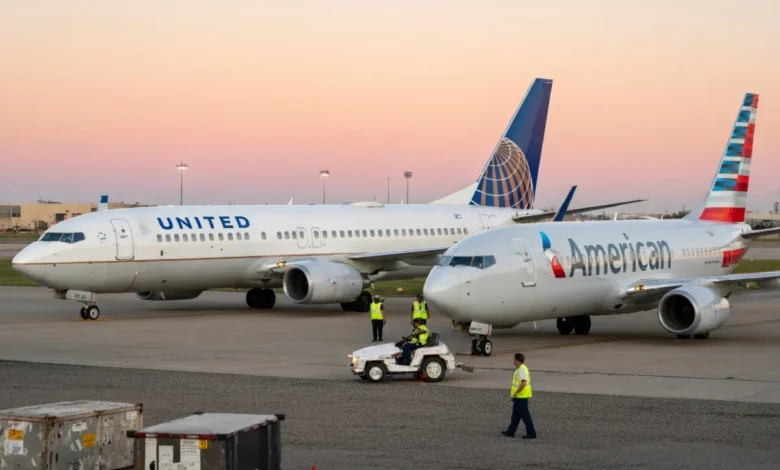
United Airlines Chief Executive Officer Scott Kirby has formally presented a proposal to federal regulators regarding a potential merger with American Airlines, a move that would fundamentally reshape the global aviation industry. This strategic overture comes at a time of significant political transition, as the executive branch signals a newfound openness to large-scale corporate consolidations. The pitch, which was first reported following discussions between industry leaders and the Department of Transportation, suggests that the "Big Four" US carriers could soon be reduced to a "Big Three," creating an entity of unprecedented scale in the history of commercial flight.
The proposal follows recent public comments from Transportation Secretary Sean Duffy, who indicated that the current administration maintains a favorable view of "big deals" that could potentially strengthen the domestic economy. While previous administrations, particularly the Biden-related Department of Justice, took a hardline stance against airline consolidation—most notably blocking the JetBlue-Spirit merger—the current political climate appears more conducive to mergers and acquisitions. Secretary Duffy has hinted that the administration is willing to consider various structural remedies, such as asset divestitures, to address competition concerns rather than issuing blanket denials of merger applications.
A Paradigm Shift in Federal Aviation Policy
The potential combination of United Airlines and American Airlines would create a carrier with a dominant presence across nearly every major domestic hub and a massive international footprint. For decades, the US airline industry has been defined by the "Big Four"—American, United, Delta, and Southwest—which together control approximately 80% of the domestic market. A merger between two of these titans would represent the largest consolidation in aviation history, surpassing the 2013 merger of American Airlines and US Airways and the 2010 merger of United and Continental.
This shift in regulatory appetite is underscored by comments from United Airlines Chief Financial Officer Mike Leskinen. Speaking to investors recently, Leskinen characterized the current period as a "unique environment" where mergers and acquisitions are not only possible but potentially necessary for long-term stability. The industry has faced significant headwinds in the post-pandemic era, including fluctuating fuel costs, labor shortages, and supply chain delays from aircraft manufacturers like Boeing and Airbus. Proponents of the merger argue that a combined United-American entity would benefit from massive economies of scale, allowing for more efficient fleet utilization and a more robust response to global economic volatility.
Historical Context: The Evolution of Consolidation
To understand the magnitude of Kirby’s proposal, one must look at the history of airline consolidation in the United States. Following the Airline Deregulation Act of 1978, the industry saw a flurry of mergers that eventually coalesced into the current market structure. The most recent wave of consolidation began in 2005 with the merger of US Airways and America West, followed by Delta’s acquisition of Northwest in 2008, United’s merger with Continental in 2010, and Southwest’s acquisition of AirTran in 2011.
The most relevant historical parallel to the current United-American proposal is the failed 2000 attempt by United Airlines to acquire US Airways. That deal was ultimately scuttled due to intense antitrust scrutiny from the Department of Justice. At the time, the carriers attempted to mitigate competition concerns by proposing the creation of "DC Air," a spin-off airline that would have taken over many of US Airways’ slots at Ronald Reagan Washington National Airport. The project was to be led by BET founder Robert Johnson, but the deal collapsed as the US economy slowed and regulators remained unconvinced that the spin-off would ensure a competitive landscape.
Today, Secretary Duffy has referenced similar "carve-out" strategies. By disposing of certain assets—such as gates, slots, and entire hub positions—the merged entity might hope to satisfy regulators. However, the scale of a United-American merger would require divestitures far larger than anything seen in previous deals.
The Chicago Conflict and Potential Divestitures
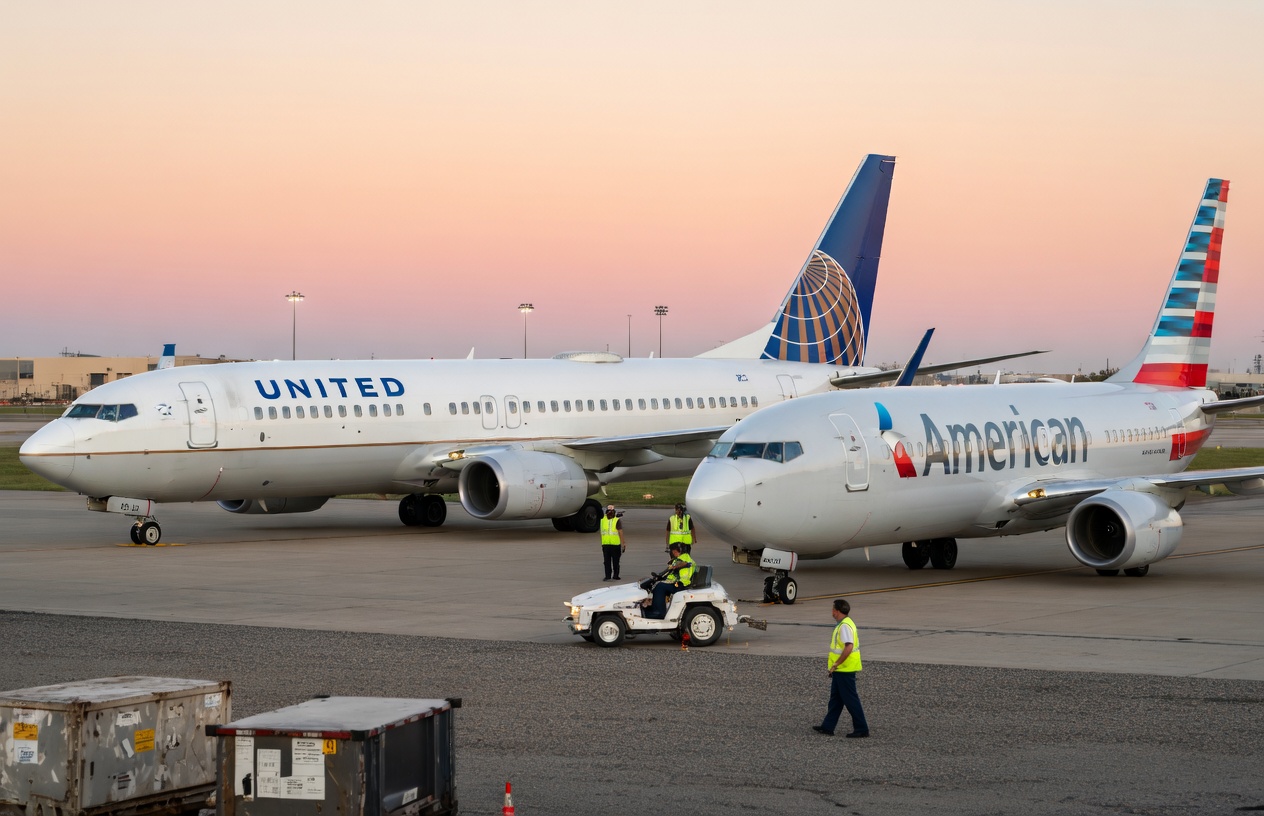
One of the primary hurdles for a United-American merger is the extreme concentration of market share in specific geographic regions. Chicago O’Hare International Airport (ORD) stands as the most prominent example. Currently, O’Hare serves as a primary hub for both United and American. A merger would effectively grant the new entity a near-monopoly on one of the world’s busiest aviation gateways.
Industry analysts suggest that for the deal to move forward, the carriers would likely have to spin off a significant portion of American’s Chicago operations to a third party, potentially a low-cost carrier like JetBlue, Southwest, or Alaska Airlines. This "Chicago Carve-out" would be essential to maintaining a competitive environment for midwestern travelers. Similar challenges exist at Los Angeles International (LAX) and New York’s LaGuardia and JFK airports, where both airlines maintain a heavy presence.
The Department of Justice (DOJ) typically evaluates mergers based on the "consumer welfare standard," which looks at whether a deal will lead to higher prices, reduced service, or decreased innovation. Even if the executive branch is philosophically aligned with "big deals," the career staff at the DOJ and the Federal Trade Commission (FTC) are expected to subject the United-American proposal to rigorous Hart-Scott-Rodino review. This process requires companies to provide the government with information about the potential impact of the merger on competition before the deal can be finalized.
Regulatory Obstacles and the Role of State Intervention
While federal approval is the most significant hurdle, it is not the only one. Any potential combination between United and American would likely face a flurry of opposition from state attorneys general and private actors. In recent years, state-level regulators have become increasingly active in antitrust enforcement, often filing their own lawsuits to block mergers that they believe will harm their local economies or residents.
A merger of this size would also face intense scrutiny from labor unions. The integration of two massive workforces—including pilots, flight attendants, and ground crews—is a notoriously difficult process. The Air Line Pilots Association (ALPA), which represents United pilots, and the Allied Pilots Association (APA), which represents American pilots, would need to negotiate a single seniority list and a unified contract. Historical precedents, such as the contentious integration of America West and US Airways pilots, suggest that labor unrest can significantly delay the realization of merger benefits.
Furthermore, consumer advocacy groups have already begun to voice concerns. Consolidation in the airline industry has historically been linked to the introduction of more fees (for baggage, seat selection, and ticket changes) and a reduction in service to smaller, regional markets. Critics argue that a United-American merger would leave consumers with fewer choices and less leverage, particularly in "fortress hubs" where the merged carrier would control the majority of gates.
Impact on Loyalty Programs and Global Alliances
Another complex layer of the proposal involves the airlines’ frequent flyer programs and global alliances. United is a founding member of the Star Alliance, while American is a cornerstone of the Oneworld alliance. A merger would necessitate a massive realignment of international partnerships. If the combined carrier were to remain in Star Alliance, Oneworld would lose its primary US partner, potentially destabilizing the alliance and affecting millions of international travelers.
The frequent flyer programs—United MileagePlus and American AAdvantage—are among the most valuable assets of both companies. These programs are not just marketing tools; they are multi-billion-dollar financial entities that sell miles to credit card companies and other partners. Merging these two massive databases and valuation systems would be an administrative task of unprecedented complexity. For consumers, the fear is that a merger would lead to a "devaluation" of miles, as a lack of competition reduces the incentive for the airline to offer generous redemption rates.
Financial Perspectives and Industry Implications
From a financial standpoint, the merger is seen by some as a way to address the "middle-market" squeeze. While low-cost carriers like Spirit and Frontier compete on price, and Delta has successfully positioned itself as a premium brand, American has occasionally struggled to define its market niche. United, under Scott Kirby’s leadership, has invested heavily in "United Next," a plan to upgrade its narrow-body fleet with larger overhead bins and seatback entertainment.
United CFO Mike Leskinen’s comments regarding the "unique environment" for M&A suggest that the company sees an opportunity to capitalize on the financial weaknesses of its competitors. By absorbing American, United could gain access to American’s extensive domestic network in the Sun Belt, complementing United’s strength in international and coastal markets.
However, the barriers to entry in the airline industry remain a significant counter-argument to the merger. Critics point out that even if the government allows the deal, new competitors cannot easily enter the market due to "slot" constraints at major airports and the high capital costs of starting an airline. Unlike other industries where a new startup can disrupt established players, the aviation industry is heavily gated by government-granted infrastructure.
The Path Forward: A Transformation of American Air Travel
As the proposal moves through the initial stages of regulatory "pitching," the aviation world remains in a state of high anticipation. If Scott Kirby is successful in convincing the Department of Justice and the Department of Transportation that a United-American merger is in the public interest, it would mark the beginning of a new era in American aviation.
The timeline for such a deal would likely span several years. Following a formal merger agreement, the companies would undergo a lengthy discovery process by the DOJ, followed by potential court battles if the merger is challenged. Even with a favorable administration, the sheer size of the deal ensures that every aspect of the companies’ operations—from flight schedules to maintenance protocols—will be dissected by regulators, economists, and competitors.
Ultimately, the proposal by United Airlines to acquire American Airlines is a high-stakes gamble on the future of federal oversight. It tests the limits of the "big deals" philosophy and challenges the traditional boundaries of antitrust law. Whether this leads to a more stable, efficient industry or a monopolistic landscape with higher prices remains the central question for regulators, investors, and the traveling public alike. As the discussion moves from the boardroom to the halls of government, the outcome will define the trajectory of the US airline industry for decades to come.