Barack Obama Reflects on AI-Generated Content, Family, and the Shifting Landscape of Political Discourse

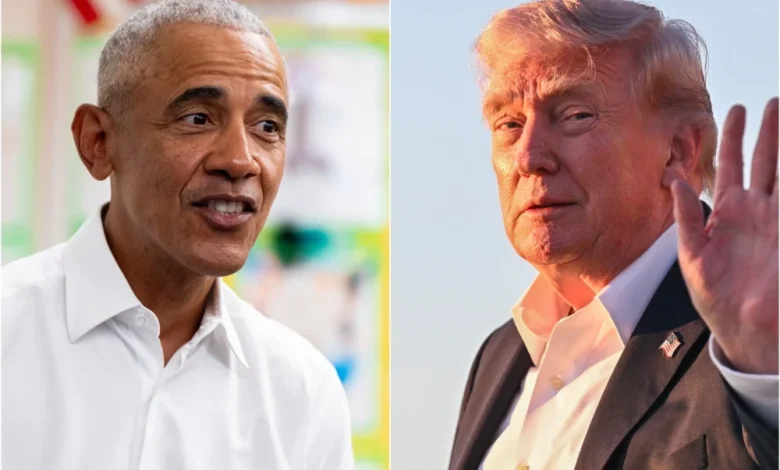
Former President Barack Obama has broken his silence on the controversial AI-generated video that appeared on Donald Trump’s Truth Social platform in February, depicting Obama and his wife, Michelle Obama, as apes. In a candid interview with The New Yorker, Obama articulated his nuanced reaction to the offensive imagery, emphasizing his primary concern for his family while also addressing the broader implications of increasingly sophisticated digital manipulation in political discourse. His remarks provide a critical insight into the former president’s perspective on the erosion of decorum and the pervasive influence of artificial intelligence in shaping public perception.
The AI-generated video, which surfaced in February, was widely condemned for its racist undertones and its use of deepfake technology to create a derogatory representation of the former first family. The incident brought to the forefront the escalating challenge of combating misinformation and hate speech amplified by advanced AI tools. Obama, while acknowledging the personal sting of seeing his family subjected to such vitriol, made it clear that his objections extended far beyond a personal affront.
Obama’s Stance: Family First, Broader Concerns Beyond
"I don’t take it personally," Obama stated in the interview, a sentiment that belies the deeply offensive nature of the content. He elaborated on this point, expressing a fundamental offense when his wife and children are "dragged into things, because they didn’t choose this." This statement underscores a widely held ethical boundary in public life: the protection of one’s family from the direct onslaught of political attacks. Obama extended this principle to his political adversaries, asserting, "That’s a line that even people whose politics I deeply reject, I would expect them to care about. I would never talk about somebody’s family in that way." This principled stance highlights a perceived decline in basic civility and respect, even among those with opposing political ideologies.
Beyond the immediate offense to his family, Obama expressed a more profound concern regarding other AI-generated videos that have been disseminated by Donald Trump. These videos, according to the former president, treat war "like a video game" and depict "excrement dumped on ordinary citizens." This observation points to a disturbing trend where AI is being used to trivialize violence, dehumanize opponents, and normalize aggressive and disrespectful forms of political engagement. Obama drew a distinction between himself as a public figure and his family, stating, "I’m a fair target in the sense of, yeah, you can feel free to pick on me, because I’m your own size." This self-awareness of his role as a public servant, open to scrutiny and critique, contrasts sharply with the weaponization of technology to target his loved ones.
This is not the first time Obama has publicly addressed the AI ape video. Previously, upon its initial release, he issued a statement emphasizing the widespread public disapproval of such tactics. He noted that "the majority of the American people find this behavior deeply troubling." This earlier statement signaled his recognition of the broader societal unease with the increasing prevalence of malicious AI-generated content.
The Erosion of Decorum and the "Clown Show"
Obama’s reflections extend to a broader critique of the current media and political environment, which he described during an appearance on Brian Tyler Cohen’s podcast. He lamented the current state of public discourse, characterizing it as a "clown show" that unfolds on social media and television. He observed a palpable absence of shame among individuals and groups who, in his view, would have previously adhered to standards of decorum and respect for public office. "And what is true is that there doesn’t seem to be any shame about this among people who used to feel like you had to have some sort of decorum. And a sense of propriety and respect for the office, right? So that’s been lost," he stated.
This sentiment echoes concerns voiced by many about the coarsening of political debate and the normalization of inflammatory rhetoric. The ability of AI to generate convincing but fabricated content further exacerbates this problem, making it increasingly difficult for the public to discern truth from falsehood. The speed at which such content can be created and disseminated, particularly on social media platforms, presents a significant challenge to democratic processes and informed public opinion.
Navigating the Media Landscape: The Role of a Former President
In the New Yorker interview, Obama also addressed his own role in the current political climate and his reluctance to become a full-time political commentator. He articulated a strategic decision to avoid adopting the persona of a media critic, akin to figures like Jon Stewart. "For me to function like Jon Stewart, even once a week, just going off, just ripping what was happening… then I’m not a political leader, I’m a commentator," he explained. This reflects a desire to maintain a distinct identity and focus on other avenues of engagement rather than perpetual punditry.
Obama also highlighted the challenging media environment, where his ongoing activities can be obscured by the constant churn of news cycles and the sheer volume of information. He noted that the public often questions why he is not more vocal, particularly outside of election cycles. "The media environment is so difficult that people don’t even know all the stuff I am doing, right?" he said. "And, I think, when they do see me, then the sense is Well, why isn’t he doing that every day instead of just during a midterm election, or during a referendum campaign around gerrymandering, or what have you?" This observation points to the public’s desire for consistent engagement from prominent figures, while also acknowledging the strategic considerations and the complexities of influencing public discourse from a post-presidency position.
The Broader Implications of AI in Politics
The proliferation of AI-generated content, exemplified by the ape video incident, has far-reaching implications for the democratic process. The ability to create sophisticated deepfakes and manipulate visual and auditory information poses a significant threat to public trust and the integrity of elections.
Timeline of the Event:
- February [Year]: An AI-generated video depicting Barack and Michelle Obama as apes is posted to Donald Trump’s Truth Social account.
- Following the incident: Barack Obama issues a statement condemning the video, calling it "deeply troubling" and noting that the majority of Americans find such behavior unacceptable.
- Later Interview with The New Yorker: Obama elaborates on his reaction, emphasizing his concern for his family and his broader worries about AI’s use in trivializing violence and dehumanizing citizens. He also discusses his role as a former president in the current media landscape.
- Appearance on Brian Tyler Cohen’s podcast: Obama further critiques the "clown show" of social media and television, lamenting the loss of decorum and propriety in political discourse.
Supporting Data and Context:
The incident involving the AI ape video is part of a growing trend of misinformation and disinformation campaigns leveraging advanced technology. Studies have shown a significant increase in the creation and dissemination of deepfake content. For example, a report by the U.S. Government Accountability Office (GAO) in 2023 highlighted the potential for AI-generated disinformation to disrupt elections and erode public trust. The report noted that AI technologies can be used to create "highly realistic fake images, videos, and audio" that are difficult to distinguish from authentic content.
Furthermore, social media platforms like Truth Social, which cater to specific political demographics, can become echo chambers where such content can spread rapidly without immediate fact-checking or moderation. The financial incentives for creating viral content, even if fabricated, also contribute to the problem.
Reactions from Related Parties (Inferred/Logical):
While direct responses from all parties involved in the AI video incident are not always publicly documented, the general reaction from civil rights organizations and media ethics watchdogs has been one of strong condemnation. Groups like the Anti-Defamation League (ADL) have consistently spoken out against the use of racist imagery and disinformation in political campaigns, particularly when targeting minority groups or former public officials.
The continued use of such tactics by political figures, even if through third-party platforms or AI-generated content, raises questions about accountability and the responsibility of platform owners. The legal and ethical frameworks surrounding AI-generated disinformation are still evolving, creating a challenging environment for regulation and enforcement.
Analysis of Implications:
The implications of this incident and Obama’s response are multifaceted:
- The Normalization of Degrading Tactics: The incident highlights a concerning trend where personal attacks and dehumanizing imagery are becoming more commonplace in political discourse, even if cloaked in AI-generated content. This can desensitize the public to such tactics and lower the bar for acceptable political behavior.
- The Evolving Threat of Deepfakes: The ability to create convincing AI-generated videos poses a significant threat to the democratic process. It can be used to fabricate events, spread false narratives, and sow discord, making it harder for voters to make informed decisions.
- The Challenge of Public Trust: As AI technology advances, the ability to distinguish between real and fake content will become increasingly difficult. This erosion of trust in visual and auditory evidence can have profound consequences for journalism, legal proceedings, and public discourse.
- The Role of Former Leaders: Obama’s thoughtful approach, focusing on his family’s protection and the broader societal impact, offers a model for how former leaders can engage with contemporary political issues without becoming consumed by partisan conflict. His emphasis on decency and kindness serves as a counterpoint to the prevailing negativity.
- Platform Responsibility: The incident also brings renewed attention to the responsibility of social media platforms in moderating content and preventing the spread of harmful AI-generated material. The debate over content moderation and free speech continues to be a critical issue in the digital age.
Barack Obama’s reflections in The New Yorker offer a sober assessment of the challenges facing American democracy in an era of rapidly advancing technology and eroding civility. His emphasis on protecting family, upholding basic decency, and strategically engaging with the public provides a valuable perspective on how to navigate the complex and often contentious landscape of modern political discourse. The incident serves as a stark reminder of the ongoing need for critical media literacy, ethical technological development, and a renewed commitment to respectful public debate.
Related posts: