
Cop City Domestic Terrorism
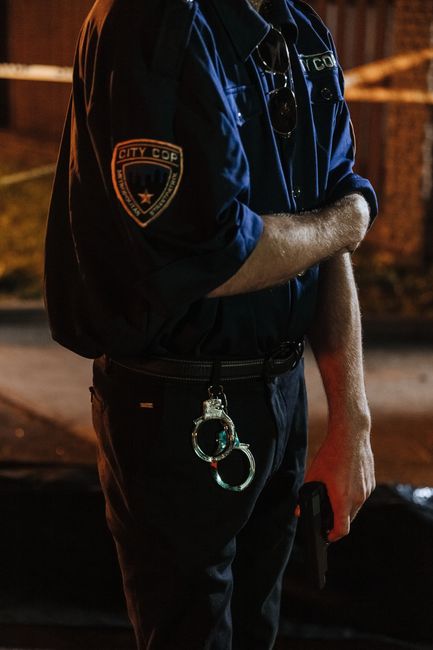
Cop City Domestic Terrorism: Unraveling the Controversial Atlanta Public Safety Training Center
The proposed Atlanta Public Safety Training Center, colloquially known as "Cop City," has ignited a firestorm of controversy, drawing accusations of domestic terrorism from a significant segment of the public and advocacy groups. While law enforcement agencies and proponents frame the facility as a necessary upgrade for police and fire department training, critics contend that its construction and the implications surrounding it represent a form of state-sponsored repression and violence, thus aligning with definitions of domestic terrorism. This article will delve into the multifaceted arguments, legal and ethical considerations, and the impact of the "Cop City" debate, examining why such a contentious project has been labeled with such grave terminology.
The core of the domestic terrorism allegations stems from the perceived intent and impact of the training facility. Critics argue that the center, if built, will become a hub for aggressive policing tactics, further militarizing law enforcement and alienating already marginalized communities. They point to the historical context of police brutality and the disproportionate impact of police actions on Black and Brown populations in Atlanta and across the United States. The idea that a facility dedicated to enhancing these very tactics, in an area of significant ecological and historical importance, is seen by many as an act of aggression by the state against its own citizens. The term "domestic terrorism" is often defined as acts dangerous to human life that are a violation of the criminal laws of the United States or of any State or political subdivision thereof and that appear to be intended to: (A) intimidate or coerce a civilian population; (B) influence the policy of a government by intimidation or coercion; or (C) affect the conduct of a government by mass destruction, assassination, or kidnapping. Opponents of Cop City argue that the intent behind its creation, the type of training it will facilitate, and the likely consequences for the civilian population, particularly those in surrounding neighborhoods, fulfill these criteria. The training is expected to include urban warfare simulations, riot control, and advanced tactical maneuvers, which critics fear will be deployed disproportionately against protestors and residents. The mere existence and operation of such a facility, they argue, can have a chilling effect on civic engagement and protest, thereby intimidating and coercing a civilian population. Furthermore, the effort to push through the project despite widespread public opposition is seen as an attempt to influence government policy through the forceful imposition of the state’s will, potentially coercing dissenting voices into silence.
The proposed location of the training center, a 269-acre tract of South River Forest, also known as the Weelaunee Forest, is a focal point of the controversy. This forest is a vital green space in Atlanta, a city often criticized for its lack of adequate public parks, and holds significant ecological and historical importance. It is the site of the Muscogee Creek Nation’s former capital and a historical refuge for enslaved people. Environmental groups and Indigenous rights activists argue that the destruction of this forest for a police training facility represents an act of environmental violence and a disregard for ancestral lands, further fueling the narrative of state-sanctioned aggression. The construction itself is viewed as an assault on the natural environment and a cultural heritage site, which some interpret as a form of terrorism against the natural world and Indigenous sovereignty. The concept of ecotage, or environmental terrorism, although not explicitly criminalized as domestic terrorism under federal law in the same way as acts targeting human life, shares the characteristic of using destructive means to achieve a political or ideological goal. In this context, the destruction of a vital forest ecosystem for a facility that critics believe will enable oppressive policing is seen by some as an act of aggression that, while not directly targeting human life with immediate violence, has devastating long-term consequences for community well-being and environmental justice, and can be broadly understood as a form of state-sanctioned harm.
The legal definitions of domestic terrorism are crucial to understanding the gravity of the accusations. While the term is often used loosely in political discourse, its legal implications are significant. Federal law defines domestic terrorism as activities that involve acts dangerous to human life and that are a violation of criminal laws of the United States or any state, and that appear to be intended to intimidate or coerce a civilian population, or to influence the policy of a government by intimidation or coercion. Critics argue that the Atlanta Public Safety Training Center, by fostering aggressive policing and potentially leading to increased surveillance and suppression of dissent, fits these criteria. The "intimidation or coercion" can manifest not only through direct violence but also through the creation of an atmosphere of fear and the curtailment of civil liberties. The potential for increased police presence and enforcement in surrounding communities, particularly those that have historically experienced over-policing, is seen as a direct form of intimidation. Furthermore, the project’s advancement despite vocal community opposition is viewed as an attempt to coerce the government into prioritizing law enforcement infrastructure over the needs and desires of its constituents.
The funding and political maneuvering behind "Cop City" have also drawn sharp criticism and contributed to the domestic terrorism narrative. The project has been heavily backed by private donors, including wealthy individuals and corporations, raising concerns about undue influence and the prioritization of private interests over public good. The process by which the Atlanta City Council approved the lease for the training center was met with widespread protests, allegations of procedural irregularities, and accusations that community voices were ignored. This top-down approach, where a controversial project is pushed through despite significant public outcry, is seen by critics as a form of authoritarianism and a betrayal of democratic principles. When a government, or entities with governmental power, engage in actions that deliberately inflict harm, fear, or intimidation upon its own population, especially through the systematic use of force or the destruction of vital community resources, such actions can be perceived and labeled as domestic terrorism by those who feel targeted and oppressed. The argument is that the state, in this instance, is weaponizing its power and resources against its own people.
The opposition to "Cop City" has manifested in a variety of ways, including mass protests, legal challenges, and acts of civil disobedience. This resistance, in turn, has been met with a forceful police response, which some have characterized as excessive and further evidence of the militarized nature of law enforcement that the training center is intended to enhance. The arrests and charges leveled against protestors, some of whom have been accused of domestic terrorism themselves, have added another layer to the controversy. Critics argue that the state is attempting to silence dissent by labeling protestors as terrorists, a tactic they believe is designed to criminalize legitimate activism and discourage further opposition. The very notion of labeling protestors as domestic terrorists for opposing a training facility that they believe will lead to state-sponsored violence creates a circular argument where the accusers become the accused, and the perceived perpetrators of domestic terrorism are the ones who are actually facing the brunt of state-sanctioned force and legal repercussions.
The "Cop City" debate is a complex and deeply polarized issue with far-reaching implications for civil liberties, environmental justice, and the future of policing in America. The use of the term "domestic terrorism" to describe the project highlights the extreme level of distrust and opposition that has emerged. Whether or not the project formally meets legal definitions of domestic terrorism, the perception among a significant portion of the population is that it represents an act of aggression and repression by the state against its own people and the environment. This perception, fueled by historical grievances, environmental concerns, and fears of increased police militarization, has transformed the debate over a public safety training facility into a critical examination of the relationship between the government and its citizens, and the very definition of state-sanctioned violence. The ongoing legal battles, community organizing, and political activism surrounding Cop City demonstrate a deep-seated struggle over the future of urban development, public safety, and the fundamental rights of citizens to protest and influence government policy without fear of reprisal or state-sanctioned intimidation. The narrative of "Cop City" as an act of domestic terrorism, from the perspective of its critics, is not merely a rhetorical flourish; it is an articulation of profound fear and anger regarding the perceived direction of state power and its potential to inflict harm upon its own population and the environment it inhabits. The controversy serves as a stark reminder that the perception of state actions as oppressive and terroristic can arise when policies and projects are seen as being imposed upon communities without genuine consent or in a manner that exacerbates existing inequalities and environmental degradation, thus blurring the lines between legitimate governance and acts of state-sanctioned coercion and harm.
