The Resurgence of Black Lung How Silica Dust and Regulatory Delays are Decimating a New Generation of Appalachian Miners

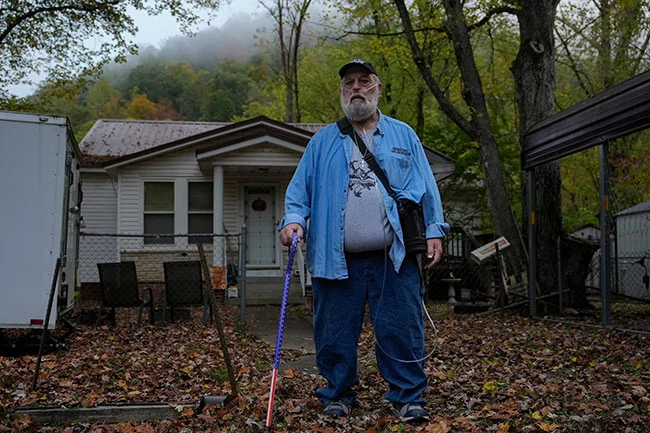
Justin Smarsh, a 42-year-old resident of Cherry Tree, Pennsylvania, represents a harrowing new trend in the American coal industry. A third-generation miner who followed his father and grandfather into the shafts of the Appalachian Plateau, Smarsh is now dying of progressive massive fibrosis (PMF), the most advanced and lethal form of coal workers’ pneumoconiosis, commonly known as black lung. Despite his relatively young age, Smarsh’s lungs are so severely scarred that he struggles to perform basic tasks, such as tying his shoes or walking across his yard. Doctors estimate he will not survive to see his 50th birthday. His condition is not an isolated tragedy but part of a documented resurgence of occupational respiratory disease that is striking younger miners with unprecedented speed and severity.
The modern epidemic of black lung is distinct from the version that afflicted previous generations. While the disease was nearly eradicated by the late 1990s following the implementation of the 1969 Coal Mine Health and Safety Act, it has returned with a vengeance. This resurgence is driven by the depletion of thick coal seams in Appalachia. To reach the remaining thin layers of coal, miners must cut through vast amounts of surrounding sandstone and quartz. This process releases crystalline silica dust, which is far more toxic than coal dust alone. When inhaled, these microscopic silica particles act like shards of glass, causing rapid inflammation and permanent scarring of the lung tissue.
The Evolution of a Workplace Health Crisis
The history of black lung regulation in the United States is a narrative of hard-won protections currently facing a period of significant erosion. The 1969 Coal Mine Health and Safety Act was passed only after a catastrophic explosion at the Consol No. 9 mine in Farmington, West Virginia, killed 78 miners. That legislation established the Mine Safety and Health Administration (MSHA) and set the first federal limits on respirable dust. For decades, these standards appeared successful, as the prevalence of black lung plummeted.
However, the geological reality of modern mining has outpaced the old regulatory framework. Data from the National Institute for Occupational Safety and Health (NIOSH) indicates that the incidence of PMF among long-term miners in Central Appalachia has reached levels not seen since the 1970s. A 2018 study identified hundreds of cases of advanced PMF in just three clinics in Virginia, prompting NIOSH to declare a renewed epidemic. Unlike the "simple" black lung of the past, which often took 30 or 40 years to become debilitating, silica-heavy dust is causing total respiratory failure in miners who have spent less than a decade underground.
The pathology of the disease is particularly cruel. As the lungs become choked with fibrotic tissue, the heart must work harder to pump blood through the scarred organs, eventually leading to right-sided heart failure. In the final stages, patients often describe a sensation of drowning as their lungs fill with fluid, a condition that even common respiratory infections like the flu can trigger into a fatal event. For miners like Smarsh, who worked as a roof bolter—a role that involves drilling directly into rock to install overhead supports—the exposure to silica is direct and intense.

A Chronology of Regulatory Stagnation and Reversal
The effort to regulate silica dust has been mired in bureaucratic and legal delays for more than half a century. The timeline of these efforts highlights the tension between worker safety and industrial interests:
- 1974: NIOSH first recommends a dedicated exposure limit for crystalline silica, suggesting a maximum of 50 micrograms per cubic meter of air.
- 2016: The Occupational Safety and Health Administration (OSHA) adopts the 50-microgram standard for most U.S. industries, including construction and manufacturing.
- 2017: Under the first Trump administration, MSHA maintains a higher limit of 100 micrograms for miners, despite the higher toxicity of the environment.
- 2024: Following years of advocacy from labor groups and medical experts, MSHA finally issues a "final rule" to lower the silica limit to 50 micrograms, with enforcement set to begin in April 2025.
- 2025: Days before the enforcement date, the 8th U.S. Circuit Court of Appeals grants an emergency stay of the rule following a petition from industry groups. Simultaneously, the Trump administration delays implementation to allow operators more time for compliance.
- 2026: MSHA announces an "indefinite" delay of the silica rule pending judicial review, effectively halting the most significant safety advancement for miners in a generation.
This regulatory retreat has occurred alongside a broader reduction in the oversight capacity of federal agencies. Reports indicate that MSHA’s coal mine enforcement staff has been reduced by approximately 50 percent over the last decade. Furthermore, the Trump administration’s "Fork in the Road" initiative, which offered buyouts to veteran federal employees, resulted in a significant loss of experienced mine inspectors. In early 2025, job offers for 90 newly hired inspectors were rescinded, leaving the agency understaffed at the very moment it was tasked with implementing more rigorous health standards.
Statistical Analysis of the Industry and Disease
Despite the political rhetoric surrounding a "coal comeback," the industry’s economic footprint has shrunk while its health risks have grown. U.S. coal production peaked in 2008 at 1,170 million tons; by 2023, that figure had dropped to 578 million tons. Pennsylvania, however, remains a critical hub for the industry, with the Pennsylvania Coal Alliance reporting over 5,000 direct mining jobs and $2.2 billion in economic output as of 2024.
The human cost of this continued production is reflected in mortality and disability data. Between 2020 and 2023, black lung-associated deaths began to rise again after decades of decline. Researchers estimate that one in ten working miners with at least 25 years of experience now suffers from PMF. The financial burden of this epidemic is largely borne by the Black Lung Disability Trust Fund, which provides compensation and medical benefits to miners whose employers have gone bankrupt—a frequent occurrence in the volatile coal market. The fund has faced chronic solvency issues, further complicating the safety net for workers like Smarsh.
Perspectives from Labor and Industry
The debate over silica regulation often centers on the feasibility of "engineering controls" versus "personal protective equipment." The 2024 MSHA rule mandated that mine operators prioritize engineering controls, such as enhanced ventilation systems and water sprays, to suppress dust at its source.
Industry groups, including the National Mining Association and the National Stone, Sand & Gravel Association, have challenged this approach in court. They argue that if ventilation systems cannot meet the 50-microgram standard, operators should be allowed to rely on respirators to achieve compliance. This stance is sharply criticized by health experts and labor unions. Deanna Istik, CEO of the Lungs at Work clinic, notes that respirators are often ineffective against the microscopic size of silica particles and are difficult to wear during the strenuous physical labor required in a mine.

The United Mine Workers of America (UMWA) has expressed profound disappointment in the ongoing delays. Erin Bates, the union’s communications director, emphasized that the responsibility for a safe workplace lies with the employer, not the employee. The union argues that relying on respirators shifts the burden of safety onto the miner, who may face retaliation or job loss if they complain about equipment failure or dusty conditions.
Broader Implications and the Future of Appalachia
The resurgence of black lung has profound implications for the socio-economic stability of Appalachian communities. When young men in their 30s and 40s become disabled, it places an enormous strain on local healthcare systems and family structures. Many miners are reluctant to seek early testing for fear that a diagnosis will lead to their dismissal, meaning they often only seek help when the disease has reached an irreversible stage.
Furthermore, the political promotion of coal as a national security asset stands in stark contrast to the lack of health protections for the workers extracting it. While the federal government has invested hundreds of millions of dollars in coal projects, the "indefinite" delay of the silica rule suggests a prioritization of production volume over worker longevity.
For Justin Smarsh, the political and legal battles are secondary to the daily reality of his fading health. His primary concern is now his 19-year-old son, who, despite seeing his father’s suffering, is considering a career in the mines because of the lack of other high-paying jobs in the region. Smarsh’s warning to his son reflects the bitter disillusionment of a generation: the "black gold" that once built the middle class in Appalachia is now being extracted at the cost of the miners’ lives, leaving behind a legacy of scarred lungs and broken promises. As the legal proceedings remain in limbo, a new cohort of miners continues to descend into the shafts, breathing in the invisible dust that ensures the next generation of the black lung epidemic.